Introduction
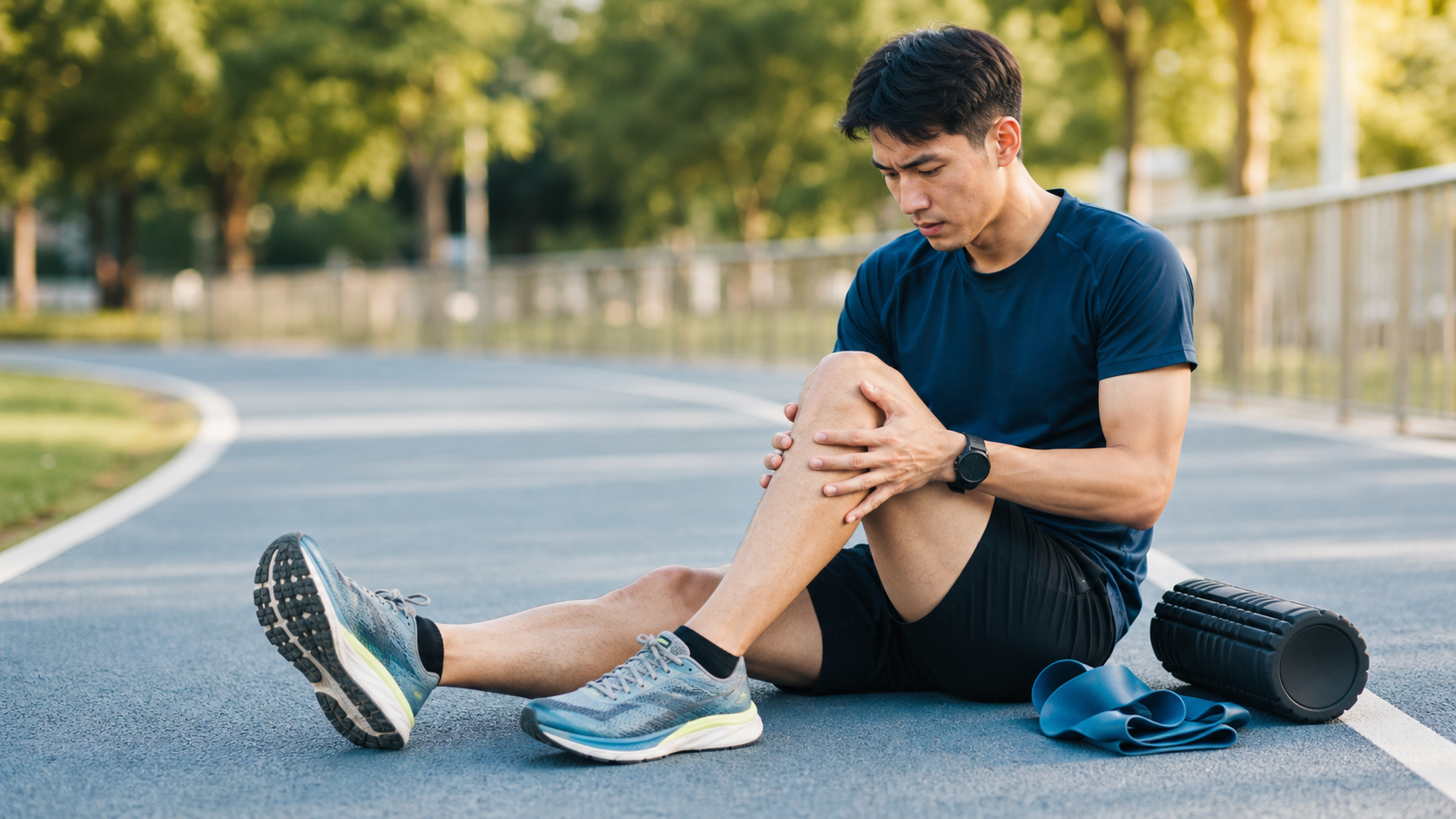
“Runner’s knee” is the common term for Patellofemoral Pain Syndrome (PFPS), one of the most common knee injuries among road running enthusiasts. The pain is concentrated at the front of the knee or around the patella, and is particularly noticeable when climbing or descending stairs, standing up after prolonged sitting, or running downhill. Many runners mistakenly believe they can push through the pain, only to miss the golden window for treatment and let a minor injury drag into a chronic problem.
Causes: Why Does the Patella “Derail”?
The patella (kneecap) sits within the trochlear groove of the femur. During normal running, it should glide up and down along a fixed track. Once the surrounding muscles become imbalanced, the patella shifts, creating abnormal friction against the femoral cartilage, leading to pain and inflammation.
Common causes include:
- Overly strong lateral quadriceps (vastus lateralis) and weak medial quadriceps (vastus medialis oblique, VMO): The patella is pulled laterally, losing its central track.
- Weak hip abductors and gluteus medius: During running, the pelvis tilts sideways and the knee collapses inward (dynamic valgus), increasing patellofemoral pressure.
- Overpronation: The ankle rolls inward, which in turn drives internal tibial rotation, causing the patella to shift.
- Sudden increases in training volume: When weekly mileage increases by more than 10%, the articular cartilage cannot adapt to the accumulated stress in time.
- Worn-out running shoes: Once the outer sole is worn flat, it can no longer provide adequate support, altering lower-limb mechanics.
Diagnosis: How to Tell If It’s Runner’s Knee?
| Symptom Characteristics | Runner’s Knee (PFPS) | Other Knee Problems |
|---|---|---|
| Pain location | Front of the patella or around it | Medial (pes anserine bursitis), lateral (IT Band) |
| Triggering movements | Standing up after prolonged sitting, descending stairs, running downhill | Varies depending on the condition |
| Swelling level | Usually mild or none | Ligament tears may cause noticeable swelling |
| Nature of pain | Dull, aching pain | Sharp tearing sensation requires immediate medical attention |
Self-test: Sit on a chair, straighten your knee, gently press on the patella and push it side to side. If you feel a grinding sensation or pain, it is recommended to consult an orthopedic doctor or physical therapist.
Prevention Strategies: Strengthen Lower-Limb Mechanics from the Ground Up
Strengthening the VMO and glutes is the most effective preventive measure:
- Wall Sit: With your back against the wall, bend your knees to 90 degrees and hold for 30–60 seconds, 3 sets daily.
- Single-leg Squat: Keep your heel aligned with the tip of your knee, ensuring the knee does not collapse inward, 10 reps per side.
- Clamshell with Resistance Band: Lie on your side with the band around your knees, lift the top knee to strengthen the gluteus medius.
Other preventive points:
- Follow the “10% rule”: increase weekly mileage by no more than 10% over the previous week.
- Replace running shoes every 500–800 km, adjusting based on body weight and running form.
- Shorten your stride when running downhill to reduce impact.
Recovery Plan: A Phased Return to Running
Acute Phase (first 2 weeks):
- Stop running activities that trigger pain.
- Ice for 15–20 minutes per session, 2–3 times daily.
- Maintain fitness with low-impact aerobic exercise such as swimming or stationary cycling.
Rehabilitation Phase (weeks 3–6):
- Begin VMO strengthening and glute training.
- Try short-distance walking and observe the pain response.
- A physical therapist may apply McConnell Taping to assist patellar tracking.
Return-to-Run Phase (from week 7 onward):
- Progress gradually using a “run-walk” approach: run 1 minute, walk 2 minutes, for a total of 20 minutes.
- Increase the running proportion each week; continue as long as pain does not exceed 3 out of 10.
Practical Advice
- During painful periods, avoid deep squats, hiking, and prolonged mountain biking—activities that involve deep knee flexion.
- If conservative treatment shows no improvement after 6–8 weeks, imaging is recommended to rule out cartilage damage.
- Custom orthotic insoles are highly effective for runner’s knee caused by overpronation; consult a rehabilitation or podiatry department for assessment.
Conclusion
The core issue behind runner’s knee is “muscle imbalance,” not simply “running too much.” As long as you identify your individual weaknesses and strengthen the muscles, the vast majority of runners can fully recover and return to training within 6–12 weeks. Pain is the body’s language of communication—learning to listen is the true secret to becoming a long-lived runner.
Related Reading
- Runner’s Knee (Patellofemoral Pain Syndrome) Complete Guide: A Comprehensive Analysis from Causes to Recovery
- Runner’s Knee (Patellofemoral Pain Syndrome): A Complete Prevention and Treatment Guide
- Runner’s Knee (Patellofemoral Pain Syndrome): Causes, Self-Assessment, and Evidence-Based Rehabilitation Pathways
- Runner’s Knee: Management of Patellofemoral Pain
一日北高常見問題大集合 | 攻略 | 路線 | 訓練 | 補給 | 自行車 單車 | 一日雙城 | 雙塔 | TWB北高360 | 屁股痛
6 年前
iPhone內建一秒變長腿🤣 車友必備#cycling
2 年前
一日北高/長距離團騎 常見問題補充篇 / 組團或跟團的眉角 / 壯車友容易被瘦車友慢性拉爆 / 原來屁股痛可能是這個原因...? / 風場配速法 / 公路車 / CT Yeh
2 年前
爬陡坡被爆胎的車友跑步超車 #cycling #里佳部落
9 個月前
白沙屯媽祖進香在家走!UREVO 坡度自調走步機 / 可連接訓練遊戲APP MyWhoosh / 邊看直播邊走起來 / CT Yeh
11 個月前
摔車後補裝備: 好市多新款單車安全帽& Specialized Romin 北高整路屁股都不痛的坐墊 | 一千元居然有MIPS | CT Yeh | 公路車
4 年前
單車 一日北高 ( 雙城 ) 肥宅雙人瘋狂行 紀錄片 REACTO
10 年前
Never Stop 西進武嶺 前後雙機 完整全程錄影 訓練台 實境
8 年前