Heat Injuries in Taiwan Summer Running: Prevention and Emergency Response for Heatstroke and Heat Exhaustion
Introduction
Taiwan’s summer (June–September) running environment is one of the most severe high-temperature, high-humidity challenges globally. Summer temperatures in the Taipei Basin frequently reach 35–38°C, with relative humidity staying at 70–85%, and the “Wet Bulb Globe Temperature (WBGT)” often exceeds 28°C—this is already the warning threshold at which many sports medicine organizations recommend canceling outdoor sporting events.
Despite this, many road races in Taiwan are held in the peak of summer, and runners training under the blazing sun is a common occurrence. Understanding the types of heat illness, recognizing symptoms, and mastering emergency response is a life-or-death essential course for running in Taiwan.
Classification and Recognition of Heat Illness
| Type | Core Body Temperature | Symptoms | Consciousness | Urgency |
|---|---|---|---|---|
| Heat Cramps | Normal | Muscle cramps (calves, abdomen) | Alert | Low, stop exercising to resolve |
| Heat Syncope | Normal or slightly elevated | Sudden fainting, dizziness, pale skin | Alert or brief loss of consciousness | Moderate, immediate evaluation needed |
| Heat Exhaustion | < 40°C | Profuse sweating, weakness, nausea, headache, cool clammy skin | Alert, possibly confused | High, immediate cooling required |
| Heat Stroke | ≥ 40°C | Hot and (possibly) dry skin, confusion, slurred speech | Impaired or unconscious | Critical, call an ambulance immediately |
The most critical distinguishing points:
- Heat exhaustion: profuse sweating (skin wet) + clear consciousness.
- Heat stroke: skin may instead be hot and dry (sweat gland dysfunction) + altered consciousness (confusion, lethargy, coma).
Heat stroke is a medical emergency; for every minute cooling is delayed, the risk of death and organ damage multiplies.
Emergency Response for Heat Stroke: Cool First, Transport Second
“Cool rapidly, call 119 while cooling”—do not “wait for the ambulance to arrive before cooling.”
Most effective on-site cooling methods (ranked by effectiveness):
- Cold Water Immersion: Submerge the patient (below the neck) in cold water (4–10°C). This is the most effective method, with the goal of reducing core body temperature below 39°C within 30 minutes.
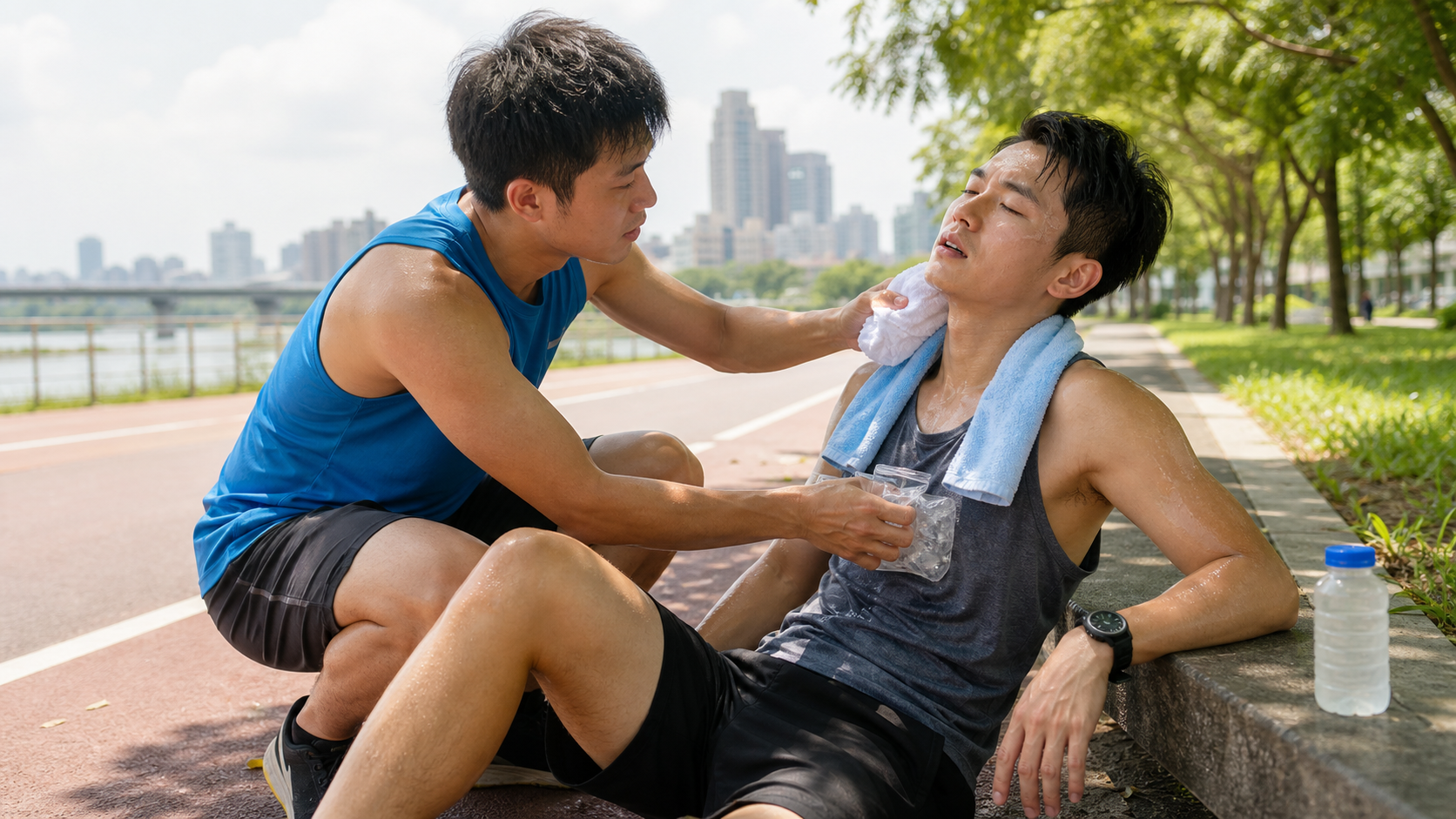
- Ice-water towel wiping + electric fan: If no tub is available, cover the entire body with towels soaked in ice water and use a fan to accelerate evaporative heat loss.
- Ice packs on the neck, armpits, and groin: Placing ice packs on these areas, where major blood vessels are concentrated, can accelerate deep-body cooling.
Absolutely do NOT:
- Give water to an unconscious patient (risk of choking).
- Let the patient “just rest a bit” and thereby delay emergency treatment.
Prevention Strategies for Summer Running in Taiwan
Timing
The safest running windows in Taiwan summer:
- 5:30–7:00 AM: Lowest temperatures, but humidity still needs attention.
- 6:30–8:00 PM: After sunset, temperatures begin to drop, but ground radiant heat remains high—assess conditions.
- Avoid 10:00 AM–4:00 PM: Strongest direct sunlight, highest heat radiation, and greatest risk of heat illness.
Hydration Strategy
- Drink 400–600 ml of water 2 hours before running.
- During running, replenish 150–250 ml of water or sports drink every 15–20 minutes (runs exceeding 1 hour should include electrolyte replacement to avoid hyponatremia).
- After running, check urine color: pale yellow = well hydrated; dark yellow or orange = needs fluids.
- Do not wait until you feel thirsty to drink—by the time thirst sets in, you are already mildly dehydrated (having lost about 1–2% of body weight in water).
Clothing Choices
- Light-colored, breathable, moisture-wicking running apparel.
- A cap or visor to shield the head and neck from direct sunlight.
- Sunscreen (SPF 30 or higher): reduces heat absorption by the skin while protecting it.
Self-Monitoring
If any of the following symptoms occur during a run, stop immediately and move to a shaded area:
- Dizziness or worsening headache.
- Nausea or vomiting.
- Sudden rapid heart rate without a change in pace.
- Reduced judgment (feeling “off”).
Heat Acclimatization
Training regularly in hot environments allows the body to gradually adapt (heat acclimatization), which takes approximately 10–14 days:
- Plasma volume increases, allowing the heart to pump more blood per beat.
- The body temperature threshold for starting to sweat lowers, initiating cooling earlier.
- Sweat volume increases while electrolyte concentration in sweat decreases (more efficient).
Heat acclimatization training recommendation: for the first 2 weeks, complete 80% of training volume in cooler conditions and the remaining 20% during full-sun hours, gradually allowing the body to adapt to the heat.
Practical Advice
- Train with a partner on hot days so someone can assist immediately if heat illness occurs.
- Research the location and density of water stations on the course before a race; for events above 25°C, adjust your target finish pace accordingly.
- Older adults, heavier individuals, and those with cardiovascular disease face higher heat illness risk and should train more conservatively in summer.
Conclusion
Taiwan’s summer is passionate, but the passion for running must not push the body beyond its heat adaptation limits. Maintaining respect and caution toward heat illness is the long-term wisdom for running year-round in Taiwan.
Related Reading
- Heat Illness in Taiwan Summer: Emergency Response for Runner Heat Stroke and Heat Exhaustion
- Heat Exhaustion and Heat Stroke in Road Racing: Safety Guidelines for Taiwan Summer Races
- Heat Stroke Warning Signs and Rescue: The Red Line Guide for Runners’ Summer Training
- Heat Illness Prevention for Cycling: Heat Stroke and Heat Exhaustion Risks of Summer Riding in Taiwan
CT暗黑廚房) 車友必備 宇宙無敵鮮蚵湯 幫助訓練恢復 天然食補 好市多 超肥鮮蚵 破PR
7 年前
台灣旅行團參加 第7回まえばし赤城山ヒルクライム大会 雙視點
8 年前
TBA 北高360 逆風爆熱再送空汙 苦行挑戰賽全記錄 4K沈浸式臨空畫質| 公路車 | CT Yeh
3 年前
單車 一日北高 ( 雙城 ) 肥宅雙人瘋狂行 紀錄片 REACTO
10 年前
水金九不厭五分 10度寒流冷到不願停!feat. 卡卡 / 公路車 / CT Yeh
6 個月前
實景訓練台) 彰化經典百K 高強度喵團 90分鐘 跟著一起練功 2019 Indoor workout Changhua Classic 100 Taiwan
7 年前
[防寒衣體驗] 鐵人魂 三鐵 防寒衣試穿會 於松運 深水游泳池 鯨魚池
8 年前
2019 夏季KOM 5小 完賽心得 準備攻略 東進武嶺 夏季登山王之路 Taiwan KOM Challenge
7 年前