Introduction
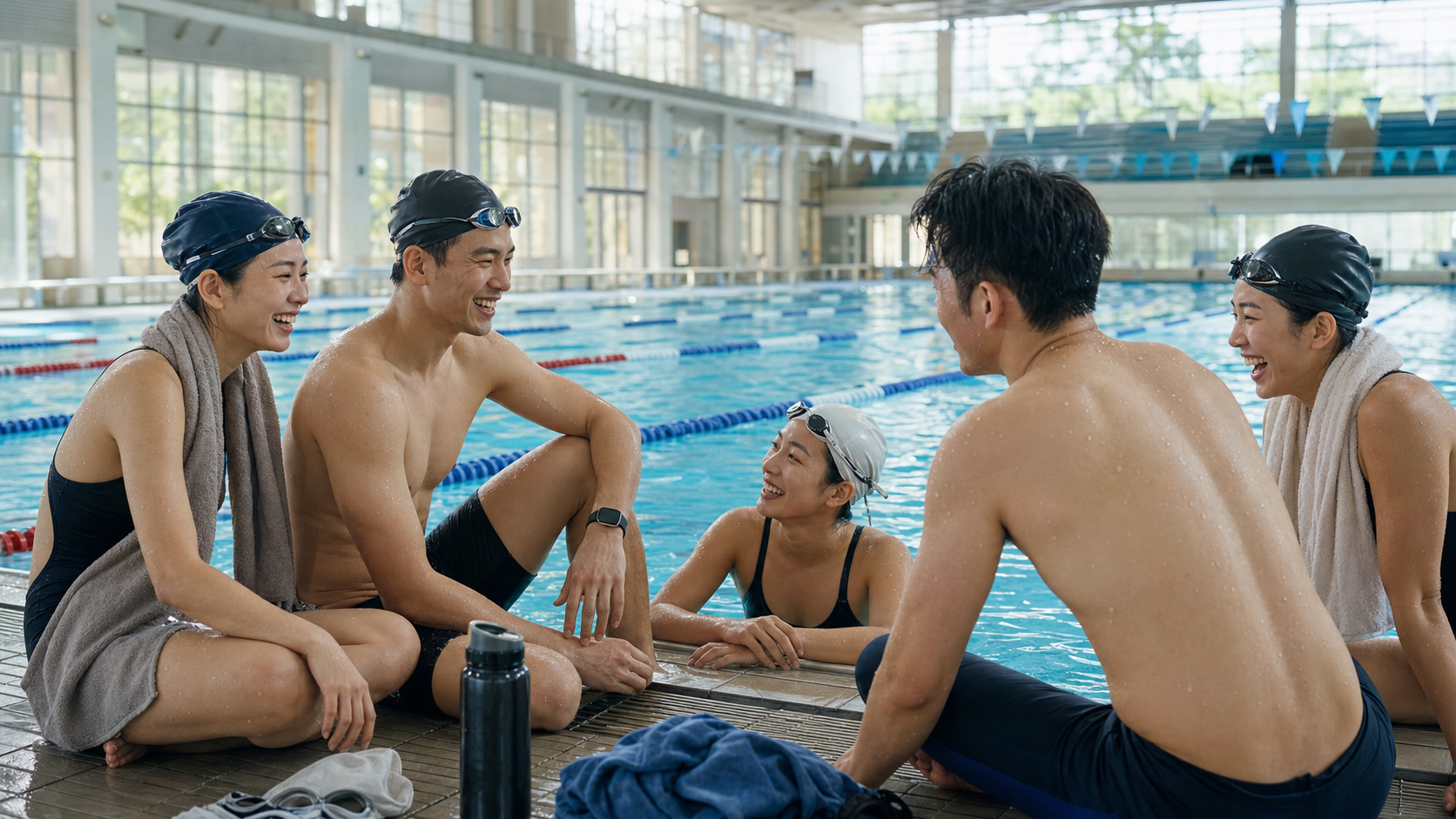
Swimming is an individual sport, but swimming culture is collective. Around pools worldwide, you’ll find groups of people pushing each other, training together, and looking out for one another. Taiwan’s swim team culture has flourished in recent years—from school teams to community swim clubs, various forms of swimming communities are forging deep interpersonal connections. This article explores how swimming becomes a medium for friendship and how to find your own circle of companions in the water.
The Diverse Landscape of Taiwan’s Swim Team Culture
| Team Type | Characteristics | Typical Members | Training Frequency |
|---|---|---|---|
| School Competitive Teams | Systematic training, coach guidance | Middle school to university students | 5–7 times per week |
| Community Swim Clubs | Family-friendly, leisure-oriented | Families, office workers | 2–3 times per week |
| Triathlon Training Groups | Cross-training, goal-oriented | Sports enthusiasts aged 30–50 | 3–4 times per week |
| Open Water Swimming Clubs | Outdoor challenges, exploration-focused | Advanced swimmers | Seasonal |
| Early Morning Swim Groups | Fixed schedule, relaxed atmosphere | All age groups | 3–5 times per week |
How Friendships Form in the Lane
Swimming friendships have a unique formation mechanism, slightly different from the social dynamics of other sports:
- The power of regular encounters: People who show up in the same lane at the same time every day build a sense of rapport and familiarity even without ever speaking. “Nodding acquaintances” are especially precious in pool culture
- Sharing difficult moments: After a grueling training set (such as 10×100m sprints), teammates naturally exchange knowing smiles and pat each other on the back—that sense of connection from overcoming a challenge together forms instantly
- A culture of technical mutual aid: Swimmers share a tradition of giving feedback—kindly pointing out when they spot a technical issue in someone’s stroke; when receiving feedback, responding with humility and gratitude. This mutual assistance builds a foundation of trust
- The importance of post-swim time: Many of the deepest swim friendships are forged after practice ends, whether during rest time by the pool, going out for breakfast together, or casual chats in the locker room
How to Join a Swimming Community
For those looking to find swimming companions, the following avenues are relatively accessible:
- Ask pool staff: Most public pools and clubs have established swimming communities using their facilities, and staff usually know which groups are recruiting
- Search on Facebook: Search keywords like “[City Name] swim club” or “[County/City] morning swim”—most Taiwanese cities have active swimming communities
- Meetup platform: Some swim groups use Meetup to schedule regular activities
- Sign up for triathlon events: Training groups for triathlon events often welcome swimmers of varying levels to join their swim sessions
- Start one yourself: If you notice familiar faces at the pool, boldly invite them to train together—most swimmers warmly welcome this kind of initiative
Practical Advice
Before joining a swim team or swimmer group, it’s recommended to understand the group’s culture and atmosphere first, and confirm whether it matches your style:
- Confirm whether the training intensity suits your current level—too intense or too easy can both lead to frustration
- Understand the group’s primary purpose—whether it’s competition-oriented or health-and-leisure focused, as the culture differs greatly between the two
- On your first participation, focus on observing and following along; there’s no need to rush to show off or offer opinions
- For more introverted people, finding an “introducer” (someone you already know within the group) can make the integration process much smoother
Conclusion
Swimming friendships have a special resilience because they are built on authentic shared experiences—sweat (washed away by the water), fatigue, progress, and setbacks are all shared. Those who strive side by side in the lane often become vital support systems in each other’s lives beyond the water. If you’ve always been swimming alone, perhaps it’s time to try finding your water companions and give swimming one more reason to look forward to.
Related Reading
- Swim Club Culture: The Characteristics of Taiwan’s Swim Groups and How to Join
- Swimming Communities and Water Friendships: An Introduction to Taiwan’s Swim Club Culture
- The Social Benefits of Swimming: A Guide to Taiwan’s Swim Club Culture and Making Friends
- The Social Function of Swimming: Real Examples of Swimming Communities and Friendships in Taiwan
[防寒衣體驗] 鐵人魂 三鐵 防寒衣試穿會 於松運 深水游泳池 鯨魚池
8 年前
福隆鐵人團練隨拍
8 年前
4K 東眼山 x 水蜜桃冰沙 百人單車約騎! 操完再吃冰 多爽快
7 年前
新屋團體繞圈賽 | 眾多菁英好手賽道奔馳 | 千瓦女子軍團 | 無敵交管狂獲好評 明年你一定不能錯過 | #公路車
5 年前
抖肩舞 台灣x日本交流版 (台灣 vs 前橋) 赤城山登山賽 coincidance
8 年前
#PUSHBIKE 原來這麼好玩! 小朋友 滑步車 初體驗 超可愛
6 年前
車隊介紹) 台北 一年開團365天 車隊 Apollo Ride 晨騎 好選擇 ( 陽明山 風櫃嘴 冷水坑 平等里 聖人 關渡 大稻埕 ) 找人騎車
7 年前
2025 海鷗團體繞圈賽 網路直播 超激烈裁判長視角 / EIPC 李廷威、Waypoint 等眾多高手競爭 / feat. 卡密兒主持 / 海鷗繞圈賽
9 個月前