The Complete Guide to Buying Running Shoes: How to Choose Among Cushioning, Stability, and Racing Types
Introduction
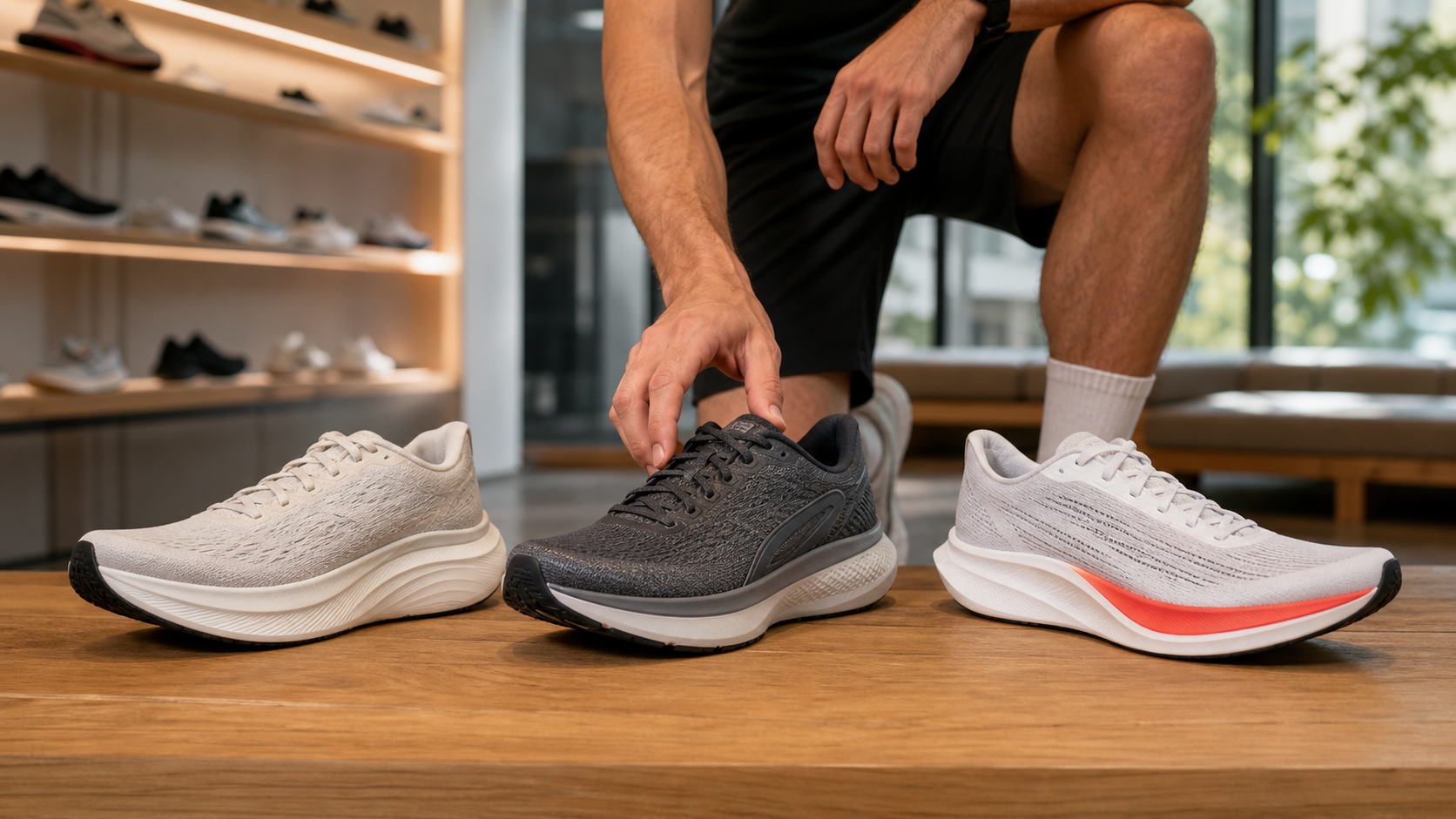
Walk into any professional running store, and you’ll find dozens of running shoes on the shelves, ranging from a few thousand dollars to over ten thousand, enough to make anyone’s head spin. In fact, running shoes can be divided into three main types based on function: cushioning, stability, and racing. Understanding the core differences among these three types is the first step to choosing the right running shoe.
Core Differences Among the Three Types of Running Shoes
Cushioning (Neutral/Cushioning)
Cushioning running shoes are suitable for runners with a neutral foot strike (natural heel-to-toe rolling) or slight supination. The midsole material is thicker, with the primary purpose of absorbing impact and protecting the knees and joints. Typical representatives include the ASICS Gel-Nimbus, Brooks Ghost, and New Balance Fresh Foam series.
Suitable for:
- Beginner runners with normal arches
- Recreational runners running less than 30 km per week
- Long-distance runners who prefer a soft feel
- Heavier runners (75 kg and above)
Stability (Stability)
Stability running shoes incorporate higher-density material on the medial side of the midsole (commonly called a “guide post” or “guide rail”) to control overpronation. Pronation refers to the inward collapse of the ankle during running; excessive pronation can easily lead to shin splints and medial knee injuries. Representative models include the ASICS GT series, Brooks Adrenaline GTS, and Saucony Guide.
Suitable for:
- Runners with flat feet or low arches
- Those with a history of medial knee pain
- Runners with visibly pronated running form
- Regular runners logging 40 km or more per week
Racing (Racing/Carbon Plate)
Racing running shoes are designed around lightweight construction and propulsion efficiency, featuring thinner soles or carbon fiber plates for enhanced energy return. They are suitable for runners with a solid running foundation who want to break their personal best (PB) in races. Representative models include the Nike Vaporfly, ASICS Metaspeed Sky+, and Adidas Adizero Adios Pro.
Note: Racing shoes offer weaker support and are not recommended as the primary shoe for daily training.
Comparison Table of the Three Types
| Type | Midsole Thickness | Support | Weight | Best Use Cases | Price Range |
|---|---|---|---|---|---|
| Cushioning | Thick (30–40mm) | Moderate | Medium (260–310g) | Daily training, LSD | NT$3,500–6,000 |
| Stability | Medium-thick (28–35mm) | Higher | Medium (270–320g) | Daily training, half marathon | NT$3,800–6,500 |
| Racing | Thick but light (30–40mm) | Lower | Light (180–230g) | Racing, speed training | NT$6,000–12,000 |
How to Determine Your Foot Type?
The most important step before choosing shoes is understanding your arch type:
- Wet foot test: Step in water, then step on paper. If the footprint shows almost no gap in the middle, you have flat feet and are suited for stability shoes; if the gap is large, you have high arches and are suited for cushioning shoes; if it’s in between, you have normal arches.
- Observe wear on old shoes: Pronounced wear on the medial side of the outsole → overpronation, choose stability shoes; wear on the lateral side → supination, choose cushioning shoes; even wear → neutral, either type works.
- Test run at a professional running store: In major cities across Taiwan, professional running stores like Fleet Feet and RUN INN offer gait analysis services. It’s recommended to test run before making your decision.
Practical Advice
- Don’t just look at the looks: Good color doesn’t mean it fits your foot type; function comes first.
- Keep two pairs on hand: Use cushioning or stability shoes for daily training, and switch to racing shoes on race day.
- Timing for trying on: Try shoes in the afternoon or evening when your feet are slightly swollen, which is closer to actual running conditions.
- Leave room in sizing: Running shoes should be half to a full size larger than your everyday shoes to prevent your toes from hitting the toe box after long runs.
- Budget planning: Replace training shoes every 600–800 km or every six months; factor this into your annual gear budget.
Conclusion
Choosing the right running shoe isn’t just about comfort—it’s directly related to injury prevention. Before your first shoe purchase, it’s recommended to understand your arch type, visit a professional running store to try shoes on, and select the appropriate shoe type based on your primary training scenarios (daily jogging, race-day speed). Taiwan’s hot and humid climate also means you should pay special attention to a shoe’s breathability and moisture-wicking performance. With the right gear, you can run farther and run healthy.
Related Reading
- Running Shoe Cushioning vs Stability vs Motion Control: How to Choose Your First Pair of Road Running Shoes
- Choosing Running Shoes: Differences Between Cushioning, Stability, and Racing Shoes
- Running Shoe Buying Guide: Cushioning, Stability, Racing—How to Choose
- Your First Pair of Road Running Shoes: Key Considerations and Fitting Tips for Beginners
#公路車 #Fitting 靠人工智慧APP 幫你調整單車
6 年前
單車 一日北高 ( 雙城 ) 肥宅雙人瘋狂行 紀錄片 REACTO
10 年前
白沙屯媽祖進香在家走!UREVO 坡度自調走步機 / 可連接訓練遊戲APP MyWhoosh / 邊看直播邊走起來 / CT Yeh
11 個月前
再快都跟的上!? 單車跟隨攝影機之王 HOVERAir X1 PROMAX 全面實測 / 唯一!8K畫質&自行車專用模式和跟蹤信標&前後避障 / DJI Neo 可參考/ 公路車 / CT Yeh
1 年前
多到選擇障礙... 換個單車把帶想一個小時 / BTP / 編織&軟木特有材質超吸睛! / 公路車 / CT Yeh
1 年前
車錶新黑馬? / 超狂續航 / 超好用錶冠 / 無敵準定位 / Dash圖表合成!?/ COROS DURA 評測!/ 公路車 / CT Yeh
2 年前
Garmin Edge 1050 旗艦車錶 全台首測!/ 環法冠軍指定 / 對比Edge 1040改進哪些? / 公路車 / CT Yeh
2 年前
全台首發神車錶! iGPSPORT iGS630 兩趟一日北高的續航! 超強導航、功率訓練、超人性APP! Garmin & Bryton 有對手了嗎? | 公路車 |CT Yeh
3 年前