Running Heart Rate Monitoring: An In-Depth Accuracy Comparison Between Heart Rate Straps and Optical Heart Rate Sensors
Introduction
Heart rate training is a core concept in modern running science. Whether it’s the MAF 180 heart rate training method, Daniels’ aerobic zones, or Garmin’s 5-zone heart rate system, all require accurate heart rate data as a foundation. However, the accuracy difference between heart rate straps (chest straps) and built-in optical heart rate (wrist-based) remains a hot topic of debate among runners.
The Two Heart Rate Monitoring Principles
Heart Rate Strap (Chest Strap)
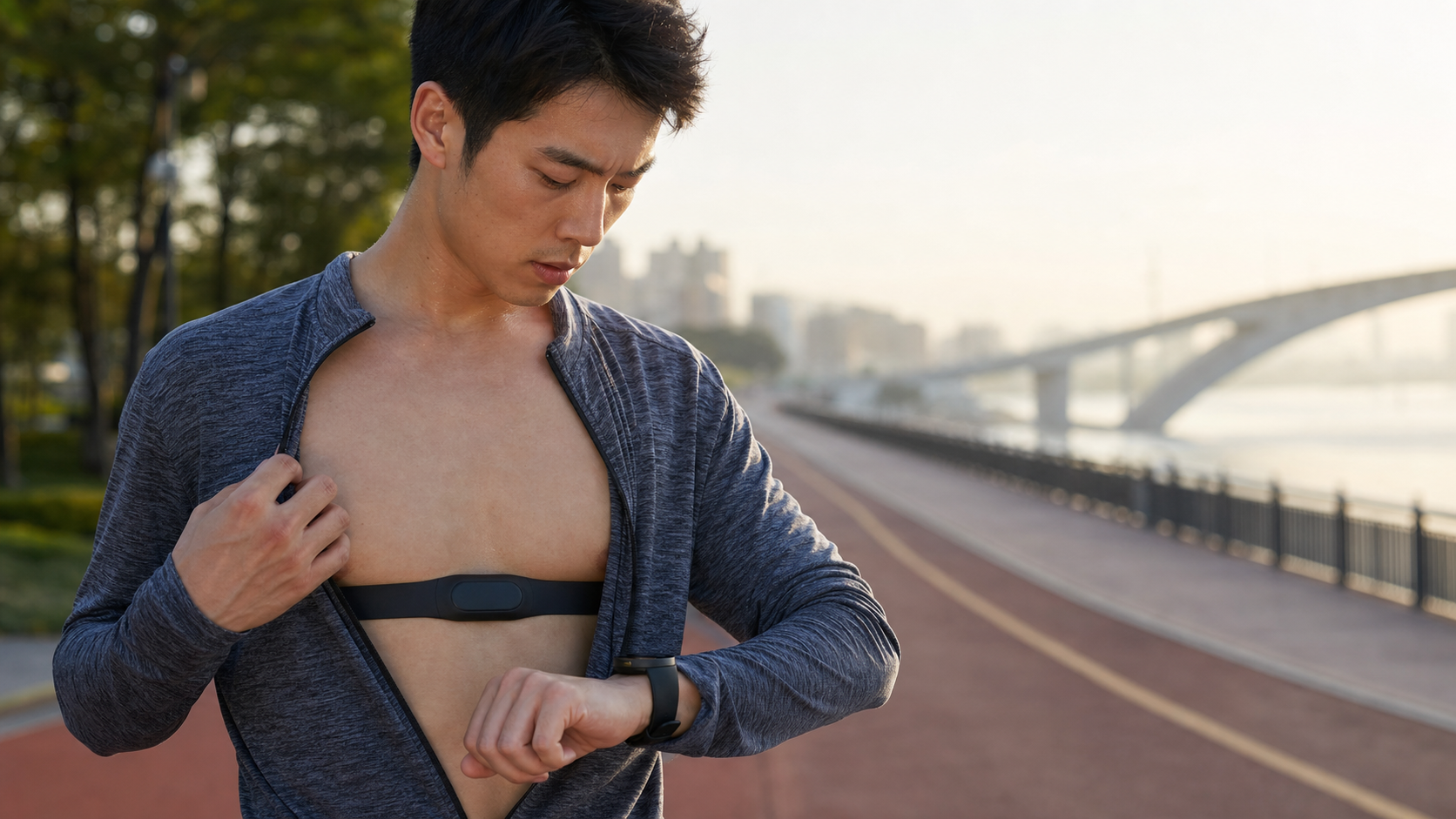
The heart rate strap uses the electrocardiogram (ECG) principle to directly detect the heart’s electrical signals:
- The chest strap electrodes attach below the left chest ribs, sensing the weak electrical currents generated by each heartbeat
- The electrical signals are converted into heartbeats per minute and transmitted to the watch via ANT+ or Bluetooth
- This is the same principle used by hospital ECGs, which is why it is considered the “gold standard”
Representative products: Polar H10, Garmin HRM-Pro+, Wahoo TICKR X
Optical Heart Rate (Optical/PPG)
Wrist-based heart rate on watches uses the photoplethysmography (PPG) principle:
- LED lights on the watch back (usually green light) shine onto the skin
- Sensors detect changes in light absorption by hemoglobin in the subcutaneous blood vessels
- Blood absorbs more light as it flows through, and algorithms calculate heart rate from the light variations
Advantages: No need to wear a chest strap, comfortable for daily wear, and doesn’t interfere with pre-run preparation
Scientific Comparison of Accuracy
According to multiple independent studies (including a 2019 systematic review in the Journal of Sports Sciences):
| Usage Scenario | Heart Rate Strap Accuracy | Optical Heart Rate Accuracy |
|---|---|---|
| Steady-state jogging (pace 6:00/km) | ±1 bpm | ±3–5 bpm |
| Moderate-intensity intervals (pace 4:30/km) | ±1–2 bpm | ±5–10 bpm |
| High-intensity sprints (pace 3:30/km) | ±1–2 bpm | ±10–20 bpm |
| Rapid heart rate changes (interval start) | ±2–3 bpm | ±15–30 bpm (delayed) |
| Cold weather (< 10°C) | ±1–2 bpm | ±10–20 bpm |
| Darker skin tones | ±1–2 bpm | ±5–15 bpm |
Key findings: Optical heart rate accuracy is acceptable during steady-state jogging, but accuracy drops significantly during high-intensity variable-speed training, in cold environments, or for individuals with darker skin tones.
Main Reasons for Optical Heart Rate Inaccuracy
- Motion Artifact: Wrist movement during running causes unstable contact between the LED and skin, creating optical noise
- Skin Pigmentation: Melanin absorbs green light, resulting in weaker signal strength for individuals with darker skin
- Cold-Induced Vasoconstriction: In low temperatures, skin blood vessels constrict, reducing blood flow and weakening the optical signal
- Strap Tightness: The watch being worn too loosely or shifted out of position is the most common source of error
Ways to improve optical heart rate accuracy:
- Wear the watch about 1–2 finger widths above the wrist bone protrusion
- Tighten the strap one notch more than usual during exercise
- Ensure the watch back makes full contact with the skin with no gaps
Practical Challenges of Using a Heart Rate Strap
Although the heart rate strap is more accurate, there are several practical issues to consider:
Discomfort: Some runners find that the chest strap chafes the skin during the later stages of long runs
Contact issues in dry conditions: The chest strap electrodes need good contact; in Taiwan’s dry, cold winter, the signal may be unstable at the start of a run (moisten the electrodes with water or saliva)
Inconvenient to wear: It requires extra setup before a race, which is more hassle than optical heart rate
Cleaning requirements: Sweat and salt accumulate on the electrodes and require regular cleaning
Recommendations for Different Types of Runners
Everyday fitness jogging (pace 6:00/km or slower): Optical heart rate is accurate enough; there’s no need to buy a heart rate strap. Investing your energy in the training itself is more meaningful than chasing precise data.
Heart rate zone training (MAF/interval training): A heart rate strap is strongly recommended, especially during high-intensity intervals, where optical heart rate delays and errors could leave you training in the wrong zone for extended periods.
Race day: A heart rate strap is recommended for marathon races to ensure reliable heart rate data for pace control in the second half.
History of heart disease or abnormal heart rate tracking: A heart rate strap is a must; optical heart rate is not reliable for medical-grade accuracy.
Recommended Purchases in Taiwan
Heart rate straps:
- Polar H10 (NT$2,990): Currently recognized as the most accurate consumer-grade heart rate strap, with onboard memory for offline heart rate data storage
- Garmin HRM-Pro+ (NT$3,590): Also records running dynamics (cadence, ground contact time); the best companion for Garmin watches
Optical heart rate watches: The latest Garmin Forerunner 265/965 and Apple Watch Ultra 2 have higher optical heart rate accuracy within their class, sufficient for most training needs.
Practical Advice
- Heart rate training beginners: Start with the watch’s optical heart rate to learn your basic heart rate zones
- Serious LT (lactate threshold) or VO2max interval training: Be sure to switch to a heart rate strap
- Remember to clean the chest strap after long runs: Rinse the heart rate strap electrodes with clean water and air-dry naturally to extend its lifespan
Conclusion
The heart rate strap is undeniably superior to optical heart rate in scientific accuracy, but the convenience of optical heart rate makes it a practical choice for everyday running. The ideal setup is: use the watch’s optical heart rate for daily training, and switch to a heart rate strap for key sessions that require precise training data (intervals, tempo runs) and races. This way, you don’t sacrifice training quality while avoiding the hassle of wearing a chest strap on every run.
Related Reading
- Running Heart Rate Strap vs. Optical Heart Rate: Choosing Between Accuracy and Usage Scenarios
- Running Heart Rate Strap vs. Optical Heart Rate: Measurement Accuracy and Wearing Comfort Comparison
- Heart Rate Strap vs. Optical Heart Rate Watch: Which Is More Accurate in Running Training?
- Road Running Heart Rate Strap vs. Optical Heart Rate Watch: Accuracy Differences and Best-Use Scenario Analysis
西進武嶺 免費訓練分析服務 Intervals | 練不夠還是練過頭?你哪一種類型選手?AI模型告訴你! | 備戰神器 | 公路車 訓練 | CT Yeh
4 年前
Garmin Edge 1050 旗艦車錶 全台首測!/ 環法冠軍指定 / 對比Edge 1040改進哪些? / 公路車 / CT Yeh
2 年前
#公路車 #Vo2Max #最大攝氧量 測驗 體驗 | 心肺測試
6 年前
2026 車錶排行榜!誰是最多車友正在使用?練家子最愛哪款?🏆 (2萬名車友數據) / 公路車 / CT Yeh
5 個月前
首發 Garmin Edge 850 車錶 深入開箱!? / 公路車 / CT Yeh
10 個月前
車錶新黑馬? / 超狂續航 / 超好用錶冠 / 無敵準定位 / Dash圖表合成!?/ COROS DURA 評測!/ 公路車 / CT Yeh
2 年前
全台首發神車錶! iGPSPORT iGS630 兩趟一日北高的續航! 超強導航、功率訓練、超人性APP! Garmin & Bryton 有對手了嗎? | 公路車 |CT Yeh
3 年前
Garmin Edge 540/840 Solar 台灣首發開箱!完整車錶功能 道路實測 / ClimbPro 爬坡提示超級牛 / 強大續航實測 / 公路車 / CT Yeh
3 年前