Introduction
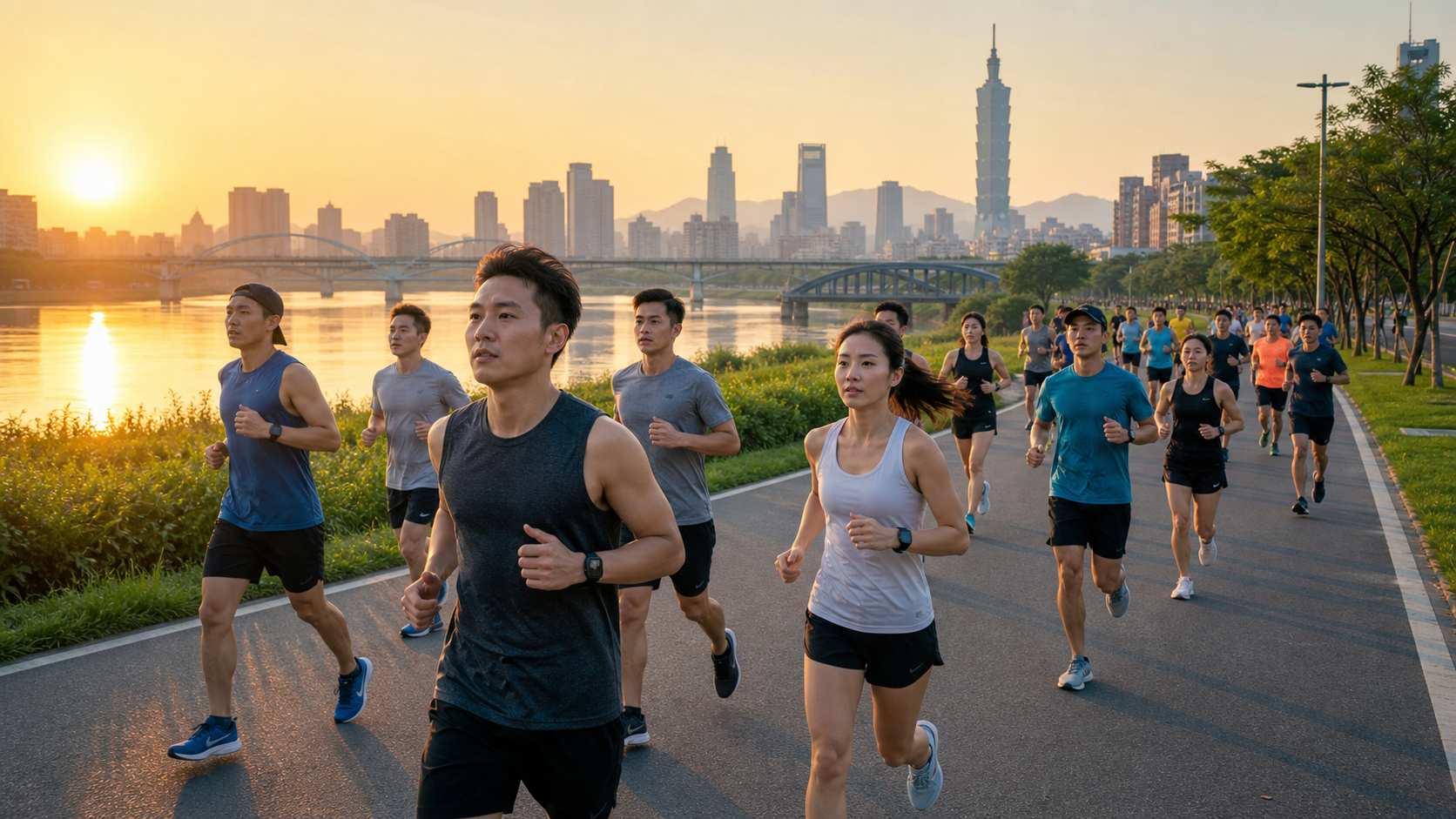
Thirty years ago, running on the streets of Taiwan was considered “strange.” Neighbors would poke their heads out and ask, “Running from something?” Elderly folks in the park would watch you sprint past with confused looks. Yet today, on every weekend morning, the Dadaocheng Wharf, riverside parks, and Daan Forest Park in Taipei are packed with runners in fluorescent shoes—the city has become one giant running track. How did Taiwan’s running culture go from the margins to the mainstream?
From the Track to the Streets: The Budding Era of Running (1990s)
The origins of running in Taiwan can be traced back to the track-and-field boom of the 1970s and 80s. Back then, running was almost exclusively “an athlete’s pursuit,” and the general public only encountered it through 800-meter or 1,500-meter runs in school physical education classes. It wasn’t until the inaugural Taipei International Marathon in 1986 that running was formally introduced to the public consciousness, but early participation was dominated by sports professionals and was nowhere near today’s scale.
In the 1990s, as the economy took off and health awareness among the public grew, jogging gradually became a fitness option for the urban middle class. Morning joggers in parks quietly emerged, and although systematic training concepts were lacking, this period established the social impression that “running equals health.” At this stage, running was an individual activity, lacking community connections, let alone a race culture.
Social Media Ignites the Spark: The Explosive Period (2008–2015)
What truly transformed Taiwan’s running landscape was the proliferation of Facebook and smartphones. Around 2010, running communities rapidly gathered on social media, with runners beginning to share pace, routes, and finish-line photos. Running shifted from a solitary activity to a social ritual.
During the same period, sports technology products such as Garmin and Nike+ flooded the market, making data-driven training no longer the exclusive privilege of professional athletes. “How many kilometers did you run today?” became part of check-in culture, inspiring more people to take up the sport. Another key driver was the city-marketing strategy of the 2011 Taipei Fubon Marathon—which tied the marathon to Taipei’s city brand, attracting corporate sponsorship and media exposure, and turning running races into city festivals.
| Era | Key Event | Impact |
|---|---|---|
| 1986 | First Taipei International Marathon | Running enters the public eye |
| 2010 | Rise of Facebook running communities | Running becomes social |
| 2011 | Taipei Fubon Marathon urban branding | Races become branded events |
| 2013 | Nike We Run Taipei 10K night race | Themed running culture |
| 2015 | Domestic running races exceed 200 | The year running went mainstream |
Diversification and Deepening: The Mature Period (2016–Present)
After 2016, Taiwan’s running culture entered a phase of diversification and deepening. Races were no longer limited to traditional road racing—trail running, ultramarathons, night runs, and themed fun runs flourished. The profile of runners also became more diverse: mom running groups, senior runners, corporate running teams, and charity runs all emerged. Running was no longer “the exclusive domain of fit men.”
Notably, the number of annual running races in Taiwan peaked at over 500 in 2019, making it one of the highest-density regions in Southeast Asia. This high-density race ecosystem has turned running into a cultural habit truly integrated into daily life, rather than an activity reserved for special race seasons.
Practical Advice
If you want to join the wave of Taiwan’s running culture, here are a few tips to help beginners get started quickly:
- Start with 5K: Don’t rush to sign up for a marathon; build a running habit through community running events first
- Join a community: Facebook running groups and Strava Clubs are the best ways to find running partners
- Make use of race information platforms: Platforms like iRunner and RaceNet can keep you updated on races across the island
- Attend a major race as a spectator: First experience the atmosphere of the Taipei Marathon or the Wanchin Shihmen Marathon as a bystander before deciding whether to participate
- Follow local runner stories: Taiwan’s ultramarathon athletes and everyday runners who set new PBs are often the best source of inspiration
Conclusion
The rise of Taiwan’s running culture is a microcosm of social change: from economic development driving health awareness, to social media shaping running communities, to the race industry fueling city marketing—every link illustrates how Taiwanese society has evolved a simple physical activity into a rich lifestyle culture. Today, when you see a sea of runners along the riverbank at 5 a.m., what you’re witnessing isn’t just exercise—it’s a snapshot of thirty years of Taiwan’s social transformation. Keep running, and that’s the best testament.
Related Reading
- The Rise of Women’s Marathon Culture in Taiwan: A Transformation from the Margins to the Mainstream
- Running and Workplace Culture: The Rise of Corporate Running Teams in Taiwan
- Women’s Running Culture: The Rise and Characteristics of Female Runners in Taiwan
- Women’s Running Communities in Taiwan: The Local Culture of Sister Running Groups and Mom Runners
2025 海鷗團體繞圈賽 網路直播 超激烈裁判長視角 / EIPC 李廷威、Waypoint 等眾多高手競爭 / feat. 卡密兒主持 / 海鷗繞圈賽
9 個月前
日本公路最高登山賽,台灣首位YT挑戰實錄,乘鞍登山賽40週年,賽前篇完整版,請到我的YT收看 #公路車 #cycling
10 個月前
「悲情男車友」創作單曲 爆笑MV / 公路車 / CT Yeh / 4K劇情版
7 個月前
小野田真的存在!日本赤城山爬坡公路賽 台灣首發團完全實錄 | 頭文字D真實賽道! | 看完東奧自行車賽後好想再去騎一次啊! | 公路車 | CT Yeh
4 年前
2018 田中馬拉松 全程健跑 VR 360 環景錄影 體驗現場狂野加油氣氛! Insta 360
7 年前
新屋團體繞圈賽 | 眾多菁英好手賽道奔馳 | 千瓦女子軍團 | 無敵交管狂獲好評 明年你一定不能錯過 | #公路車
5 年前
Live) 備戰2019彰化經典百K 賽前攻略 (已完賽請看新影片
7 年前
#PUSHBIKE 原來這麼好玩! 小朋友 滑步車 初體驗 超可愛
6 年前