Introduction
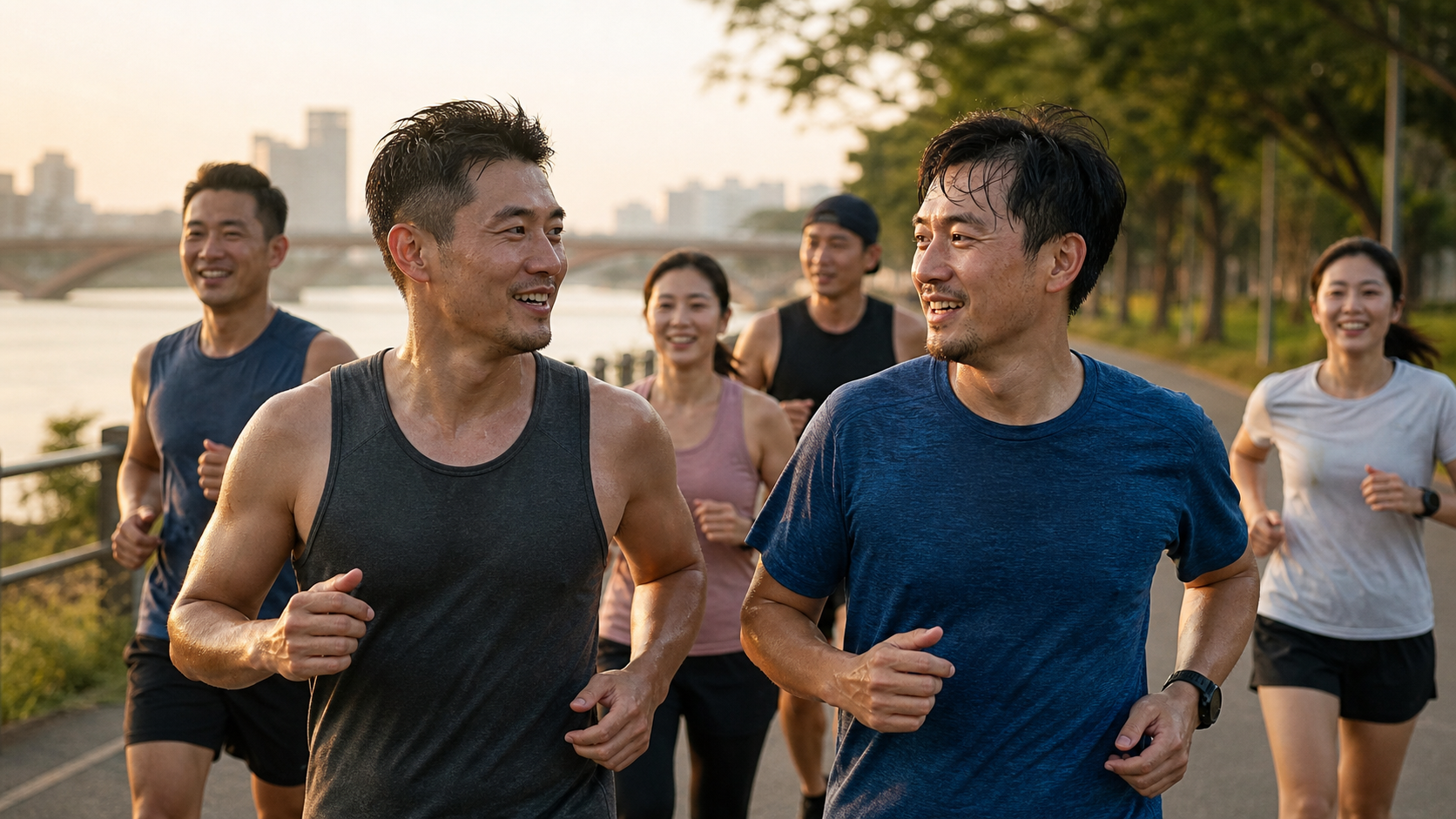
“The best friends you’ll ever have are likely your running buddies.” This saying is widely shared in Taiwan’s running community. It sounds like an exaggeration, but ask any runner who has been running for more than three years, and almost all of them will nod in agreement. Running is a peculiar social medium: it strips away the defenses and performative behavior people typically display in social settings, allowing them to show their most authentic selves amid fatigue and sweat—and that authenticity is the best soil for deep friendships.
The Unique Mechanics of Running-Based Socializing
Psychological research indicates that shared experiences of stress can rapidly bring people closer, a phenomenon well-documented in the military, search-and-rescue teams, and sports teams. Running, especially long-distance running, possesses several unique mechanisms that foster social connection:
Side-by-side rather than face-to-face conversation: Psychologists point out that people engaging in parallel activities (such as walking, running, or driving) are often more open to speaking honestly than when facing each other directly. Conversations during long runs carry no pressure from eye contact, making genuine self-disclosure easier. This is why after an hour of running, two people may reach a conversational depth that would take three hours over coffee.
The bond of overcoming difficulties together: Whether it’s completing a 30-kilometer long run or enduring ten kilometers together on a 38°C summer day, sharing hardship and overcoming challenges creates a psychological sense of “having been through battle together.” Every group training session is a small-scale shared ordeal, and the emotional capital accumulated is remarkably deep.
The naturalness of regular meetings: Running clubs typically hold scheduled group training sessions two to three times a week. This high-frequency, routine contact allows friendships to shed the sense of “scarcity” and become a natural part of everyday life. Research shows that friendship depth is highly correlated with contact frequency, and running provides the most natural opportunity for high-frequency interaction.
The intimacy of physical synchronization: The physiological synchronization that occurs when runners’ strides and breathing rhythms align has been shown in neuroscience to enhance trust and empathy. The saying “running into the same rhythm together” is not just a literary expression—it is a physiological reality.
| Social Setting | Conversational Depth | Frequency | Shared Challenges | Physical Synchronization |
|---|---|---|---|---|
| Dining and drinking | Medium | Low | None | None |
| Office | Low | High | Low | None |
| Ball sports | Low | Medium | Yes | Partial |
| Long-distance running | High | High | Strong | High |
The Friendship Culture of Taiwan’s Running Community
Several aspects of the friendship culture in Taiwan’s running community are particularly worth observing:
The post-run meal culture: Many Taiwanese running groups have a fixed tradition of “eating after the run.” Setting out before dawn and then having breakfast together afterward—that sense of satisfaction while still catching your breath and saying “one more bowl!”—is something no other social setting can replicate.
Cross-community runner networks: Taiwan’s road-running scene is not exactly small, but with the dense calendar of races, members of different running clubs often get to know each other across multiple events, forming an informal cross-community network. This network has provided unexpected support in careers, life struggles, and even marriages.
Companionship through injury and setbacks: When a runner is injured and unable to run, the moment arrives that best reveals the authenticity of runner friendships. In Taiwan’s running community, runners accompanying each other through rehabilitation, keeping training logs on each other’s behalf, and sending messages of encouragement during emotional low points are among the most touching everyday scenes in this community.
Practical Advice
If you want to build deep interpersonal connections through running, the following points are worth keeping in mind:
- Speak up—don’t just run with your head down: Take the initiative to strike up a conversation with those around you during group training. The most natural icebreaker in running is, “Where do you usually run?”
- Join the post-run meal: Even when tired, occasionally stay for a meal together. Friendships often deepen at the dinner table.
- Accompany each other on long runs: Suggesting, “Want to do a long run together?” is the best catalyst for warming up any running friendship.
- Interact sincerely on social platforms: Give genuine feedback on your running buddies’ training logs, rather than a perfunctory round of applause.
- Cheer each other on during races: Follow your running buddies’ race progress. Even sending a simple message like “You’re almost there! Keep going!” is a deposit into the emotional bank account.
Conclusion
In an era where interpersonal relationships are increasingly fragmented, the running community offers a rare form of connection: authentic, sustained, and built on a shared language. The distances covered side by side in the darkness of 5 a.m., the moments of mutual encouragement on the toughest stretches of a racecourse, the satisfaction of eating heartily together after a run—the friendships built from these accumulated experiences are a form of life wealth that is hard to buy through any other means. Running makes you healthier, running buddies make you happier, and happiness may well be the biggest secret to longevity.
Related Reading
- The Social Benefits of Running: How Running Communities Strengthen Interpersonal Connections
- The Positive Psychology of Road-Running Communities: How Running Companions Improve Race Completion Rates
- The Psychological Support of Running Communities: Why Running Alone and Running with a Group Are Completely Different
- The Psychology of Road-Running Communities: The Impact of Support and Competition Among Runners on Training Motivation
#PUSHBIKE 原來這麼好玩! 小朋友 滑步車 初體驗 超可愛
6 年前
Live) 備戰2019彰化經典百K 賽前攻略 (已完賽請看新影片
7 年前
新屋團體繞圈賽 | 眾多菁英好手賽道奔馳 | 千瓦女子軍團 | 無敵交管狂獲好評 明年你一定不能錯過 | #公路車
5 年前
2021 96聯賽 桃園市長盃 4K多視角實況 當天選手瓦數/推力比/均速/時間 即時數據分析 | 公路車 | CT Yeh
5 年前
2025 海鷗團體繞圈賽 網路直播 超激烈裁判長視角 / EIPC 李廷威、Waypoint 等眾多高手競爭 / feat. 卡密兒主持 / 海鷗繞圈賽
9 個月前
一日北高/長距離團騎 常見問題補充篇 / 組團或跟團的眉角 / 壯車友容易被瘦車友慢性拉爆 / 原來屁股痛可能是這個原因...? / 風場配速法 / 公路車 / CT Yeh
2 年前
2019 柯P 超越北高 第一集團實錄 (11小時實錄請參考另一部影片) 一日雙城 一日北高 NeverStop Taiwan Long Distance Cycling Challenge
7 年前
2018 田中馬拉松 全程健跑 VR 360 環景錄影 體驗現場狂野加油氣氛! Insta 360
7 年前