Introduction
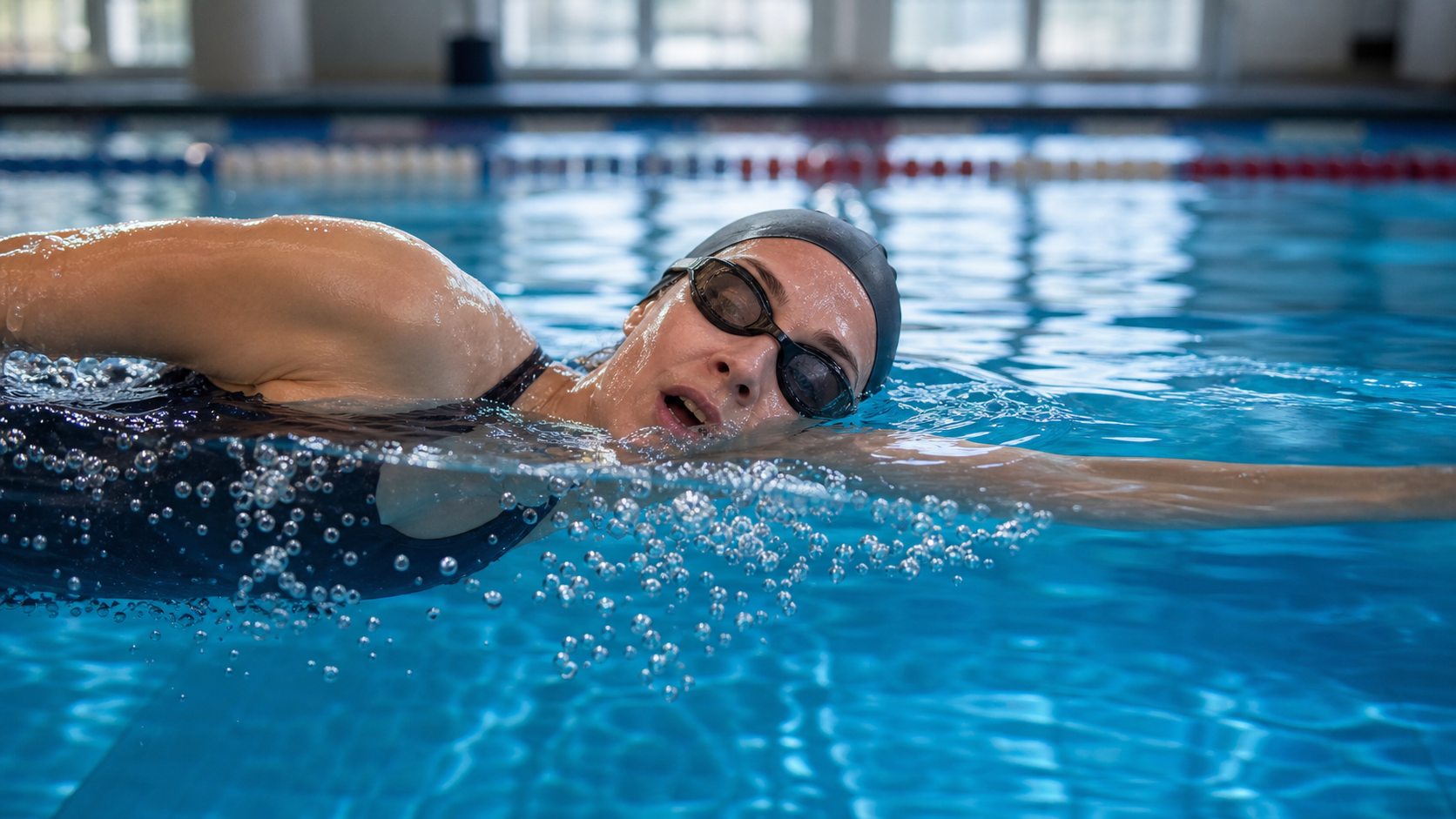
Breathing is the most fundamental function of life, yet most people have never actively trained their respiratory system. Swimming is one of the few sports that forces the training of breathing patterns: every breath taken after a stroke is a resistance exercise for the respiratory muscles; holding one’s breath underwater is an active challenge to lung volume. For the growing number of respiratory disease patients in Taiwan due to air quality issues, swimming offers a natural method of lung care.
How Swimming Trains the Respiratory System
Resistance Training for the Respiratory Muscles
When inhaling in water, the chest cavity faces resistance from hydrostatic pressure and must expand with greater force to complete an effective inhalation. Although this resistance is only 1–3 cmH₂O (equivalent to the resistance of a light breathing trainer), the breathing rate of approximately 20–30 breaths per minute during swimming makes the cumulative effect quite significant. After long-term training, the strength and endurance of both the inspiratory muscles (diaphragm, external intercostals) and expiratory muscles (abdominals, internal intercostals) will improve.
The Training Effect of Forced Exhalation
Swimming requires continuous exhalation underwater (breathing out into the water), rather than the natural exhalation seen in land-based exercise. This “active exhalation” pattern strengthens the expiratory muscles, improves the residual volume of the lungs, and allows each breath to more effectively refresh the gas in the alveoli.
The Humidity Advantage of Pool Air
The air humidity in indoor pools is typically maintained at 60–80%, which is more suitable for those with sensitive airways than dry winter outdoor air (sometimes below 30%). Moist air reduces dry irritation to the airway mucosa and lowers the risk of bronchospasm—this is precisely why asthma patients are especially prone to triggering symptoms when exercising in winter.
Improvements in Lung Function Indicators from Swimming
| Lung Function Indicator | Definition | Improvement After Swimming Training |
|---|---|---|
| Vital Capacity (VC) | Maximum volume exhaled after maximum inhalation | +8–15% |
| Forced Expiratory Volume in 1 Second (FEV₁) | Volume exhaled in the first second of a forced breath | +7–12% |
| FEV₁/FVC Ratio | Indicator of airway obstruction severity | +5–10% (asthma patients) |
| Maximal Voluntary Ventilation (MVV) | Maximum volume breathed per minute | +15–20% |
| Maximal Inspiratory Pressure (MIP) | Maximum inspiratory pressure | +20–30% |
The above data comes from meta-analyses of multiple studies on regular swimmers (at least 3 times per week for more than 12 weeks).
Special Benefits of Swimming for Asthma Patients
Asthma is the most common chronic disease among schoolchildren in Taiwan, with approximately 10–15% of school-age children diagnosed with asthma. The effectiveness of swimming in asthma management mainly stems from the following mechanisms:
- Reduced risk of exercise-induced bronchoconstriction: The horizontal swimming posture and humid pool air reduce the stimulation of cold, dry air on the airways
- Strengthened respiratory muscles: Enhances the ability to maintain airway pressure when resisting bronchospasm
- Improved cardiorespiratory fitness: Raises the aerobic threshold, lowering the relative exercise intensity of daily activities and reducing the frequency of asthma attacks
- Weight management benefits: Obesity is an aggravating factor for asthma, and swimming aids in weight control
An Australian study on asthmatic children showed that after participating in weekly swimming lessons for 6 months, the frequency of asthma attacks in children decreased by 46%, emergency room visits dropped by 38%, and parents’ satisfaction with their children’s health improved significantly.
Precautions for Asthma Patients When Swimming
- Chloramine Issues: Pool disinfection byproducts (such as nitrogen trichloride) may irritate sensitive airways; it is recommended to choose pools using ozone or UV disinfection, or outdoor pools with good ventilation
- Carry a Reliever Inhaler: Short-acting beta-agonists (SABA) should be carried at all times and placed within reach in the pool locker room
- Warm up 15 minutes before swimming: Adequate warm-up can activate the airway’s “refractory period,” reducing the risk of bronchospasm during exercise
- Inform the coach or lifeguard: Let pool staff know about your asthma condition so they can respond quickly in an emergency
Practical Recommendations
- Start with backstroke: Backstroke breathing does not require turning the head, making the breathing rhythm easiest to control—suitable for asthma patients as beginners
- Start with short distances: Swim 25-meter laps with adequate rest in between, allowing the respiratory system to adapt gradually
- Practice diaphragmatic breathing: Practice diaphragmatic breathing on land before swimming to improve breathing efficiency in the water
- Avoid entering an air-conditioned room immediately after swimming: The drop in body temperature combined with temporarily sensitive airways means cold air may trigger bronchospasm
- Regular lung function monitoring: Asthma patients should undergo lung function tests every six months to objectively evaluate the effects of swimming training
Conclusion
Swimming is one of the exercises with the most substantial scientific evidence for training the respiratory system, offering significant benefits to healthy adults, seniors, and asthma patients alike. Taiwan’s school physical education and community health promotion programs should more actively promote swimming, particularly in asthma management for schoolchildren, where the benefits of swimming far exceed medication alone. Let every breath taken in the pool become both a workout and a healing for the lungs.
Related Reading
- Swimming Lung Capacity Training: The Physiology of Breath-Holding and Breathing Rhythm
- Transfer of Swimming Breathing Training: The Effect of Swimming Breathing on Running Respiratory Rhythm
- The Scientific Impact of Swimming on Lung Function and Asthma
- Swimming Breath Control Training: The Benefits of Underwater Breath-Holding on Aerobic Capacity and Mental Resilience
#公路車 #Vo2Max #最大攝氧量 測驗 體驗 | 心肺測試
6 年前
CT暗黑廚房) 車友必備 宇宙無敵鮮蚵湯 幫助訓練恢復 天然食補 好市多 超肥鮮蚵 破PR
7 年前
實景訓練台) 彰化經典百K 高強度喵團 90分鐘 跟著一起練功 2019 Indoor workout Changhua Classic 100 Taiwan
7 年前
洗單車神器 吹水機! 實際洗車用用看 暴力洗鍊條大法 | 公路車 | CT Yeh
4 年前
一起升級!海鷗盃LSD團練...JJSC Zone2招待 騎到手抖 / 公路車 / CT Yeh
1 天前
一個測試有沒有認真練車的方法😂 #公路車
10 個月前
[防寒衣體驗] 鐵人魂 三鐵 防寒衣試穿會 於松運 深水游泳池 鯨魚池
8 年前
西進武嶺 免費訓練分析服務 Intervals | 練不夠還是練過頭?你哪一種類型選手?AI模型告訴你! | 備戰神器 | 公路車 訓練 | CT Yeh
4 年前