Introduction
Neck and shoulder pain is the most common musculoskeletal complaint among people in Taiwan today. According to a survey by the Ministry of Labor, more than 70% of office workers experience neck and shoulder discomfort at least once a week. Prolonged低头使用手機、螢幕位置不當、壓力引起的肌肉緊張,都是成因。游泳對肩頸問題的影響是雙面的:正確的游泳方式能有效預防和改善肩頸痠痛;但錯誤的泳式姿勢,特別是頭部抬高換氣,可能反而加重頸椎負擔。
Understanding the Causes of Neck and Shoulder Pain and the Role of Swimming
The Anatomical Basis of Neck and Shoulder Pain
Modern neck and shoulder pain typically stems from two interrelated problems:
- Forward Head Posture: For every 2.5 cm the head shifts forward, the weight borne by the cervical spine increases by approximately 4–5 kg. Prolonged低头使頸後伸肌群過度緊繃,頸前深屈肌則逐漸弱化。
- Scapular Instability: People who sit for long periods at work often have tight pectoral muscles and weakened rhomboids and serratus anterior, causing the shoulder blades to rotate forward, which in turn leads to shoulder impingement syndrome and overcompensation by the upper trapezius.
The pulling motions of swimming can specifically target the weak links in these two problems.
Analysis of Stroke Effects on the Neck and Shoulders
| Stroke | Shoulder Impact | Neck Impact | Suitability for Neck and Shoulder Pain |
|---|---|---|---|
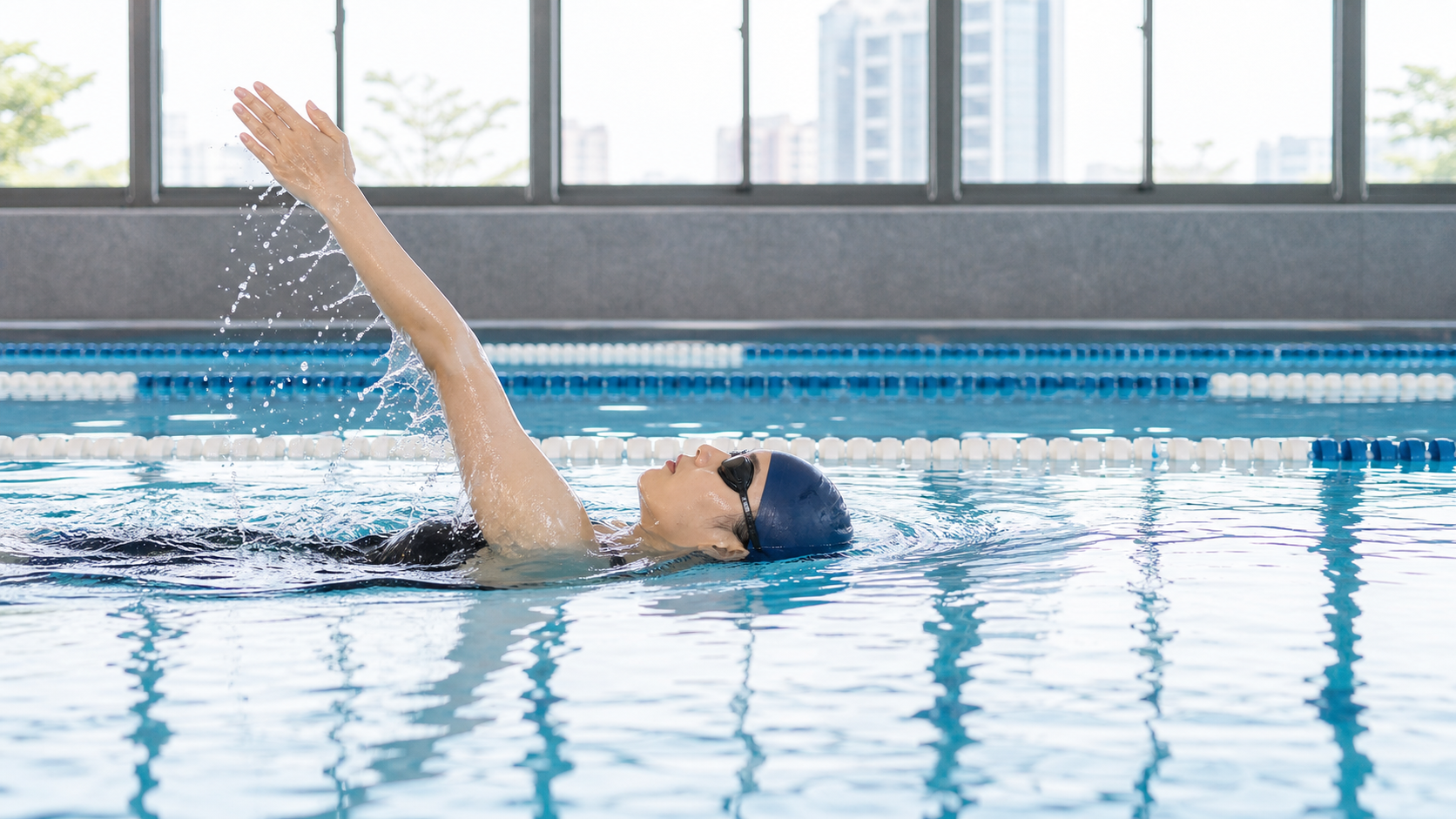
| Backstroke | Trains shoulder external rotators | Cervical spine naturally extended, minimal stress | ★★★★★ Best |
| Freestyle (correct breathing) | Strengthens rhomboids and serratus anterior | Rolling to breathe places moderate load on the neck | ★★★★☆ |
| Breaststroke | Primarily shoulder adductors | Low cervical spine stress when breathing | ★★★☆☆ |
| Freestyle (lifting head to breathe) | Prone to causing shoulder impingement | High stress from neck extension | ★☆☆☆☆ Avoid |
| Butterfly | High load on the rotator cuff | Repeated neck extension | ★☆☆☆☆ Use with caution |
Backstroke Is the Best First Choice
When swimming backstroke, the cervical spine is in a natural neutral position, with the ears close to the water surface, completely eliminating the stress of cervical flexion. At the same time, the backward rotation of the shoulders in backstroke effectively stretches the overly tight pectoralis minor and strengthens the chronically weakened posterior deltoid and rhomboids—exactly the “corrective training” that modern head-down posture users need most.
Key Muscle Groups Strengthened by Swimming for Neck and Shoulder Health
The following muscle groups are crucial for neck and shoulder health, and swimming can train them effectively:
- Serratus anterior: Stabilizes the scapula against the ribcage; a key muscle in the freestyle pull. Weakness leads to winged scapula.
- Rhomboids: Draw the shoulder blades toward the spine, counteracting prolonged forward posture.
- Lower trapezius: Depresses the shoulder blades, preventing overcompensation by the upper trapezius (a major culprit in neck and shoulder stiffness).
- Deep neck flexors (longus colli, longus capitis): Maintain the normal curvature of the cervical spine and prevent forward head posture.
Research Evidence on Swimming Improving Neck and Shoulder Problems
A study of office workers showed that after swimming backstroke twice a week for eight weeks, neck pain scores on the Visual Analogue Scale (VAS) dropped by 52%, and shoulder range of motion (flexion and external rotation) improved by 18% and 23%, respectively—better results than stretching or massage interventions alone.
Techniques to Avoid Worsening Neck and Shoulder Problems While Swimming
- Freestyle breathing: roll the body, don’t lift the head: Correct breathing involves turning the head to the side along with the body roll, rather than lifting it backward, reducing cervical extension.
- Chin tuck: Keep the chin slightly tucked while swimming to maintain a neutral cervical spine.
- Don’t overreach the hand entry point: Excessive forward reach causes excessive internal rotation of the shoulder joint, increasing the risk of impingement.
- Breathe evenly to both sides: In freestyle, breathe every three strokes (alternating left and right) to avoid uneven cervical rotation from always breathing to one side.
Practical Recommendations
- Warm up scapular mobility before swimming: Perform large arm circles and shoulder blade squeezes followed by release to activate the scapular stabilizers.
- Stretch the pectoralis major after swimming: Place both hands on a door frame, lean forward, and hold for 30 seconds to counteract the shoulder adduction motion of swimming.
- Learn proper breathing technique: It is recommended to have a swim coach correct your breathing form; incorrect head movement is the greatest risk factor for neck and shoulder injury.
- Combine with dry-land training: External rotation exercises with resistance bands and prone swimming simulation movements (superman) can strengthen the same muscle groups used in swimming.
- Special caution for rotator cuff injuries: Those with rotator cuff tears or severe impingement syndrome should undergo a physical therapy assessment before swimming.
Conclusion
The impact of swimming on neck and shoulder health depends on whether technique is correct—proper backstroke or freestyle with rolling breathing is the best exercise for office workers to maintain neck and shoulder health; swimming with the head lifted, however, can make existing problems worse. Invest in proper swimming technique so that aquatic exercise truly becomes a remedy, not a poison, for neck and shoulder pain.
Related Reading
- The Effectiveness and Precautions of Swimming for Chronic Back Pain
- The Complete Guide to Swimming Shoulder Pain: Causes and Prevention of Shoulder Impingement Syndrome
- Swimming to Relieve Chronic Back Pain: Aquatic Solutions for Spinal Decompression and Core Strengthening
- A Complete Analysis of Swimmer’s Shoulder: Causes, Diagnosis, and Prevention
一日北高/長距離團騎 常見問題補充篇 / 組團或跟團的眉角 / 壯車友容易被瘦車友慢性拉爆 / 原來屁股痛可能是這個原因...? / 風場配速法 / 公路車 / CT Yeh
2 年前
一日北高常見問題大集合 | 攻略 | 路線 | 訓練 | 補給 | 自行車 單車 | 一日雙城 | 雙塔 | TWB北高360 | 屁股痛
6 年前
抖肩舞 台灣x日本交流版 (台灣 vs 前橋) 赤城山登山賽 coincidance
8 年前
[教學] Premiere 影片 手震 修正 教學 防抖 單眼 影像 GoPro 穩定 Video Stabilization
8 年前
CT 喇低賽) 武嶺牽車 才是王道 西進牽車四小時內秘訣 攝手位置 如何判斷 防抽筋小秘訣
7 年前
CT暗黑廚房) 車友必備 宇宙無敵鮮蚵湯 幫助訓練恢復 天然食補 好市多 超肥鮮蚵 破PR
7 年前
[防寒衣體驗] 鐵人魂 三鐵 防寒衣試穿會 於松運 深水游泳池 鯨魚池
8 年前
靠單車減肥35公斤 心得分享與整理
7 年前