Introduction
Taiwan currently has more than 500 public swimming pools (including school facilities), and city and county governments continue to build new community swimming centers, making swimming more accessible than ever. However, many first-time users of public pools are unfamiliar with pool etiquette, hygiene rules, and how to choose facilities — which not only affects their own experience but can also inconvenience other swimmers. This article provides a complete guide to using public swimming pools in Taiwan.
Basic Rules for Taiwan’s Public Swimming Pools
Preparing Before You Enter
Most public pools in Taiwan require:
- Swim caps: Mandatory at the vast majority of pools, to reduce loose hair clogging the filtration system and to lower the chance of algae and bacteria buildup
- Swimwear: Ordinary cotton shorts are not allowed — proper swimwear is required. Some pools explicitly prohibit overly bright or revealing styles
- Health declarations: Some pools require users to sign a health declaration stating they have no communicable diseases
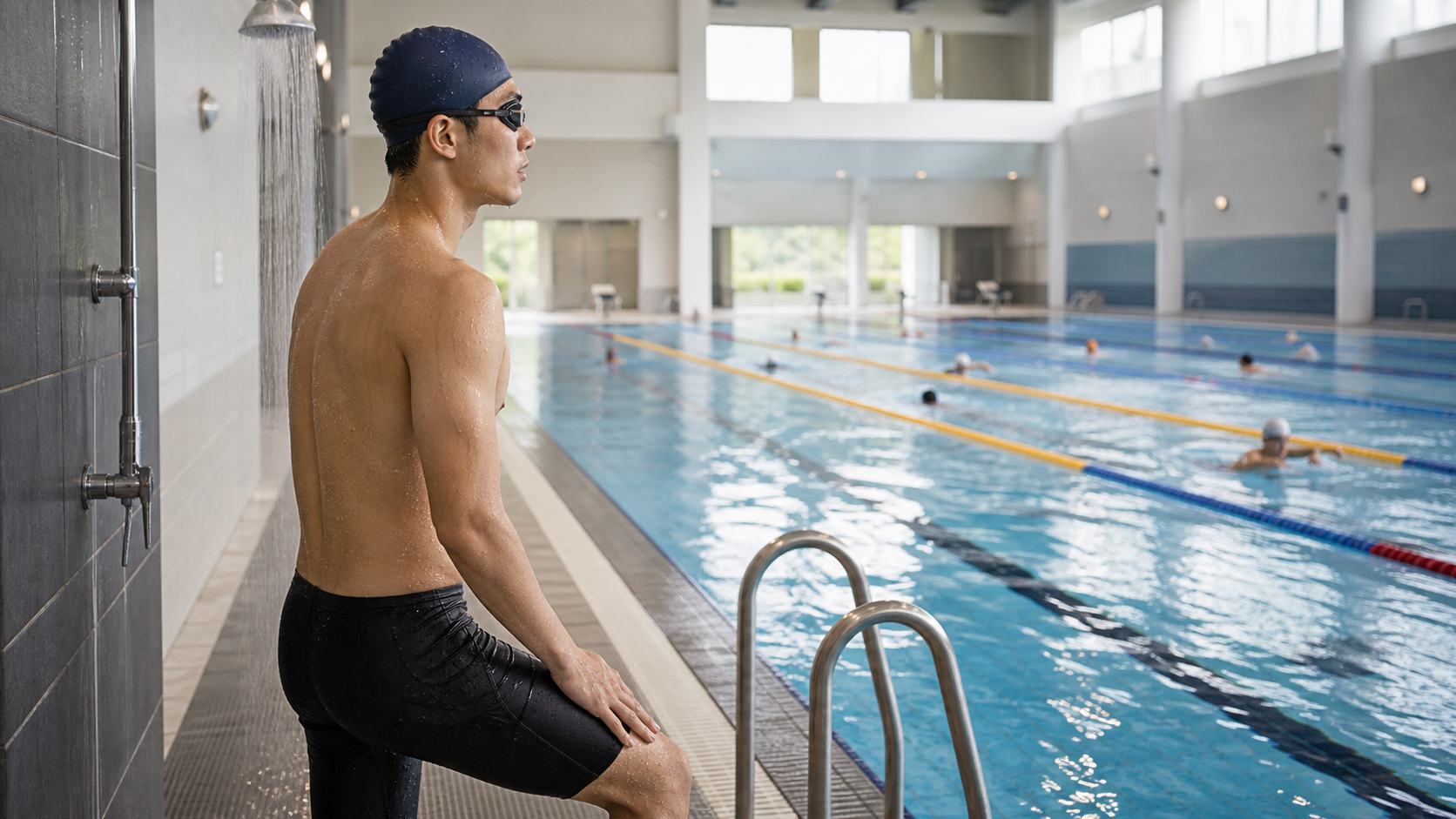
- Mandatory pre-swim shower: Taiwanese pools require a shower before entering the water — this is an essential measure to reduce contaminants entering the pool, not an optional step
When You Are Not Allowed to Enter the Pool
According to Taiwan’s Sports Administration and various city/county health regulations, entry is prohibited under the following circumstances:
- Open wounds or skin ulcers
- Fever, coughing, or symptoms of an upper respiratory infection
- Highly contagious skin conditions (e.g., scabies, acute fungal infections, shingles)
- Gastroenteritis or diarrhea within the past 48 hours
- Pink eye (conjunctivitis)
Lane Etiquette: A Good Experience for Everyone
| Situation | Correct Practice | Common Mistake |
|---|---|---|
| Choosing a lane | Choose slow/medium/fast lanes based on your speed | Practicing a slow breaststroke in the fast lane |
| Sharing a lane with others | Swim on the right, pass on the left (circulate clockwise) | Swimming down the middle, blocking others |
| Passing another swimmer | Lightly tap their foot to signal you want to pass | Passing without any signal |
| Resting at the lane wall | Stay to the side, leaving room for others to turn | Resting in the center of the lane |
| Lane capacity | A single lane can typically accommodate 4–5 people circulating | One person occupying an entire lane |
| Phone use | Only in the locker room or rest area | Taking photos or videos poolside |
Taiwan Pool Hygiene Knowledge and Self-Protection
Pool Water Quality Standards
Taiwan’s Sports Administration sets the following water quality standards for public swimming pools:
- Chlorine concentration: 0.3–1.0 ppm (for disinfection)
- pH value: 6.5–8.0 (near neutral)
- E. coli: None detected per 100 mL
- Turbidity: Below 4 NTU (an object 2.4 meters deep should be clearly visible)
Users can ask pool staff for the most recent water quality test report — this is the most direct way to understand a pool’s hygiene status.
Common Pool-Related Infections and Prevention
- Athlete’s foot: Pool floors are a common breeding ground for fungus; wearing sandals to the shower area and locker room is the most effective prevention
- Swimmer’s ear (otitis externa): Caused by bacteria growing after water enters the ear canal. Shake your head vigorously after swimming to drain water, and use earplugs if needed
- Conjunctivitis: Wearing goggles is the most effective prevention; rinse your eyes with clean water after swimming
- Norovirus gastroenteritis: Spread through contaminated pool water — choose properly chlorinated pools and avoid swallowing pool water while swimming
Choosing the Right Pool in Taiwan
Choosing a Pool Type Based on Your Needs
- City/county public pools: The lowest cost (usually NT$60–100), standard facilities, suitable for regular swimmers. Many offer discounted time slots for seniors
- University/high school pools: Open to the public during winter and summer breaks, with good facilities and a competitive training environment
- Community sports center pools: Slightly higher fees (NT$100–200), usually better water quality management, with aqua aerobics classes available
- Commercial gym pools: The highest fees, but usually more comfortable water temperature (28–30°C), with hot/cold spa facilities — suitable for those who prioritize a pleasant experience
- Hotel pools (some open to non-guests): Comfortable water temperature, fewer people, good for relaxing in the water, not ideal for competitive swimming
A Checklist for Choosing a Pool
- Water clarity: You should be able to clearly see the black lane markings on the pool floor from the poolside
- Chlorine smell: A slight chlorine smell is normal; a strong, irritating chloramine odor indicates poor water management or overcrowding
- Water change/circulation frequency: Ask staff how often the water is changed or how the circulation cycle works
- Lifeguard staffing: Taiwan requires every pool to have a certified lifeguard on duty — confirm someone is actively supervising
- Operating hours: Check for discounted time slots for seniors, children, or early-morning swimmers
Practical Tips
- Observe before using a new pool for the first time: Check the water clarity, number of users, and whether a lifeguard is on duty before deciding to get in
- Bring your own gear: Some pools in Taiwan offer rental caps and gear, but bringing your own is more hygienic — goggles especially are recommended to bring yourself
- Know the peak hours: Taiwan’s public pools are busiest on weekend afternoons; weekday mornings and evenings tend to be quieter and offer a better experience
- Download your city/county sports bureau’s app or check its website: Many pools offer real-time occupancy checks or online reservations, saving you a wasted trip
- Respect lifeguard instructions: Lifeguards at Taiwan’s pools have the authority to ask rule-breaking users to leave — all safety instructions should be followed immediately
Conclusion
Public swimming pools are a shared sports resource for everyone in Taiwan, and every user’s self-discipline and etiquette form the foundation of a well-maintained pool environment. Understanding proper pool usage rules not only protects your own health but also shows respect for other users. We hope this guide helps more people in Taiwan enjoy the health and fun that swimming brings in a safe, hygienic, and friendly environment.
Related Reading
[防寒衣體驗] 鐵人魂 三鐵 防寒衣試穿會 於松運 深水游泳池 鯨魚池
8 年前
備戰 戀戀197 賽前關門點分析 西濱團練 #公路車 4K高畫質
6 年前
單車 一日北高 ( 雙城 ) 肥宅雙人瘋狂行 紀錄片 REACTO
10 年前
一日北高常見問題大集合 | 攻略 | 路線 | 訓練 | 補給 | 自行車 單車 | 一日雙城 | 雙塔 | TWB北高360 | 屁股痛
6 年前
2023桃園團體繞圈賽 / 海鷗繞圈賽 | 全程空拍數據版 | 公路車 | CT Yeh
2 年前
一日北高前的高裝檢 | 北高 360 | 挑戰11小時的裝備 | 一日雙塔 | 補給
6 年前
Live) 備戰2019彰化經典百K 賽前攻略 (已完賽請看新影片
7 年前
一日北高/長距離團騎 常見問題補充篇 / 組團或跟團的眉角 / 壯車友容易被瘦車友慢性拉爆 / 原來屁股痛可能是這個原因...? / 風場配速法 / 公路車 / CT Yeh
2 年前