Introduction
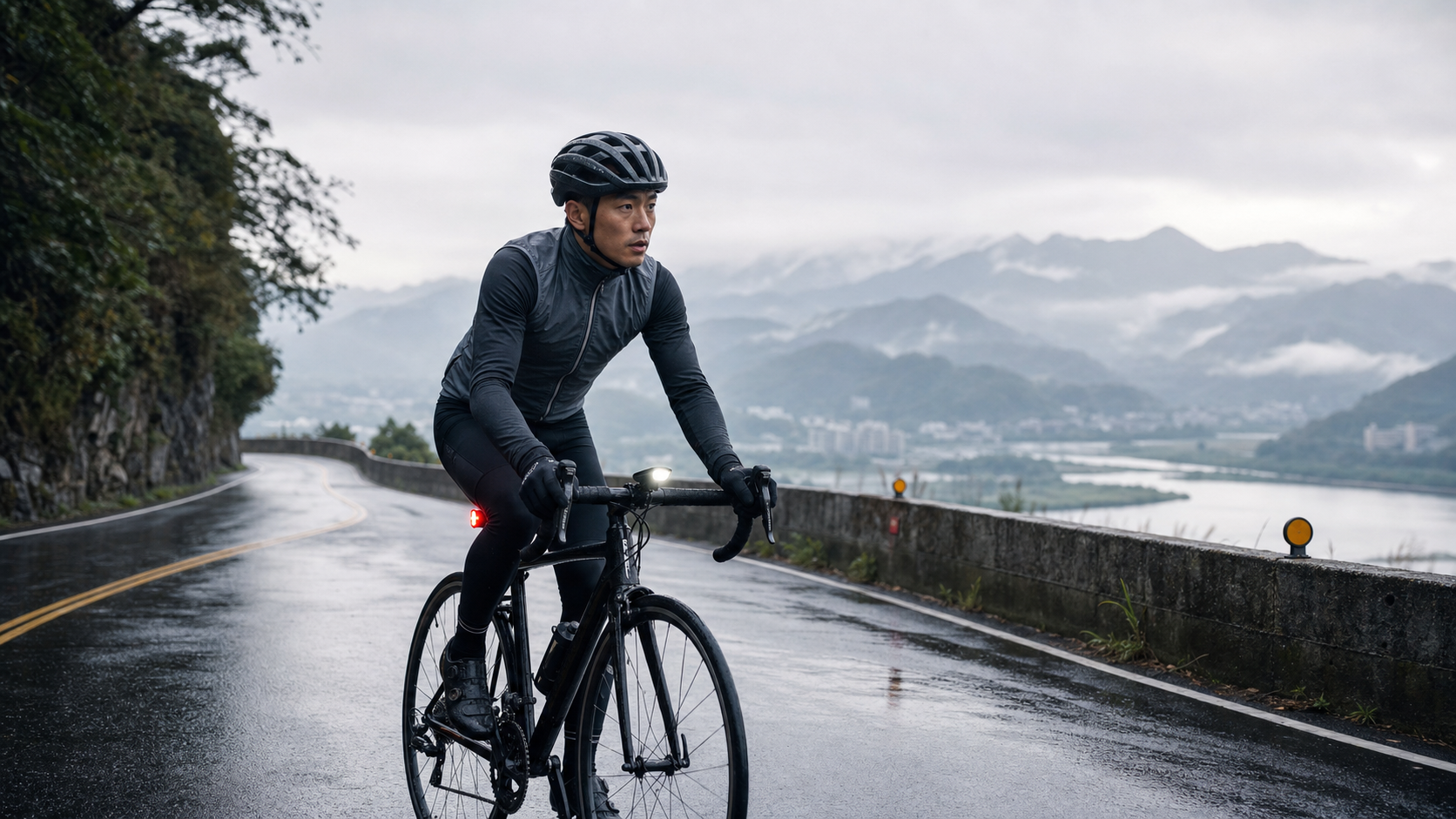
From October to March each year, an unspoken topic circulates among cycling communities in northern Taiwan: “Should we keep riding through winter?” The overcast skies and rain brought by the northeast monsoon, the sudden temperature drops in the early morning, and the slippery roads lead many riders to decide to “take a break for now” after one rainy ride—and that break often stretches all the way to the following spring.
Yet those who keep riding through every winter tend to enter spring with noticeably better fitness foundations and more stable riding skills. Winter training isn’t just about not giving up; it’s a form of accumulation. This article will walk you through the real challenges of winter cycling in Taiwan and how to get through the season with the right gear and mindset.
Taiwan’s Winter Cycling Climate Characteristics
Regional Differences
Winter climates vary considerably between northern and southern Taiwan, and so does the difficulty of riding:
| Region | Winter Climate Characteristics | Riding Challenge Level | Recommended Routes |
|---|---|---|---|
| Taipei, Keelung | Humid, rainy, strong northeast monsoon | High | Indoor trainer or short, fast rides |
| Hsinchu, Miaoli | Occasional strong winds, drier than Taipei | Medium | Mountain routes, avoid the coast |
| South of Taichung | Relatively pleasant climate, little rain | Low | Rideable almost year-round |
| East (Hualien, Taitung) | Occasional foehn winds, more stable weather | Low to Medium | Best along the coastline and rift valley |
Real Challenges of Winter Riding in the North
Winter riding challenges in the Taipei area come mainly from three sources:
- Low morning temperatures and fog: Morning temperatures can drop below 10°C, requiring a longer muscle warm-up time
- Slippery roads: Prolonged overcast and rainy weather promotes moss growth on road surfaces, requiring extra caution on corners and descents
- Reduced visibility: Foggy and overcast days impair oncoming drivers’ visibility, making bike lights all the more important
Winter Cycling Gear Guide
Layering System for Warmth
The dressing principle for winter cycling is similar to mountaineering—use the “onion layering” approach:
- Base layer: Moisture-wicking, quick-drying undershirt; avoid cotton (cotton absorbs sweat and dries slowly, making you colder)
- Mid layer: Long-sleeve jersey or thermal vest for core warmth
- Outer layer: Windproof, waterproof jacket—the most critical piece for blocking the northeast monsoon
Areas requiring special attention:
- Hands: Full-finger gloves are essential in winter; numb fingers can compromise braking response
- Ears and head: Wear ear warmers or a thin skull cap under your helmet
- Knees: When temperatures drop below 15°C, wear long bibs or knee warmers
Lighting and Safety Equipment
With shorter daylight and overcast skies in winter, your lighting setup needs an upgrade:
- Front light: At least 600 lumens; use flashing mode in foggy conditions to increase visibility
- Rear light: A powerful flashing function helps vehicles behind you spot you more easily
- Reflective vest or straps: In foggy, rainy weather, reflective materials are far more effective than bright colors
Adjusting Your Winter Riding Mindset
Maintaining a riding habit through winter requires more mental adjustment than gear:
- Lower your per-ride distance goals: Winter isn’t the season for results; it’s the season for building your base. A relaxed 40-minute ride is more meaningful than forcing yourself to ride 3 hours in the rain
- Embrace the indoor trainer: Using a trainer in winter isn’t avoidance—it’s a smart way to maintain cardiovascular fitness and strength. Paired with Zwift or YouTube training videos, indoor riding can be just as enjoyable
- Turn bad weather into a reward: Pick a few cafés you only visit on rainy days, so that even a rest day in bad weather comes with something to look forward to
Practical Tips
- Check road conditions before heading out; avoid riding immediately after heavy rain—wait until the road surface has dried somewhat
- After winter rides, thoroughly clean and dry your bike, especially the drivetrain, to prevent chain rust
- For riders in central and southern Taiwan, winter is the best riding season—consider taking a warm southern route trip during winter
- Cheer each other on within your riding community and share photos of winter rides; it’s an effective way to stay motivated
Conclusion
Taiwan’s winter won’t freeze you to death, but it will indeed test your commitment to cycling. Those who keep pedaling through the drizzle are often the first to reach the summit when spring arrives. Don’t let winter become a distance between you and your bike—let it be the reason you grow tougher than everyone else.
Related Reading
- Winter Bike Maintenance Special: Coping Strategies for Northern Taiwan’s Cold, Wet Weather
- Riding South in Taiwan’s Winter: Chasing Good Weather in the South from December to April
- Winter Cycling Gear Guide: Keeping Your Riding Passion Alive in the Cold
- Winter Training: Off-Season Strength Plans for Taiwanese Cyclists
單車賞雪 裝備準備及注意事項分享 | 公路車
5 年前
太平山單車員工旅遊 | 這樣玩CP值最高!| 公路車
5 年前
騎單車去大屯山賞雪! 助航台滑冰 全記錄 | 台北R友大集合 | 下雪打雪仗囉 | 4K超高畫質
5 年前
碟煞公路車 優缺點?換車一年半實際經驗分享 / 公路車 / CT Yeh
2 年前
虎豹潭!日本老師來台一日約騎 台灣車友熱情招待私房路線 / CT Yeh
20 天前
高雄綠園道鐵路自行車道 / 外地人能輕鬆駕馭 還是整路崩潰? / 2025 全線開通 春節實地探索一次!(附GPS連結)/ 公路車 / CT Yeh
1 年前
台中大雪山 膏王領騎 震到都沒畫面了 公路車
5 年前
單車 一日北高 ( 雙城 ) 肥宅雙人瘋狂行 紀錄片 REACTO
10 年前