Muscle Fiber Types and Cycling Performance: Training Strategies for Slow-Twitch and Fast-Twitch Muscles
Introduction
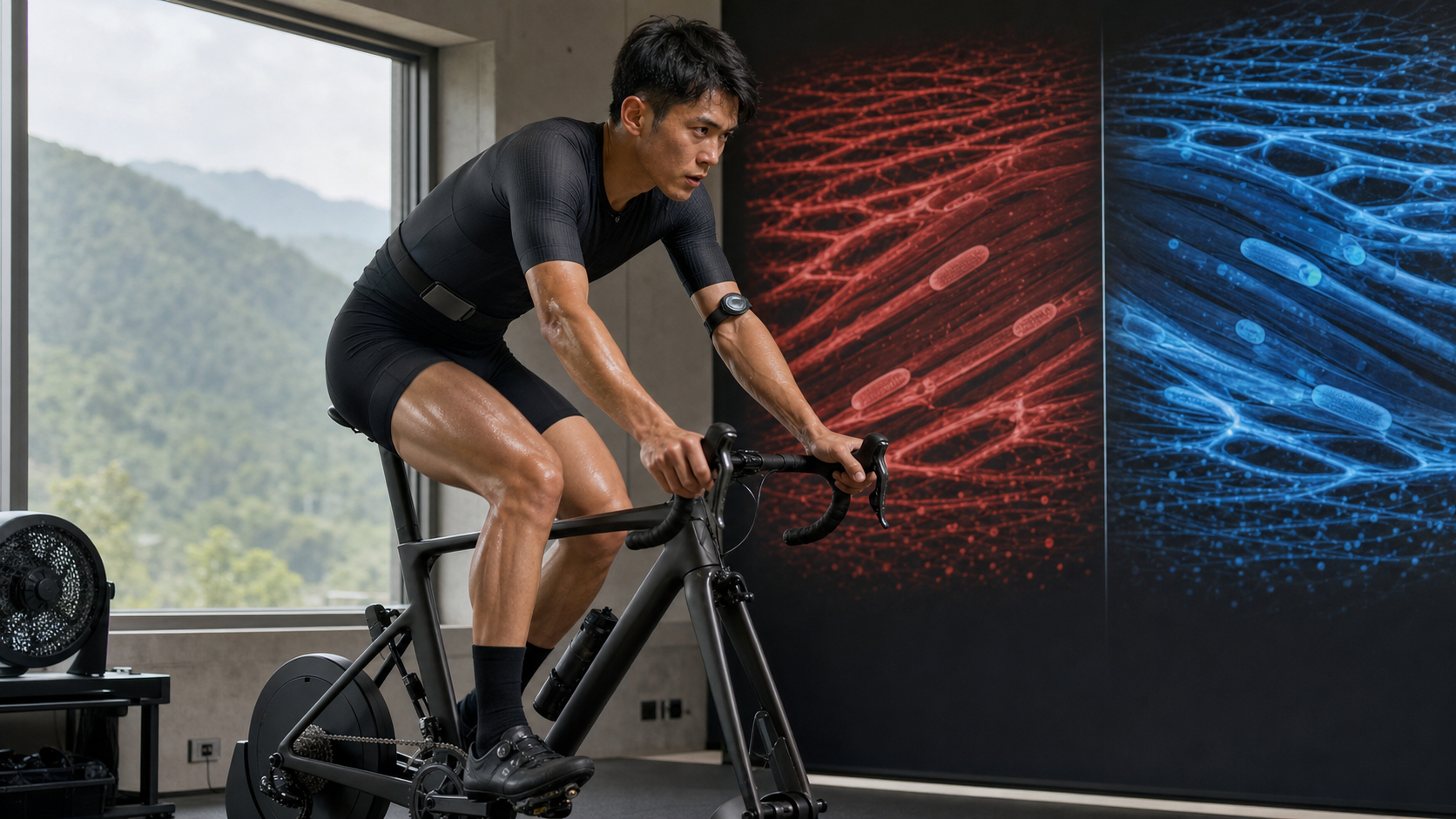
Why are some people born climbing machines, while others are unstoppable in flat-out sprints? Part of the answer lies in the microscopic world of muscle fibers. Human muscle is composed of slow-twitch (Type I) and fast-twitch (Type II) fibers, and the ratio and characteristics of these two types profoundly influence your strengths and weaknesses on the bike. Understanding this system is the first step in building a personalized training plan.
Physiological Differences Between Slow-Twitch and Fast-Twitch Fibers
| Characteristic | Slow-Twitch (Type I) | Fast-Twitch IIa (Type IIa) | Fast-Twitch IIx (Type IIx) |
|---|---|---|---|
| Contraction speed | Slow | Moderate | Fast |
| Fatigue resistance | High | Moderate | Low |
| Primary energy source | Aerobic (fat + carbohydrate) | Aerobic + anaerobic | Anaerobic (phosphocreatine) |
| Mitochondrial density | High | Moderate to high | Low |
| Suitable activities | Long-distance endurance | Middle distance, climbing | Short-duration explosive power |
In the leg muscles of professional climbers, the proportion of slow-twitch fibers often reaches as high as 70–80%; whereas in short time trial or track sprint specialists, fast-twitch fibers (especially Type IIa) may exceed 50%. Due to a training environment dominated by mountain roads, local Taiwanese riders generally have a higher proportion of slow-twitch fibers than flatland riders.
How Training Affects Fiber Characteristics
The good news is that although fiber type is largely determined by genetics, Type IIx fibers can “convert” to Type IIa under aerobic training, gaining better compatibility with both aerobic and anaerobic systems. This conversion is irreversible, which is also why, after a long period off the bike, your explosive power declines more slowly than your endurance.
Adaptations from endurance training:
- Increased mitochondrial density (benefits both Type I and IIa)
- Upregulation of fat oxidation enzymes, allowing greater fat utilization at Zone 2 intensity
- Increased muscle capillary density, improving oxygen transport efficiency
- Type IIx → Type IIa conversion (requires 8+ weeks of sustained endurance training)
Adaptations from explosive power training:
- Improved neuromuscular recruitment efficiency (more synchronized firing of fast-twitch fibers)
- Increased phosphocreatine stores (supporting longer explosive efforts)
- Increased fast-twitch muscle strength, raising Peak Power Output
- But note: prolonged exclusive explosive training may cause a Type IIa → IIx reversal
Therefore, the best strategy is a pyramid structure of “endurance as the base, strength as the peak,” rather than neglecting either side.
How to Determine Your Fiber Ratio
Without a muscle biopsy, we can estimate using functional tests:
- 30-second all-out sprint test: Those whose power drops by more than 30% may have a higher proportion of fast-twitch fibers; those with less decay likely have a higher proportion of slow-twitch fibers
- CP (Critical Power) test: The higher the ratio of CP relative to Peak Power, the higher the proportion of slow-twitch fibers
- Climbing vs. flat preference: This is subjective, but it holds some reference value
Practical Recommendations
- Slow-twitch dominant (born climber): Your strength-building plan should add 1–2 explosive power sessions per week, including 10–15 second maximal power sprints × 10 sets, to reinforce neuromuscular recruitment and improve flat-road acceleration
- Fast-twitch dominant (born sprinter): You must schedule sufficient Zone 2 aerobic base volume, with at least 4–6 hours of low-intensity riding per week, to gradually convert Type IIx to IIa and extend effective power output duration
- Mixed training (recommended for everyone): Polarized Training—80% low intensity + 20% high intensity—has been shown in research to provide optimal stimulation for both fiber types
- Weight training: Squats, leg presses, and hip hinge exercises are crucial for developing fast-twitch strength; recommended 1–2 times per week
- Regular assessment: Repeat the 30-second all-out sprint test every 3 months to track whether fast-twitch performance is improving
Conclusion
Genetics determine the starting line; training determines the finish line. A high proportion of slow-twitch fibers doesn’t mean you can’t sprint, and a high proportion of fast-twitch fibers doesn’t mean you can’t climb—both can be improved through proper training to shore up weaknesses and reinforce strengths. Taiwan’s riding environment, spanning high-mountain climbs and flat-road sprints, is an ideal stage for developing muscle fibers comprehensively. Understand your fiber profile, then train strategically—that is the path of a smart rider.
Related Reading
- Muscle Fiber Composition and Cycling Performance: Are You a Born Climber or Sprinter?
- Muscle Fiber Types and Cycling-Specific Training: The Choice Between Slow-Twitch and Fast-Twitch
- Fast-Twitch and Slow-Twitch Fibers: Characteristics of Muscle Fiber Types, and Can Training Really Change Fiber Composition?
- Skeletal Muscle Fiber Types in Cyclists: Training Implications of Type I and Type II Fibers
一日北高/長距離團騎 常見問題補充篇 / 組團或跟團的眉角 / 壯車友容易被瘦車友慢性拉爆 / 原來屁股痛可能是這個原因...? / 風場配速法 / 公路車 / CT Yeh
2 年前
大武山後門26%歡樂陡坡!JJSC南台灣單車行Day2 / 被颱風追著跑 / 公路車 / CT Yeh
2 年前
#公路車 #Fitting 靠人工智慧APP 幫你調整單車
6 年前
靠單車減肥35公斤 心得分享與整理
7 年前
CT暗黑廚房) 車友必備 宇宙無敵鮮蚵湯 幫助訓練恢復 天然食補 好市多 超肥鮮蚵 破PR
7 年前
「悲情男車友」創作單曲 爆笑MV / 公路車 / CT Yeh / 4K劇情版
7 個月前
單車 梅山36灣 坡度介紹 路段介紹 空拍 (相關遊記影片,請參考說明或我的頻道喔,歡迎訂閱)
6 年前
如果Pogačar騎西進武嶺可以多快?會破2嗎?各種情況深度推估探討 / 公路車 / CT Yeh
2 年前