Heat Acclimatization Training: Physiological Strategies to Boost Cycling Performance in Taiwan's Summer
Introduction
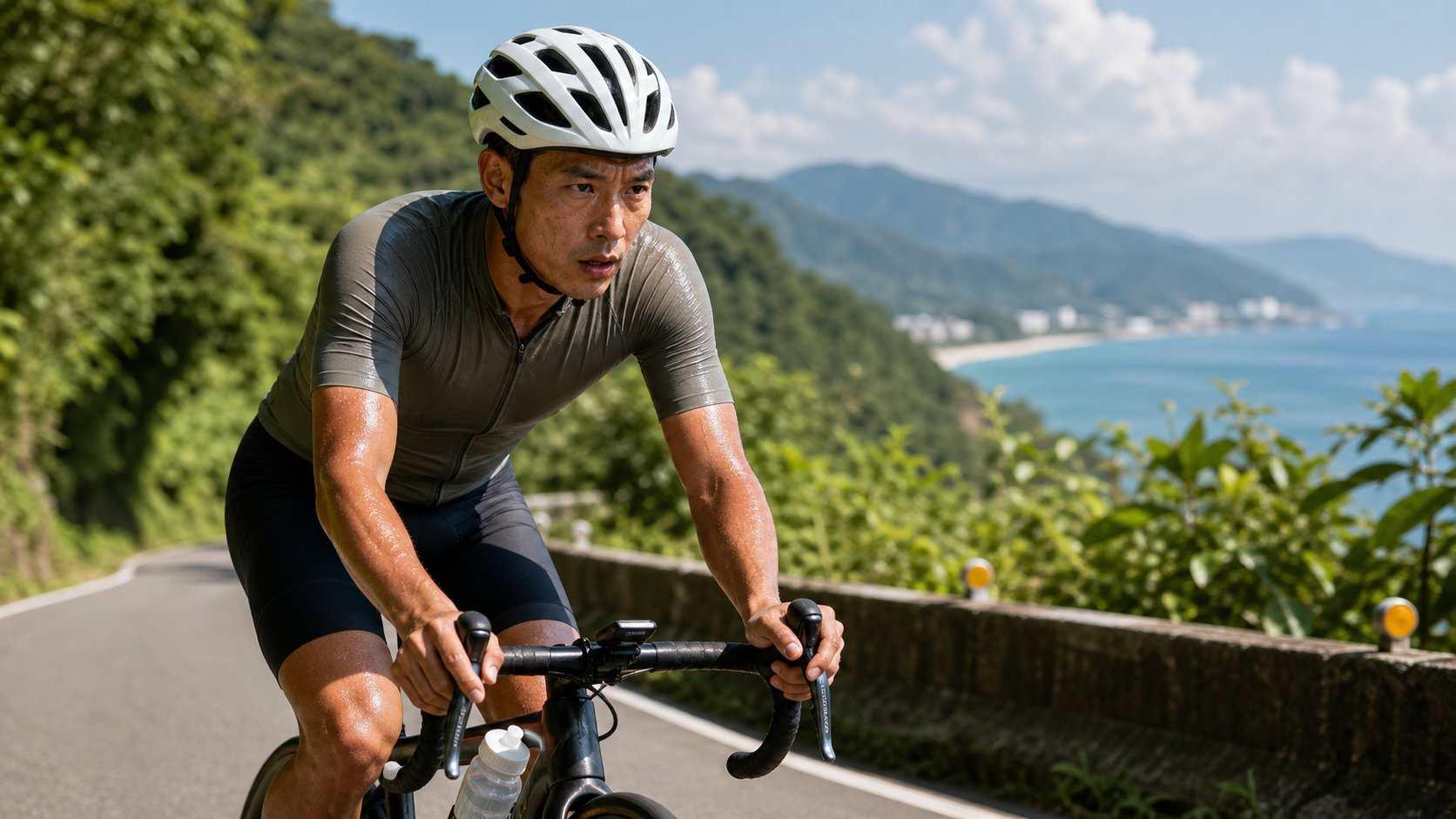
Every summer, cycling events in Taiwan continue in full swing. Major races such as Formosa 900 and the Taiwan Cycling Festival are mostly held around the transition from summer to autumn, requiring athletes to maintain high-intensity output in environments above 30°C with 80% humidity. For cyclists who are not heat-acclimatized, high temperatures are not just uncomfortable—they cause core temperature to rise, cardiac output to drop, and perceived fatigue to intensify, directly impairing performance. The good news is that systematic heat acclimatization training can build significant physiological adaptations within 10–14 days.
The Physiological Impact of Hot Environments on Performance
When cycling in high temperatures, the body faces competition between two demands:
- Working muscles need substantial blood flow to deliver oxygen and remove metabolic waste
- The skin needs substantial blood flow to dissipate heat into the environment
Cardiac output is limited, and this competition results in relatively insufficient muscle blood flow, with VO2max dropping by as much as 5–10%. Additionally:
| Heat Stress Effect | Mechanism | Performance Impact |
|---|---|---|
| Core temperature rise | Metabolic heat production + environmental heat gain | CNS forcibly reduces power output above 39.5°C |
| Heavy sweating and dehydration | Heat dissipation through sweat evaporation | Every 2% body weight lost to dehydration reduces performance by 3–5% |
| Cardiac drift | Reduced blood volume, decreased stroke volume | Heart rate rises at the same power output |
| Electrolyte loss | Sodium, potassium, and magnesium lost in sweat | Muscle cramps, abnormal nerve conduction |
| Increased perceived fatigue | Heat receptors activate the insular cortex | Subjective effort feels harder than actual output |
Physiological Adaptation Mechanisms of Heat Acclimatization
After 10–14 days of training in hot environments, the body develops the following adaptations:
Early adaptations (days 1–7):
- Plasma volume increases by 5–12% (reducing cardiac drift)
- Sweat sodium concentration decreases (more efficient electrolyte retention)
- Sweating onset threshold temperature lowers (cooling starts earlier)
Late adaptations (days 7–14):
- Maximum sweat rate increases
- Skin blood flow regulation improves
- The slope of core temperature rise during exercise decreases
- Perceived exertion at the same intensity decreases
Research shows that heat-acclimatized cyclists perform 5–8% better (in terms of power output) in hot races than non-acclimatized riders, and may also see a 1–3% performance improvement in cooler weather (due to the sustained increase in plasma volume).
Heat Acclimatization Training Protocols
Active heat acclimatization (recommended method):
- Ride at low to moderate intensity during the hottest hours of the day (suggested 10 a.m.–2 p.m.)
- Last 60–90 minutes, performed daily or every other day
- Core temperature should reach 38.5–39.5°C (feeling “hot but manageable”)
Passive heat acclimatization (when time is limited):
- Take a hot bath (40–42°C) for 30–40 minutes immediately after training
- Or ride at low intensity wearing thermal clothing
- Slightly less effective than active heat acclimatization, but still provides significant benefits
Practical Recommendations
- Start heat acclimatization 2 weeks in advance: Begin 2 weeks before race day, riding 60–90 minutes daily (Zone 2 intensity) during the hottest hours
- Aggressive hydration strategy: Consume 150–200ml of electrolyte-containing drinks every 15 minutes (avoid plain water to prevent hyponatremia)
- Pre-cooling strategy: 30–45 minutes before the race, use neck cooling, ice vests, and cold drinks to lower starting core temperature by 0.5–1.0°C
- Monitor urine color: Ideal urine is pale yellow (beer-yellow indicates mild dehydration; dark yellow means immediate rehydration is needed)
- Electrolyte supplementation: Replace approximately 500–700mg of sodium per liter of sweat; use electrolyte tablets or sports drinks rather than water alone
- Heat index adjustment: Taiwan’s summer apparent temperature (temperature + humidity index) often exceeds 40°C; use the “feels like” temperature from a weather app on your phone as a guide for adjusting training intensity
Conclusion
Taiwan’s summer is a nightmare for foreign athletes, but for local cyclists it should be a home-field advantage. Through systematic heat acclimatization training, your body can maintain a stable heart rate and power output in environments where other riders are succumbing to heat exhaustion. Starting now, turn the hottest part of the day from “a reason not to ride” into “the training condition that makes you stronger.”
Related Reading
- Heat Acclimatization Training: Performance Enhancement Strategies for Taiwan’s Hot Summer Environment
- Cycling Heat Acclimatization Training: Coping Strategies for Taiwan’s Summer Heat
- Heat Acclimatization Training for Cyclists: Boosting Performance in Taiwan’s Summer Heat
- Summer Race Preparation: A Complete Heat Acclimatization Training Protocol and Scientific Implementation Guide
單車 一日北高 ( 雙城 ) 肥宅雙人瘋狂行 紀錄片 REACTO
10 年前
#公路車 #Fitting 靠人工智慧APP 幫你調整單車
6 年前
CT暗黑廚房) 車友必備 宇宙無敵鮮蚵湯 幫助訓練恢復 天然食補 好市多 超肥鮮蚵 破PR
7 年前
2019 夏季KOM 5小 完賽心得 準備攻略 東進武嶺 夏季登山王之路 Taiwan KOM Challenge
7 年前
2023自行車展!與環台賽選手一同表演賽 / 全自動AI Fitting?/ TIME新車發表/神秘充電桌等 精華分享 VLOG | CT Yeh | 公路車
3 年前
備戰 戀戀197 賽前關門點分析 西濱團練 #公路車 4K高畫質
6 年前
大武山後門26%歡樂陡坡!JJSC南台灣單車行Day2 / 被颱風追著跑 / 公路車 / CT Yeh
2 年前
訓練台體驗) 2019台北自行車展 三大家 訓練台體驗 Tacx Neo Flux 2 Xepdo Apx Wahoo Kickr
7 年前