Introduction
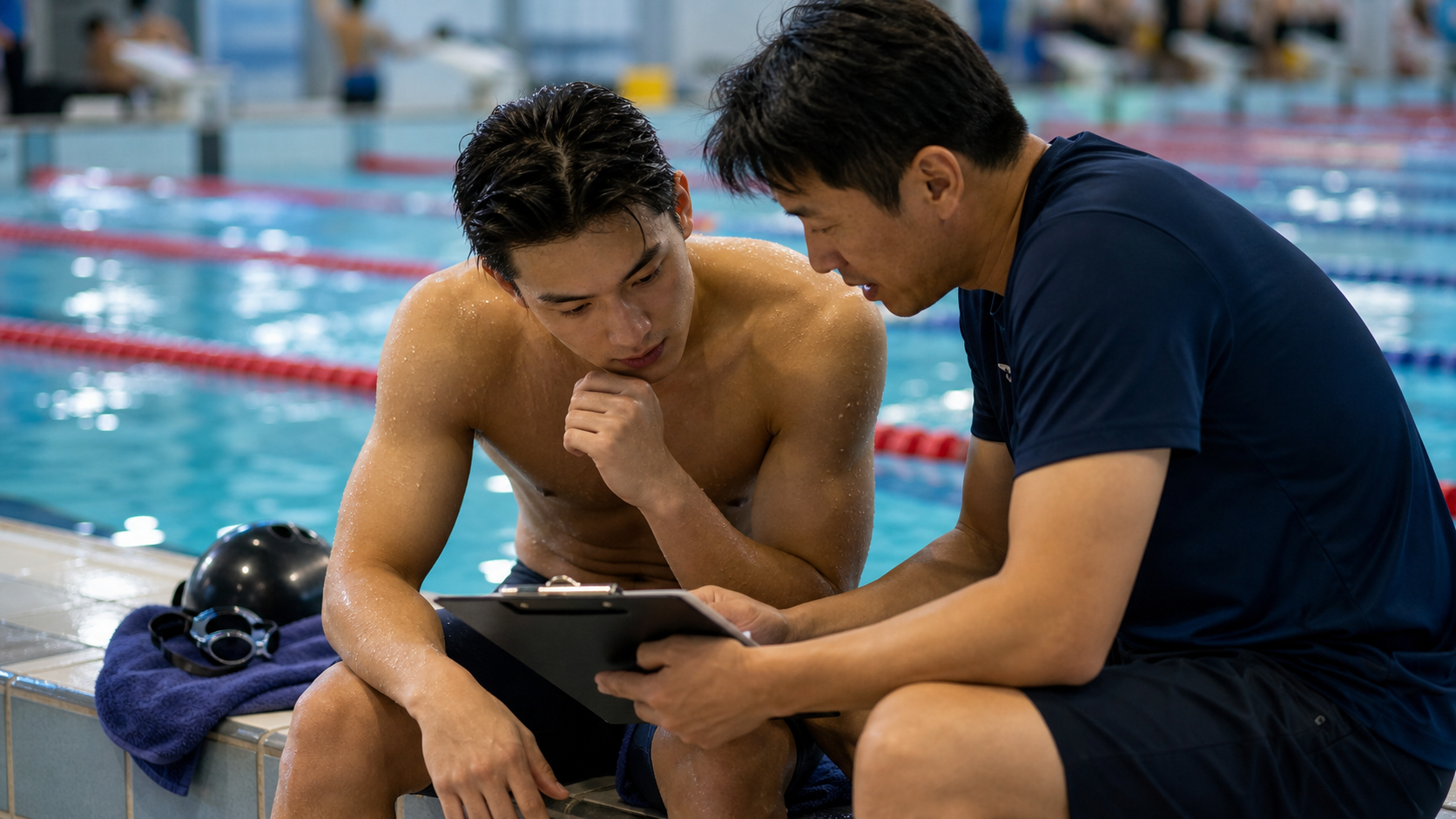
After a race ends, most athletes’ first reaction is to check their placing and time, then head home either elated or disappointed. However, in the eyes of competitive-level athletes, the end of the race is only the beginning of the most important “data collection moment.”
Post-race analysis is the process of converting race results into a basis for training improvements. A race that is properly analyzed can yield far more value to the athlete than the significance of the placing itself.
The Data Framework for Post-Race Analysis
Layer 1: Time Data Analysis
Time data from each race is the most basic and direct material for analysis:
| Data Point | Analysis Metric | Training Insight |
|---|---|---|
| Reaction time off the blocks | Comparison with personal best | Whether start training is sufficient |
| First half split | Gap from target pace | Aerobic base or race speed capability |
| Turn efficiency | Time from wall touch to push-off | Frequency of turn training |
| Second half split | Difference between first and second halves | Anaerobic endurance and pacing strategy |
| Final result | Margin of improvement or decline from personal best | Overall training effectiveness |
Split Differential is the single most important indicator:
- Differential < 1 second (100m freestyle): Pacing is reasonable
- Differential of 1–2 seconds: Physical limitations in the second half
- Differential > 2 seconds: Overly aggressive start or insufficient aerobic base
Layer 2: Technical Quality Assessment
If race footage is available (above or below water), conduct the following technical observations:
- Technical deterioration under fatigue: Whether the elbow drops during the stroke or the head lifts too high when breathing in the second half
- Turn quality: How turns under race pressure differ from those in training
- Glide after the start: Whether the glide distance after the dive entry reaches training standards
Layer 3: Subjective Feeling Records
Beyond the numbers, subjective feelings are equally important:
- “Pre-race anxiety level (1–10)”
- “How the body felt after warm-up (good / average / poor)”
- “Focus and concentration during the race”
- “Energy levels in the second half (plentiful / acceptable / severely fatigued)”
- “Satisfaction with the execution of the race strategy”
Standard Post-Race Analysis Process
Within 1 hour after the race (when memory is clearest):
- Record subjective feelings (voice memos work well)
- Confirm all split timing data
- Take a photo or screenshot of the results sheet
24–48 hours after the race (once emotions have settled):
- Organize the data and enter it into your personal results log
- Review race footage (if available)
- Discuss initial findings with the coach
Within one week:
- Complete a full analysis report (one page is enough)
- Propose 1–3 specific improvement areas for the next training cycle
Translating Analysis Results into a Training Plan
The ultimate purpose of post-race analysis is to “tell the training plan where to go next”:
Case 1: Split differential of 2.5 seconds (significant slowdown in the second half)
→ Add anaerobic threshold training in the next cycle (e.g., 10×100m @85–90% HRmax)
Case 2: Turn efficiency 0.8 seconds slower than personal best
→ Add 20 turn-specific drills to every training session for 4 weeks
Case 3: Excessive pre-race anxiety led to a poor start
→ Add pre-race mental routine training in the next cycle, simulating race-day scenarios during warm-up
Practical Recommendations
- Build a personal results tracking sheet: Record split times, technical notes, and subjective ratings for every race
- Conduct a “race trend analysis” every six months: Identify the areas of fastest and slowest improvement
- Don’t just look at your best result—look at your most consistent result: Consistency reflects training quality
- Conduct post-race analysis together with your coach: Avoid personal blind spots and gain an external perspective
- Failed races often provide the most improvement clues: Don’t skip the analysis in the midst of frustration
Conclusion
Every race is a “free training evaluation report.” If athletes and coaches can systematically collect, analyze, and apply race data, they can move into the next training cycle with greater direction. Don’t let the value of a race disappear once results are posted—turning data into action is the true competitive mindset.
Related Reading
- Swimming Post-Race Performance Analysis: Interpreting Split Data and Improvement Directions
- Swimming Post-Race Performance Analysis: A Systematic Approach to Identifying Technical Errors Through Video Review
- Swimming Post-Race Analysis: How to Objectively Evaluate Performance Without Getting Emotional
- Swimming Post-Race Analysis: Breaking Down the Technical Factors Behind a Personal Best
西進武嶺 免費訓練分析服務 Intervals | 練不夠還是練過頭?你哪一種類型選手?AI模型告訴你! | 備戰神器 | 公路車 訓練 | CT Yeh
4 年前
崇越盃武嶺冠軍高手 賽前JJSC 群峰會精華!對應大數據分析,會有落差嗎?/ feat. JJSC中部公路車約騎 /公路車 / CT Yeh
2 年前
CT Talk) 數據面窺看 武嶺大神們 平時的備戰 共通點 (娛樂性質XD)
7 年前
備戰 戀戀197 賽前關門點分析 西濱團練 #公路車 4K高畫質
6 年前
FTL 與 SYB 車隊專訪 西進武嶺 實用攻略分享! 2小時 如何練?!你不知道的眉角!新手準備武嶺必看 EP1 | 實力派女車友 | 精華版 | 公路車 | CTYeh
4 年前
西進武嶺 自製新版AI配速表產生器 x 賽前攻略 抱佛腳! 沒有功率計也可以產生配速表嗎?有什麼其他眉角賽前要注意的呢? | 西進武嶺 / 東進武嶺 KOM 攻略 | 公路車 | CT Yeh
4 年前
live) 超越北高 之一日北高12小時 策略
7 年前
單車AI教練!全新 ChatGPT4o 幫你分析訓練成果!排武嶺課表,分析騎車姿勢! 太神了! / 公路車 / CT Yeh / feat. 緯緯
2 年前