The Biomechanics of Carbon-Plated Shoes: A Scientific Explanation of Elastic Rebound and Running Efficiency
Introduction
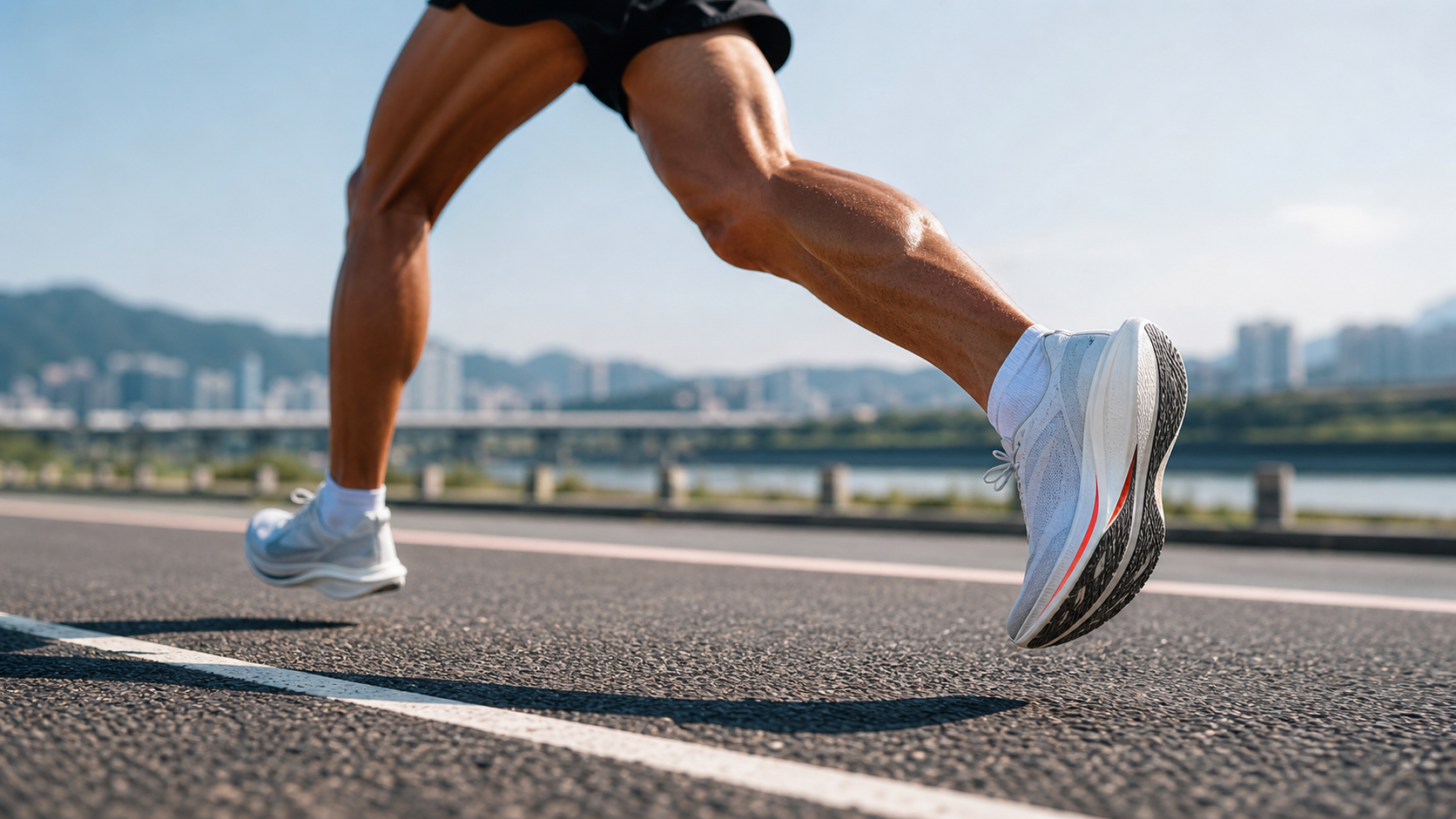
In 2016, the Nike Vaporfly series burst onto the scene by breaking the marathon world record, ushering in a revolutionary era of running shoe technology. Carbon-plated racing shoes have since become standard equipment for competitive runners, and at almost every major road race in Taiwan, you can spot a sea of pink, orange, and other high-tech shoes flashing by. But how exactly do carbon-plated shoes make you “run faster” from a biomechanical standpoint? The answer to this scientific question is far more compelling than any advertising copy.
The Three Core Technologies of Carbon-Plated Shoes
The high efficiency of modern carbon-plated racing shoes comes from the synergy of three engineering elements:
1. Carbon Fiber Plate:
- A carbon fiber composite plate embedded in the midsole, providing a “lever arm effect”
- Restricts excessive dorsiflexion of the metatarsophalangeal (MTP) joint, reducing energy dissipation in the plantar fascia and calf muscles
- Studies show that energy loss at the MTP joint accounts for 17–25% of total running energy expenditure; the carbon plate effectively “recovers” a portion of that energy
2. Supercritical Foam (PEBA / Pebax Series):
- Ultra-lightweight, high-rebound foams such as Nike’s ZoomX (Pebax) and Adidas’s LightStrike Pro
- Energy return rates as high as 85–92% (traditional EVA foam is around 60–65%)
- Extremely low density (lighter than water), providing substantial cushioning at minimal weight
- Research shows that for every 10mm increase in midsole thickness, running economy improves by approximately 1% (within a certain range)
3. Rocker Geometry:
- The curved forefoot design allows the center of gravity to roll forward naturally, reducing energy loss during the landing-to-toe-off transition
- Combined with the lever action of the carbon plate, it creates a longer and more powerful toe-off arc
| Shoe Type | Energy Return Rate | Weight (250g Reference) | Running Economy Improvement |
|---|---|---|---|
| Traditional Training Shoes | 55–65% | 280–350g | Baseline |
| Advanced Training Shoes | 65–75% | 250–290g | +1 to +2% |
| Carbon-Plated Racing Shoes | 80–92% | 180–230g | +3 to +5% |
Specific Figures from Scientific Research
Multiple independent studies have quantified the benefits of carbon-plated shoes:
- Hoogkamer et al. (2018, Sports Medicine): Compared with traditional racing shoes, the Vaporfly 4% reduced running oxygen consumption by 4.2%, translating to an estimated marathon time improvement of 3–4 minutes
- Barnes & Kilding (2019): At the same perceived effort, runners wearing carbon-plated shoes ran 2.6% faster than those in traditional shoes
- Statistical analysis of world records: Between 2016 and 2023, marathon world records (men’s and women’s) improved at a pace far exceeding historical trends, with carbon-plated shoes estimated to contribute 2–4% of the improvement
However, research also reveals enormous individual variability:
- Approximately 10–15% of runners respond poorly (or even negatively) to carbon-plated shoes
- Forefoot strikers typically derive greater benefits
- Benefits increase with running speed (the advantage of carbon plates diminishes at slower paces)
Potential Risks of Carbon-Plated Shoes
Side effects that Taiwanese runners need to understand:
- Increased load on the gastrocnemius and soleus muscles: With the carbon plate restricting MTP joint movement, the calf muscles must take on more of the toe-off work; those who are not adapted may face an increased risk of calf strains
- Metatarsal stress fractures: Some studies indicate that long-term carbon plate use may alter the distribution of stress in the foot, increasing stress on metatarsals 2–4
- Training costs: Premium carbon-plated shoes last approximately 400–600km and cost NT$5,000–10,000, making them relatively expensive for regular training use
- Dependency issues: Some runners who train extensively in carbon-plated shoes experience significant discomfort when switching back to traditional shoes
Practical Recommendations
A strategy for Taiwanese runners using carbon-plated shoes:
- Pace threshold: The benefits of carbon-plated shoes are most pronounced at paces faster than 4:00/km; if your marathon pace is slower than 5:30/km, the benefits are relatively limited
- Reserve them for race day: Treat carbon-plated shoes as “race shoes” and use traditional training shoes for daily workouts to protect your feet’s adaptive capacity
- Transition training: In the 4–6 weeks before introducing carbon-plated shoes, strengthen calf eccentric training to prevent excessive tendon loading
- Rotation strategy: Wear carbon-plated shoes for 1–2 long runs per month to familiarize your body with their characteristics, but maintain regular training shoes for the majority of your workouts
- Taiwan’s summer heat: The rebound performance of carbon-plated midsoles decreases slightly in high temperatures; they are still worth wearing for summer races, but the benefits may be slightly reduced
Conclusion
Carbon-plated running shoes are a genuine and effective technological breakthrough, not merely a marketing gimmick. However, they are not a universal magic solution—their maximum benefits can only be fully realized with proper running form, sufficient speed, and an adequate adaptation period. Before Taiwanese runners make an investment decision, they should first build a solid training foundation and correct running form, then let carbon plate technology add the finishing touch to their efforts. Remember: shoes can make you 4% faster, but training is what makes you 40% faster.
Related Reading
- The Science of Carbon-Plated Running Shoes: An In-Depth Analysis of Energy Return and Running Economy
- The Sports Science of Carbon-Plated Running Shoes: An Analysis of the Nike Vaporfly Propulsion Mechanism
- The Impact of Running Shoes on PB: The Scientific Principles Behind How Carbon-Plated Shoes Save Energy and Who They Suit Best
- Carbon-Plated Shoe Review: The Actual Marathon Performance Gains from Thick-Soled Carbon Plates
Nepest NOVA 碳條輪組:輕量、空力、舒適一次滿足!/ 公路車 / CT Yeh
7 個月前
Unaas X50 全碳纖幅條輪 數據實測對比PK | Lun Hyper 的高階版 | 板輪爬坡也可以很厲害? ! 武嶺2小時大師一起親測! CP值超高 | 公路車 | CT Yeh
4 年前
3D 列印車褲墊 / 舒適改善? / 無痕 x 分區壓縮 / ATK & Decider系列 / JE22黑科技 / #公路車 #CTYEH
11 個月前
#公路車 #Fitting 靠人工智慧APP 幫你調整單車
6 年前
Live) 備戰2019彰化經典百K 賽前攻略 (已完賽請看新影片
7 年前
全台首發!邁金P715踏板功率計!市場價格撼動者再出招 / 功率對比實測 / FAVERO ASSIOMA 可參考! / 公路車 / CT Yeh
1 年前
2019 柯P 超越北高 第一集團實錄 (11小時實錄請參考另一部影片) 一日雙城 一日北高 NeverStop Taiwan Long Distance Cycling Challenge
7 年前
再快都跟的上!? 單車跟隨攝影機之王 HOVERAir X1 PROMAX 全面實測 / 唯一!8K畫質&自行車專用模式和跟蹤信標&前後避障 / DJI Neo 可參考/ 公路車 / CT Yeh
1 年前