Introduction
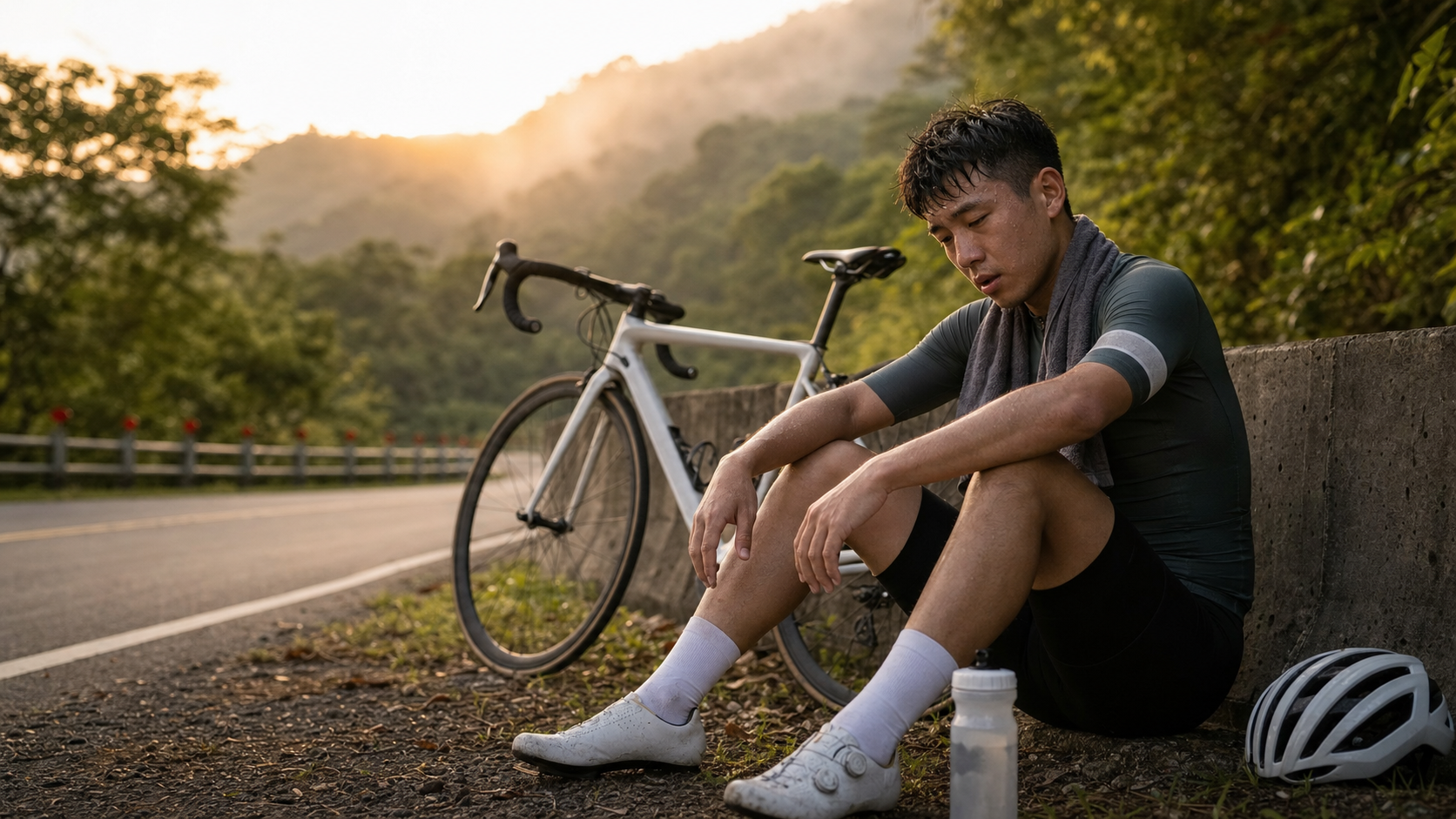
“More training is always better”—this belief has led many dedicated Taiwanese cyclists into the trap of overtraining. After weeks of consecutive high-intensity training, you may find your performance stagnating or declining, persistent whole-body fatigue, low mood, and even a growing aversion to riding. This is not a matter of willpower—it is the classic manifestation of Overtraining Syndrome (OTS).
The Physiological Mechanisms of Overtraining
Overtraining is the result of a long-term imbalance between training stress and recovery, involving dysfunction across multiple physiological systems:
Hormonal Imbalance
Chronic high training stress leads to dysfunction of the hypothalamic-pituitary-adrenal (HPA) axis:
- Persistently elevated cortisol: Increases catabolism, hindering muscle repair and synthesis
- Declining testosterone: The testosterone/cortisol ratio (T:C ratio) is a key monitoring metric; a drop of >30% is a warning sign of overtraining
- Reduced growth hormone secretion: Affects tissue repair and body composition
Autonomic Nervous System Dysregulation
- Parasympathetic-type OTS (common in endurance sports): Decreased resting heart rate, abnormal HRV fluctuations, lowered blood pressure
- Sympathetic-type OTS (less common): Elevated resting heart rate, insomnia, increased anxiety
Immune System Suppression
During high-intensity training, NK cell (natural killer cell) activity declines, making athletes more susceptible to colds or upper respiratory infections—a common early sign of OTS.
Classification and Severity of OTS
| Stage | Name | Duration | Primary Symptoms | Recovery Time |
|---|---|---|---|---|
| Mild | Functional Overreaching | A few days–a few weeks | Temporary performance decline; full recovery with adequate rest | 1–2 weeks |
| Moderate | Non-Functional Overreaching (NFO) | Several weeks–months | Persistent fatigue, mood swings, reduced training responsiveness | Several weeks–2 months |
| Severe | Overtraining Syndrome (OTS) | Months | Systemic dysfunction; complete cessation of training required | 3–6 months |
Early Warning Signs
If 3 or more of the following symptoms are present, training plans should be reassessed immediately:
Physiological signs:
- Resting heart rate 5–10 bpm above your personal baseline (for 3+ consecutive days)
- HRV values persistently below your personal baseline
- Abnormally high or low heart rate at the same power output
- Deteriorating sleep quality (difficulty falling asleep, frequent waking)
- Recurrent upper respiratory infections
- Delayed muscle soreness recovery (DOMS lasting more than 72 hours)
Psychological signs:
- Loss of motivation for training, beginning to dread riding
- Low mood, irritability, decreased concentration
- Increased performance anxiety
Performance signs:
- FTP or maximal power declining in testing
- The same training session feeling noticeably harder (elevated RPE)
- Regressing race or test results
Scientific Prevention Strategies
Monitoring Training Load
- Use the “Acute Training Load (ATL) / Chronic Training Load (CTL)” ratio to track training stress; ATL/CTL >1.5 is a high-risk zone
- Record HRV weekly to establish a personal baseline
- Complete a “Profile of Mood States” (POMS) questionnaire monthly
The Importance of Deload Weeks
Schedule a deload week every 3–4 weeks (reduce training volume by 40–50%, maintain intensity) to allow supercompensation to occur and prevent the accumulation of OTS.
Recovery Strategies
Mild (Functional Overreaching):
- Reduce training volume for 3–7 days, maintaining only low-intensity easy rides
- Increase sleep duration (target 8–9 hours)
- Ensure adequate carbohydrate and protein intake
Moderate to Severe OTS:
- Completely stop structured training for 2–4 weeks
- May engage in unstructured light activity (walking, easy swimming)
- Consult a sports medicine physician to assess hormonal status
- Seek psychological support (sports psychologist if necessary)
Practical Advice
- Taiwanese cyclists often over-push their bodies during the “build phase” before the Wuling KOM; it is recommended to begin systematic tapering 3 weeks before the event
- “Non-training stressors” such as work pressure, exam stress, or family upheaval also deplete recovery resources and should be factored into training load calculations
- Sleep is the most powerful recovery tool—for every hour of sleep lost, next-day maximal power drops by approximately 3–5%
- Keep a training log; three consecutive days of subjective feeling scores below 5 (out of 10) is a trigger point for tapering
Conclusion
Overtraining syndrome is preventable. Listening to your body’s signals, respecting the importance of recovery, and building a scientific monitoring system—these habits are not limiting your training; they are what allow you to progress consistently and sustainably over the long term. The best training is the kind you can keep improving from, uninterrupted, for decades.
Related Reading
- Early Warning Signs of Overtraining in Cycling: Your Body’s Signals to Stop
- Overtraining Syndrome for Cyclists: How to Identify and Recover from Overtraining
- Overtraining Syndrome (OTS): A Complete Scientific Guide to Identification, Prevention, and Recovery
- Overtraining Syndrome: How to Identify, Prevent, and Recover
一日北高常見問題大集合 | 攻略 | 路線 | 訓練 | 補給 | 自行車 單車 | 一日雙城 | 雙塔 | TWB北高360 | 屁股痛
6 年前
西進武嶺 免費訓練分析服務 Intervals | 練不夠還是練過頭?你哪一種類型選手?AI模型告訴你! | 備戰神器 | 公路車 訓練 | CT Yeh
4 年前
一日北高/長距離團騎 常見問題補充篇 / 組團或跟團的眉角 / 壯車友容易被瘦車友慢性拉爆 / 原來屁股痛可能是這個原因...? / 風場配速法 / 公路車 / CT Yeh
2 年前
本週北高前練習,連同天比的226們也來⋯鐵車真的太猛了 #cycling #北高
2 年前
CT 喇低賽) 單車 比賽總是沒照片? 攝影師的觀點大公開 姿勢就是力量! 請加速1.25倍收看
7 年前
Fitting訓練兩用功率車 ! Thinkrider ST900 完整實測!/ 坡度升降 / 鄰居測試/ smart bike/公路車/ CT Yeh
2 年前
一個測試有沒有認真練車的方法😂 #公路車
10 個月前
#公路車 #Fitting 靠人工智慧APP 幫你調整單車
6 年前