Introduction
In the world of competitive swimming, a 0.01-second difference often decides the outcome. The evolution of racing swimsuits—from early cotton suits to today’s aerospace-grade compression materials—has seen every generation of innovation push against the limits of physics. Taiwanese swimmers at the National Games, University Championships, and even on the world stage are increasingly relying on the advantages offered by swimsuit technology. This article provides an in-depth analysis of the core technologies behind racing swimsuits, helping readers make informed choices between budget and performance.
Core Technologies of Racing Swimsuits
Compression Levels and Muscle Stabilization
One of the most critical functions of a racing swimsuit is “compression technology.” Appropriate compression stabilizes the core muscle group and thigh muscles, reducing unnecessary muscle vibration during swimming, thereby slowing the rate of lactate accumulation. Research indicates that muscle compression intervention can improve local blood circulation and enhance proprioception, allowing athletes to maintain a more precise stroke rhythm during intense competition.
Compression levels are typically measured in “mmHg (millimeters of mercury).” The compression design of racing swimsuits focuses on the abdominal core and front of the thighs, differing from the logic of compression running tights, which emphasize the calves. Before purchasing, refer to the brand’s official compression distribution chart to confirm whether the compression design targets your specific weak points.
Material Science: The Combination of Polyurethane, Nylon, and Spandex
| Material | Characteristics | Ideal Use Case |
|---|---|---|
| Polyurethane (PU) outer layer | Extremely low friction coefficient, high water resistance | Outer covering layer of high-end racing swimsuits |
| Nylon base | Good elasticity, quick shape recovery | Main body of training- to racing-grade swimsuits |
| Spandex/Lycra blend | Two-way stretch, high chlorine resistance | Top choice for daily training swimsuits |
| Polyester | Best chlorine resistance, shape retention | Recommended for high-chlorine training environments |
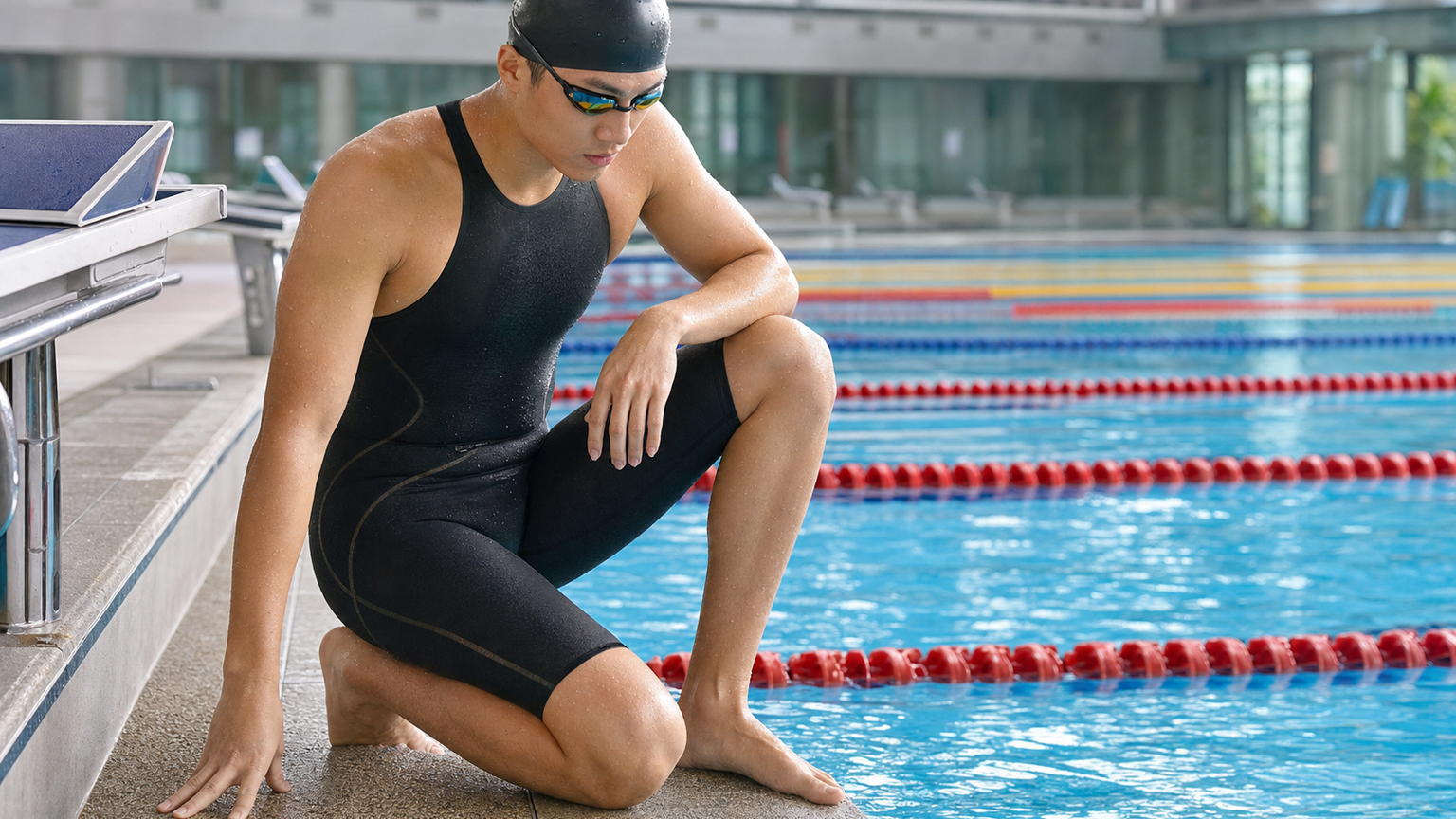
After the 2008 Beijing Olympics, FINA completely banned full-body polyurethane swimsuits (the so-called “fourth-generation fastskin suits”). Currently approved racing swimsuits are restricted to between the waist and knees (for men); women’s suits may extend to the neck, but the outer layer material must be breathable and not exceed the specified thickness.
Seam Technology: Ultrasonic Bonding vs. Traditional Sewing
Traditional sewn seams create slight protrusions on the swimsuit surface, generating micro-turbulence at high swimming speeds. Modern top-tier racing swimsuits employ “Ultrasonic Bonding” technology, which fuses fabric panels together, minimizing seam area and reducing swimming drag by 3–8% (according to brand test data; actual effects vary by individual technique).
Among racing swimsuit brands commonly available in the Taiwanese market, the Speedo LZR Racer series, Arena Carbon series, and YINGFA’s top-tier Chinese racing models all utilize similar technology, though price differences are significant, ranging from a few thousand to over ten thousand NT$.
The Importance of Fit and Testing Methods
Why “Uncomfortably Tight” Is Correct
The design logic of racing swimsuits is completely opposite to that of regular clothing. When trying one on land, you should feel noticeable compression, especially at the waist and thigh seams. This is normal, as the suit will loosen slightly in the water due to the fabric’s water-pressure adhesion effect. If it feels “just right” during the fitting, it will typically be too loose in the water, resulting in excess fabric creating drag.
Fit Testing Steps
- Strap test: Extend both arms forward to simulate the entry position; straps should not slip off or pull excessively on the back of the neck
- Waist test: Bend 90 degrees at the waist; there should be no gaps at the waist seam
- Thigh opening test: Perform a kicking motion; the leg openings should not shift noticeably
- Breathing test: Take a deep breath; there should be noticeable pressure on the chest, but not to the point of preventing normal breathing
- Dressing time: A properly fitted racing swimsuit typically takes 10–20 minutes to put on; if it slips on easily, the size is likely too large
Size Selection Recommendations
Sizing varies greatly between brands. It is recommended to use chest or waist measurements as the primary basis, rather than the garment size number. Feedback from many Taiwanese athletes indicates that Speedo runs small, while Arena follows European body types (with a larger waist). It is best to try suits on in person before purchasing, or consult swim shops with physical stores.
Practical Advice
- Beginner racers: Start with a nylon/spandex racing training suit in the NT$1,500–3,000 range, and confirm your tolerance for compression suits before upgrading
- Student athletes: A FINA-approved mid-range racing swimsuit is sufficient for domestic events like the University Championships; focus on technical training rather than equipment investment
- Advanced athletes: Limit each racing swimsuit to 5–10 important competitions, and never wear racing swimsuits for daily training to extend their lifespan
- Purchasing channels: Buy from reputable swim shops to avoid counterfeit products online (fake Speedo LZR suits are not uncommon on the market)
- Care methods: Rinse immediately with fresh water after competition to prevent residual chlorine from pool water, lay flat to dry, and never use a washing machine
Conclusion
The return on investment for a racing swimsuit varies from person to person. For professional athletes, the 1–2% performance improvement from a top-tier suit could be the difference between a medal and no medal; for amateur enthusiasts, investing the same amount in quality coaching often yields greater benefits. Understanding the technology behind racing swimsuits allows you to make rational purchasing decisions and find the option that best matches your competitive goals and budget.
Related Reading
- Equipment Adjustments for Swimmers: Details on Racing Suit and Goggle Fit
- The Impact of Swimsuit Choice on Performance: Time Differences Between Racing and Training Suits
- The Science of Buying Running Compression Tights: Complete Advice on Compression Levels, Materials, and Timing
- Racing Swimsuit Buying Guide: Speed Differences Between Bonded vs. Sewn Seams and Suitable Applications
3D 列印車褲墊 / 舒適改善? / 無痕 x 分區壓縮 / ATK & Decider系列 / JE22黑科技 / #公路車 #CTYEH
11 個月前
鉅齒紋輪組!? ControlTech MEG-T50 EVO 碳纖維幅條輪組/ 功率對比實驗 / 公路車 / CT Yeh
2 年前
Nepest NOVA 碳條輪組:輕量、空力、舒適一次滿足!/ 公路車 / CT Yeh
7 個月前
實景訓練台) 彰化經典百K 高強度喵團 90分鐘 跟著一起練功 2019 Indoor workout Changhua Classic 100 Taiwan
7 年前
西進武嶺 免費訓練分析服務 Intervals | 練不夠還是練過頭?你哪一種類型選手?AI模型告訴你! | 備戰神器 | 公路車 訓練 | CT Yeh
4 年前
[防寒衣體驗] 鐵人魂 三鐵 防寒衣試穿會 於松運 深水游泳池 鯨魚池
8 年前
再一組! 全碳幅條 碟煞/無內胎輪組 開箱! 到底好騎嗎? UNAAS X40 | 公路車 | CT Yeh
4 年前
#公路車 #Fitting 靠人工智慧APP 幫你調整單車
6 年前