Introduction
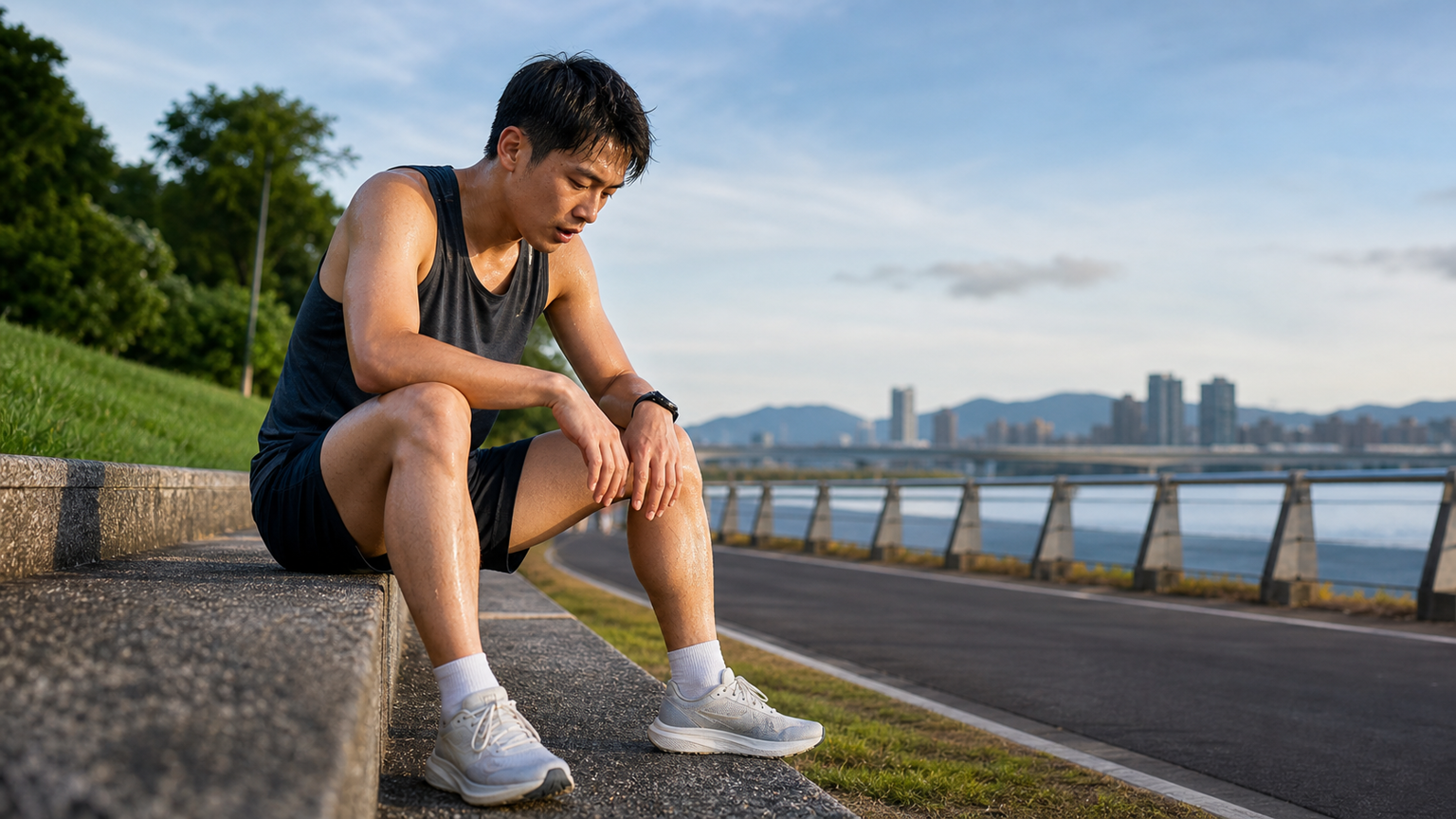
After finishing a marathon or completing a long run exceeding 30 kilometers, many Taiwanese runners share a similar experience: it’s not just sore legs, but a feeling of being “completely drained.” A week later, even after the muscle soreness in the legs has disappeared, they still feel a lack of power, reduced coordination, and even a loss of enthusiasm for training while running.
Behind these symptoms lies a frequently underestimated recovery issue: Neuromuscular Fatigue. Unlike muscle metabolic fatigue, it takes longer to recover from, is harder to detect, yet has a profound impact on the quality of subsequent training.
The Two Levels of Fatigue
Exercise physiologists categorize post-run fatigue into two main types:
| Fatigue Type | Primary Mechanism | Recovery Time | Subjective Sensation |
|---|---|---|---|
| Metabolic/Peripheral Fatigue | Glycogen depletion, lactate accumulation, ionic imbalance | 24–72 hours | Muscle soreness, heavy legs |
| Neuromuscular Fatigue | Reduced central drive, decreased neuromuscular junction function | 3–14 days (depending on intensity) | Reduced explosive power, poor coordination, mental fatigue |
After a moderate-intensity long run, metabolic fatigue can recover within 2–3 days, but full recovery of neuromuscular function often takes considerably longer.
The Physiological Mechanisms of Neuromuscular Fatigue
Central Fatigue
Central fatigue refers to a reduced capacity of the brain and spinal cord to drive the muscles. Key mechanisms include:
- Elevated Serotonin: After prolonged running, serotonin levels in the brain rise, which is associated with drowsiness and subjective feelings of fatigue
- Reduced Dopamine: Dopamine is involved in exercise motivation and voluntary muscle activation; when depleted, runners feel a lack of drive
- Decreased Neuronal Excitability: After prolonged activation, the firing threshold of neurons in the motor cortex increases, weakening the “command signals” sent to the muscles
Peripheral Neuromuscular Fatigue
Peripheral fatigue occurs below the level of the spinal cord:
- Neuromuscular Junction: After prolonged high-intensity contractions, the synthesis and release rate of acetylcholine decreases, reducing signal transmission efficiency
- Excitation-Contraction Coupling Dysfunction: Impaired calcium ion release and reuptake mechanisms directly affect muscle contraction force
- Muscle Fiber Damage: Particularly structural damage to muscle fibers caused by eccentric contractions (such as downhill running)
Methods for Assessing Neuromuscular Fatigue
Countermovement Jump (CMJ) Test
The reduction in countermovement jump height is the most commonly used field indicator for assessing neuromuscular fatigue. Research shows:
- Immediately after a marathon: CMJ height decreases by 10–20%
- 24 hours post-race: Still decreased by 8–15%
- Full recovery: Typically requires 7–14 days
Heart Rate Variability (HRV)
Heart rate variability reflects the balance of the autonomic nervous system and serves as an indirect indicator of neural recovery. Low HRV indicates the body remains in a sympathetic-dominant, high-alert state, and has not yet entered the parasympathetic-dominant state conducive to recovery.
Many running watches (such as Garmin and Polar) have built-in HRV monitoring features that Taiwanese runners can use for tracking.
Strategies to Accelerate Neuromuscular Recovery
Prioritize Sleep
Deep sleep (slow-wave sleep) is the core window for nervous system repair. During deep sleep:
- Growth hormone (GH) is secreted in large amounts, promoting muscle repair
- Metabolic waste products in the brain (including adenosine, which is linked to fatigue) are cleared
- Synaptic strengthening and reorganization (Synaptic Homeostasis) occurs
In the 1–3 days following high-volume training or a race, prioritize 7–9 hours of sleep and avoid evening blue light from phones that can interfere with falling asleep.
Light Active Recovery
Complete bed rest after a race is not the best option. Light aerobic activity (walking, cycling, swimming) can:
- Promote blood circulation and accelerate the clearance of metabolic waste
- Maintain basic neuromuscular activation, preventing excessive “deconditioning”
- Maintain a psychological connection with training
Recommended intensity: Zone 1 (below 50–60% of maximum heart rate), lasting 20–40 minutes.
Cold Water Immersion
- Temperature: 10–15°C
- Duration: 10–15 minutes
- Effects: Reduces inflammatory response, decreases muscle swelling, and subjectively accelerates the feeling of fatigue recovery
- Caution: Overuse (such as cold immersion after every training session) may suppress training adaptations; it is recommended only after important races or high-volume training sessions
Nutritional Strategies
- Protein Supplementation: Consume 20–40g of high-quality protein (eggs, milk, whey protein) within 30–60 minutes post-exercise to support muscle repair
- Carbohydrate Supplementation: Replenishes glycogen while lowering cortisol, reducing muscle breakdown
- Antioxidant-Rich Foods: Dark-colored fruits and vegetables, and berries can help combat oxidative stress, but high-dose antioxidant supplements are not recommended (they may interfere with training adaptations)
Special Considerations for Taiwanese Runners
Taiwan’s hot summer trail races (such as the Qixing Mountain Run) and the dense winter marathon season mean many Taiwanese runners face the problem of “too short an interval between races.” General recommendations:
- After a 5K race: 2–3 days of complete rest before resuming training
- After a half marathon: 3–5 days of easy training, with high-intensity work only resumed in the second week
- After a full marathon: The “1 mile (1.6km) per day” rule—meaning it takes approximately 26 days to recover to high training volume after running 42km
Practical Recommendations
- In your training log, record not only pace and distance, but also subjective fatigue (on a scale of 1–10) and sleep quality
- Within 3 days after a heavy training session, if subjective fatigue remains above 7, postpone the next high-intensity workout
- Use HRV apps (such as Elite HRV) for daily morning monitoring as a decision-making tool for training intensity
- After long runs in Taiwan’s summer, be sure to replenish electrolytes (sodium, potassium); the additional stress of heat on the nervous system cannot be overlooked
Conclusion
Neuromuscular fatigue is the most easily overlooked yet most profoundly impactful recovery issue after long-distance running. Learning to listen to the signals of your body’s nervous system, rather than merely waiting for muscle soreness to disappear, is the true essence of scientific training. In Taiwan’s dense road racing season, knowing “when to rest” is often harder than knowing “when to train”—but it is equally, if not more, important.
Related Reading
- The Science of Fatigue in Running: How Central and Peripheral Fatigue Jointly Determine Your Limits
- Core Endurance Training for Runners: Building Postural Stamina for Long-Distance Running
- Neuromuscular Fatigue in Cycling Training: Distinguishing and Recovering from Central vs. Peripheral Fatigue
- Marathon Post-Race Recovery Plan: A Scientific Guide from Week One to Week Four After Finishing
實景訓練台) 彰化經典百K 高強度喵團 90分鐘 跟著一起練功 2019 Indoor workout Changhua Classic 100 Taiwan
7 年前
一日北高/長距離團騎 常見問題補充篇 / 組團或跟團的眉角 / 壯車友容易被瘦車友慢性拉爆 / 原來屁股痛可能是這個原因...? / 風場配速法 / 公路車 / CT Yeh
2 年前
iPhone內建一秒變長腿🤣 車友必備#cycling
2 年前
西進武嶺 免費訓練分析服務 Intervals | 練不夠還是練過頭?你哪一種類型選手?AI模型告訴你! | 備戰神器 | 公路車 訓練 | CT Yeh
4 年前
Live) 備戰2019彰化經典百K 賽前攻略 (已完賽請看新影片
7 年前
一日北高常見問題大集合 | 攻略 | 路線 | 訓練 | 補給 | 自行車 單車 | 一日雙城 | 雙塔 | TWB北高360 | 屁股痛
6 年前
CT暗黑廚房) 車友必備 宇宙無敵鮮蚵湯 幫助訓練恢復 天然食補 好市多 超肥鮮蚵 破PR
7 年前
一日北高 11小時 賽後心得分享篇 | TWB北高360 | 一日雙城 | 單車 | 公路車
6 年前