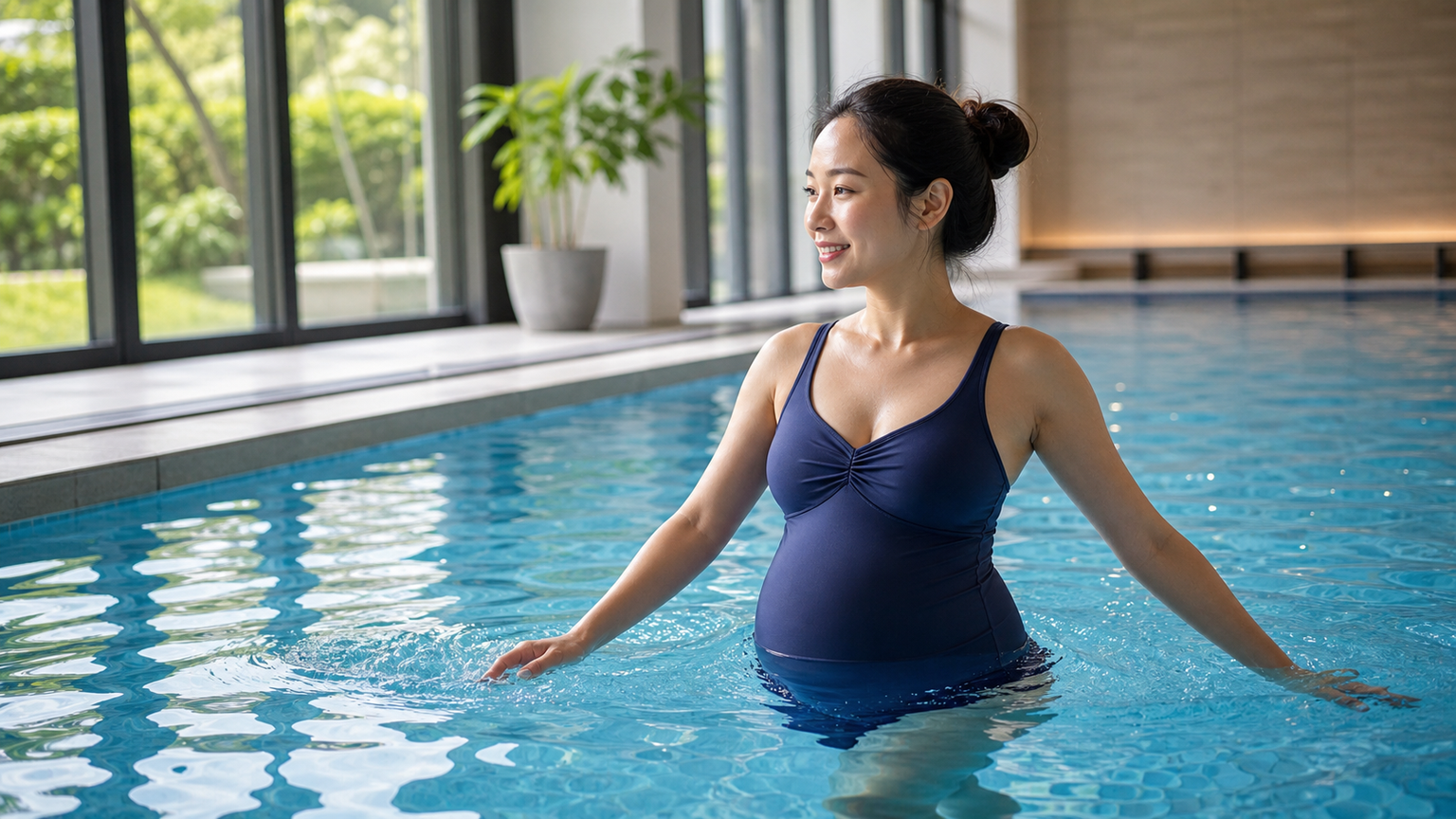
Introduction
Numerous studies support the benefits of appropriate exercise during pregnancy, including reducing the risk of gestational diabetes, controlling weight gain, improving emotional well-being, and shortening labor duration. However, many expectant mothers still have concerns about exercising during pregnancy: “Will water pressure from swimming affect the fetus?” “Is chlorinated water safe?” “What are the restrictions at different stages of pregnancy?”
In fact, both the American College of Obstetricians and Gynecologists (ACOG) and the Taiwan Association of Obstetrics and Gynecology recommend that healthy pregnant women accumulate at least 150 minutes of moderate-intensity aerobic exercise per week, and swimming is one of the most highly recommended options. The buoyancy of water reduces the pressure of the uterus on the spine, while gentle water resistance provides a full-body workout while minimizing the risk of injury.
Key Benefits of Swimming During Pregnancy
Relieving Common Discomforts
As pregnancy progresses, the physical burden on the mother increases. Swimming offers direct relief for several common discomforts:
- Lower back pain: Buoyancy reduces spinal strain, and water-based stretching exercises help relax tense lower back muscles
- Lower limb edema: The uniform massaging effect of water pressure on the legs promotes venous return and reduces pregnancy-related swelling
- Pelvic pain (symphysis pubis dysfunction): The aquatic environment allows the pelvis to move without gravitational pressure
- Nausea: Some pregnant women report that gentle water exercise temporarily alleviates nausea (especially during the first trimester)
- Sleep difficulties: Regular swimming can improve sleep quality during pregnancy; see related research for details
Maintaining Fitness and Controlling Weight
Excessive weight gain during pregnancy is associated with risks such as gestational diabetes, hypertension, and difficult labor. Swimming effectively burns calories without stressing the joints, helping maintain a reasonable rate of weight gain while strengthening the core muscles and pelvic floor muscles needed for childbirth.
Mental Health Benefits
Mood swings, anxiety, and mild depression are common during pregnancy. Swimming promotes endorphin release, and the social environment of the pool (interactions with classmates in prenatal swimming classes) has a significant positive impact on maternal mental health.
Swimming Focus by Trimester
| Trimester | Weeks | Key Characteristics | Swimming Recommendations | Special Precautions |
|---|---|---|---|---|
| First Trimester | 1-12 weeks | Pronounced nausea, strong fatigue | Light swimming, adjust according to energy levels | Ensure water temperature does not exceed 32°C |
| Second Trimester | 13-28 weeks | Most comfortable period | Best time to establish a swimming routine | Begin avoiding prolonged supine positions |
| Third Trimester | 29-40 weeks | Abdomen noticeably enlarged | Reduce intensity, add water walking | Avoid jumping movements, watch balance |
First Trimester (Weeks 1-12)
During this stage, the embryo is not yet stable, and many women experience severe nausea and fatigue. Swimming intensity should follow the principle of “feeling comfortable,” without pushing yourself to complete a fixed swimming volume.
Important consideration: The placenta is not fully formed during the first trimester, and the natural miscarriage rate is relatively higher, but swimming itself does not increase the risk of miscarriage. If you experience bleeding, abdominal pain, or have a history of miscarriage, consult your obstetrician first.
Second Trimester (Weeks 13-28)
This is the “golden period” for swimming during pregnancy. Morning sickness usually subsides, the abdomen is not yet too large, and energy levels are relatively high. It is recommended to establish a regular swimming routine during this stage, 3-4 times per week, 30-45 minutes per session.
After 20 weeks, avoid prolonged supine positions (as the uterus compressing the inferior vena cava may cause a sudden drop in blood pressure). Backstroke can be modified to a semi-side-lying position.
Third Trimester (Weeks 29-40)
The abdomen is noticeably enlarged, the center of gravity has shifted, and extra caution is needed when entering and exiting the water. The focus of swimming during this period shifts to “maintenance and relaxation” rather than building fitness:
- Reduce swimming intensity, add water walking and floating exercises
- Practice pelvic floor muscle exercises (Kegel exercises), which can be done in the water
- Strengthen deep breathing exercises to prepare for childbirth
- Shorten each swimming session to 20-30 minutes
Contraindications for Swimming During Pregnancy
Swimming should be paused and your obstetrician consulted immediately in the following situations:
- Placenta previa or low-lying placenta: Entering and exiting the pool and water activities may increase the risk of bleeding
- Signs of preterm labor: Regular contractions, abdominal tightness, increased watery discharge
- Gestational hypertension or preeclampsia: Activity level should be determined per physician’s instructions
- Multiple pregnancy: Especially triplets or more, activity level requires more careful assessment
- Cervical insufficiency: There is a risk of preterm birth, and vigorous activity is usually advised against
- Vaginal bleeding, severe abdominal pain, or a noticeable decrease in fetal movement after swimming
Common Concerns About Chlorinated Water Safety
Many pregnant women worry about the effects of pool disinfectant chlorine on the fetus. Current research shows that swimming in properly maintained pools with normal chlorine concentrations does not harm the fetus. Choosing a well-managed public pool with water quality meeting standards, and showering thoroughly after swimming, are the most important protective measures.
Swimming Resources for Pregnant Women in Taiwan
More and more prenatal programs in Taiwan are incorporating swimming as an option:
- Hospital-affiliated prenatal swimming classes: Some birthing centers (such as Taipei Mackay Memorial Hospital, Taichung Veterans General Hospital) offer prenatal water aerobics classes led by physical therapists or professional swimming coaches
- Public pool prenatal classes at city/county level: Mostly scheduled in the morning, with affordable fees
- Private prenatal swimming classes: Offer one-on-one or small group instruction that can be tailored to individual needs
When choosing a class, confirm that the instructor holds relevant training certifications for prenatal exercise, and ensure the pool maintains an appropriate water temperature (28-30°C).
Practical Tips
- Inform the lifeguard before swimming: Proactively notify the lifeguard on duty of your pregnancy so they can pay extra attention to your safety.
- Wear appropriate maternity swimwear: Choose supportive maternity swimwear that provides adequate support for your growing abdomen.
- Enter and exit the pool slowly: Use the pool steps, avoid diving or entering quickly, to prevent falls and impact to the abdomen.
- Monitor your heart rate at all times: Use the “able to talk but slightly breathless” intensity as your standard. If you feel very breathless or dizzy, rest immediately.
- Stay hydrated: Pregnant women have a higher basal metabolic rate, and combined with water exercise, drink 250ml of water before and after each swimming session.
- Bring a light snack: Avoid swimming on an empty stomach. Eat appropriately 1-2 hours before swimming to prevent low blood sugar.
Conclusion
Swimming is an excellent choice for exercise during pregnancy, providing a safe, effective, and comfortable exercise experience during this special period of constant physical change. From relieving back pain to maintaining cardiorespiratory function, from improving sleep to building stamina for childbirth, the benefits of swimming span the entire pregnancy.
Most importantly, every pregnant woman’s physical condition is different. Before starting prenatal swimming, be sure to confirm with your obstetrician and maintain close communication throughout the pregnancy. Approach swimming with respect for your body and enjoyment of the water, making this beautiful journey of nurturing all the healthier and more joyful.
Related Reading
- Prenatal Swimming Safety Guide: Beneficial for Both Mother and Baby
- Prenatal Swimming Safety Guide: Appropriate Swimming Intensity and Stroke Selection for Each Trimester
- Swimming During Pregnancy: Safety Guide and Benefits for Mother and Baby
- The Complete Guide to Prenatal Swimming: Safe Water Temperature, Stroke Selection, Intensity Limits, and Contraindications
靠單車減肥35公斤 心得分享與整理
7 年前
一日北高常見問題大集合 | 攻略 | 路線 | 訓練 | 補給 | 自行車 單車 | 一日雙城 | 雙塔 | TWB北高360 | 屁股痛
6 年前
[教學] Premiere 影片 手震 修正 教學 防抖 單眼 影像 GoPro 穩定 Video Stabilization
8 年前
CT暗黑廚房) 車友必備 宇宙無敵鮮蚵湯 幫助訓練恢復 天然食補 好市多 超肥鮮蚵 破PR
7 年前
CT 喇低賽) 武嶺牽車 才是王道 西進牽車四小時內秘訣 攝手位置 如何判斷 防抽筋小秘訣
7 年前
單車 梅山36灣 坡度介紹 路段介紹 空拍 (相關遊記影片,請參考說明或我的頻道喔,歡迎訂閱)
6 年前
一日北高/長距離團騎 常見問題補充篇 / 組團或跟團的眉角 / 壯車友容易被瘦車友慢性拉爆 / 原來屁股痛可能是這個原因...? / 風場配速法 / 公路車 / CT Yeh
2 年前
摔車後補裝備: 好市多新款單車安全帽& Specialized Romin 北高整路屁股都不痛的坐墊 | 一千元居然有MIPS | CT Yeh | 公路車
4 年前