Introduction
Taiwan has one of the highest diabetes prevalence rates in the world, with approximately 11–12% of adults living with diabetes, and this number continues to rise. For people with diabetes, regular aerobic exercise—especially cycling—is an important non-pharmacological tool for blood glucose management. However, cycling also presents challenges related to blood glucose fluctuations, and if not managed properly, it can lead to life-threatening hypoglycemic events.
This article provides clinically research-based blood glucose management strategies for cyclists with type 1 (T1DM) and type 2 (T2DM) diabetes.
The Impact of Cycling on Blood Glucose
Two Distinctly Different Exercise Effects
The effect of cycling on blood glucose depends on exercise intensity:
| Exercise Type | Intensity | Effect on Blood Glucose | Mechanism |
|---|---|---|---|
| Aerobic riding (> 30 minutes at low intensity) | Zone 1–2 | Significantly lowers blood glucose | Increased muscle glucose uptake, enhanced insulin sensitivity |
| High-intensity climbing or intervals | Zone 4–5 | Initially raises, then lowers | Catecholamine secretion promotes glycogenolysis (transient glucose elevation) |
| Long-distance endurance (> 2 hours) | Moderate intensity | Continuously lowers, risk of delayed hypoglycemia | Muscle glycogen depletion, increased insulin sensitivity lasting 12–24 hours |
Delayed Hypoglycemia: The Risk Requiring the Most Attention
After long-distance rides, muscles continue to take up glucose from the bloodstream to replenish glycogen, which may cause hypoglycemia several hours after the ride ends, or even the following night (nocturnal hypoglycemia). This poses a significant safety risk for people with diabetes using insulin.
Management for Cyclists with Type 2 Diabetes (T2DM)
Blood Glucose Improvement Benefits
Research shows that T2DM patients who engage in 150 minutes of moderate-intensity aerobic cycling per week can achieve:
- HbA1c reduction of 0.5–1.0%
- Fasting blood glucose reduction of 10–20 mg/dL
- 20–40% improvement in insulin sensitivity
Medication Adjustment Considerations
- Metformin: Complements the blood glucose-lowering effects of exercise; no special adjustment needed
- Sulfonylureas: Stimulate insulin secretion, leading to a higher risk of hypoglycemia during rides; discuss with your physician whether the dose should be reduced
- SGLT-2 inhibitors (e.g., Empagliflozin): Combined with exercise may lower blood glucose excessively; confirm with your physician before long-distance rides
- GLP-1 receptor agonists (e.g., Semaglutide): Provide sustained and stable blood glucose effects; relatively safe when combined with cycling
Management for Cyclists with Type 1 Diabetes (T1DM)
Pre-Ride Blood Glucose Targets
| Scenario | Recommended Blood Glucose Range (Pre-Ride) | Management Approach |
|---|---|---|
| General low-intensity riding | 126–180 mg/dL | Start directly, carry supplies |
| Long distance (> 2 hours) | 144–200 mg/dL | Moderately raise starting blood glucose |
| Blood glucose < 90 mg/dL | Not recommended to start | Reassess after consuming 15–20g of carbohydrates |
| Blood glucose > 250 mg/dL | Delay ride, check ketones | If signs of ketoacidosis, exercise is prohibited |
Insulin Adjustment Strategies
Insulin pump (CSII) users:
- 60–90 minutes before riding, reduce basal rate by 50–80%
- After long-distance rides, the basal rate reduction can be maintained for 6–8 hours post-ride (to prevent delayed hypoglycemia)
Basal + rapid-acting insulin regimen:
- Reduce the rapid-acting insulin dose for the pre-ride meal by 25–50%
- The basal insulin dose on the night of a long-distance ride can be reduced by approximately 20% (requires individualization; discuss with your physician)
The Continuous Glucose Monitoring (CGM) Revolution
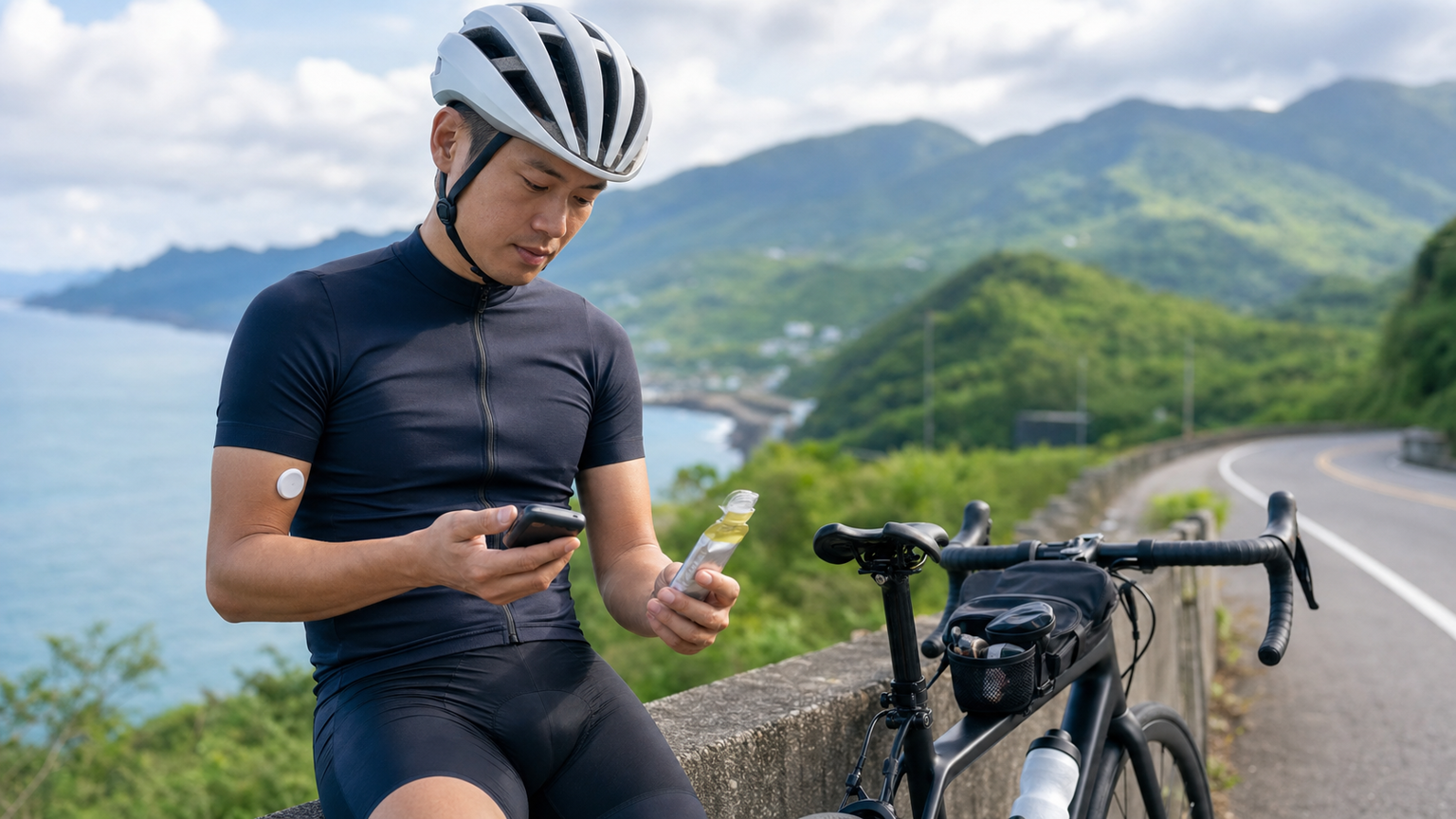
Modern CGM devices (such as FreeStyle Libre, Dexcom G7) allow cyclists to see blood glucose trends in real time, making them a revolutionary tool for T1DM cyclists:
- Downward glucose trend arrow (↓↓) → Consume carbohydrates immediately, without waiting for symptoms to appear
- Upward glucose trend arrow (↑↑) during high-intensity segments → Temporarily normal; usually returns to baseline naturally
- Set a hypoglycemia alert (< 70 mg/dL) for early intervention
Blood Glucose Management During Rides
Fueling Principles
- For rides lasting over 30 minutes, monitor or assess blood glucose every hour
- Blood glucose < 100 mg/dL → Immediately consume 15–20g of fast-acting carbohydrates (juice, energy gels, sports drinks)
- For long-distance rides, proactively consume 15–30g of carbohydrates every 45–60 minutes (even if blood glucose is normal)
Essential Hypoglycemia Emergency Gear for Cyclists
- Fast-acting carbohydrates: glucose tablets (fastest absorption), juice packs, sports drinks
- Glucagon emergency injection kit (essential for T1DM cyclists)
- Medical identification bracelet (informs emergency responders of diabetes status)
- Inform riding companions how to recognize hypoglycemia symptoms and how to provide first aid
Practical Advice
- Before attempting long-distance rides or new intensities for the first time, discuss your plan with an endocrinologist
- Record blood glucose data from every ride to build a personalized blood glucose response profile
- Supply stops on Taiwan’s mountain roads can be far apart; T1DM cyclists should carry sufficient emergency carbohydrates for hypoglycemia
- Don’t drink alcohol on an empty stomach at post-ride meals (alcohol suppresses hepatic glucose output, increasing the risk of hypoglycemia)
- Supportive diabetes cycling communities (such as the Taiwan Sugar Friends Long Ride Facebook group) are extremely valuable resources
Conclusion
Diabetes is not a barrier to cycling, but rather a physiological condition that requires an extra measure of wisdom to manage. Through scientific blood glucose monitoring, personalized insulin adjustments, and thorough fueling preparation, many people with diabetes in Taiwan have already completed island-wide tours and conquered Wuling. With your physician’s support, let cycling become your most powerful non-pharmacological tool for blood glucose management.
Related Reading
- Cycling and Diabetes Management: The Cycling Prescription for Blood Glucose Control
- Cycling Strategies for People with Diabetes: Stabilizing Your Blood Glucose Curve with Pedaling
- Cycling for Type 2 Diabetes Management: Success Stories and Science from Taiwanese Diabetic Cyclists
- Cycling and Diabetes Management: The Science of Cycling’s Effects on Blood Glucose Control and Insulin Sensitivity
靠單車減肥35公斤 心得分享與整理
7 年前
#公路車 #Fitting 靠人工智慧APP 幫你調整單車
6 年前
2016/4/20 - 中社路 夜騎 半年甩肉14KG 後測
10 年前
碟煞公路車 銑面器 !? 原來銑完差這麼多! 降低蹭碟機率! | TIME 公路車 保養小記錄 | CT Yeh
3 年前
2025 自行車錶排行榜 兩萬車友大數據 / Garmin Bryton 排名會大洗牌嗎? / 全新的碼表前身分析 /公路車 / CT Yeh
1 年前
一日北高常見問題大集合 | 攻略 | 路線 | 訓練 | 補給 | 自行車 單車 | 一日雙城 | 雙塔 | TWB北高360 | 屁股痛
6 年前
4K 東眼山 x 水蜜桃冰沙 百人單車約騎! 操完再吃冰 多爽快
7 年前
台北大雁西飛 約騎挑戰 feat. Doris | 公路車 | CT Yeh
3 年前