Introduction
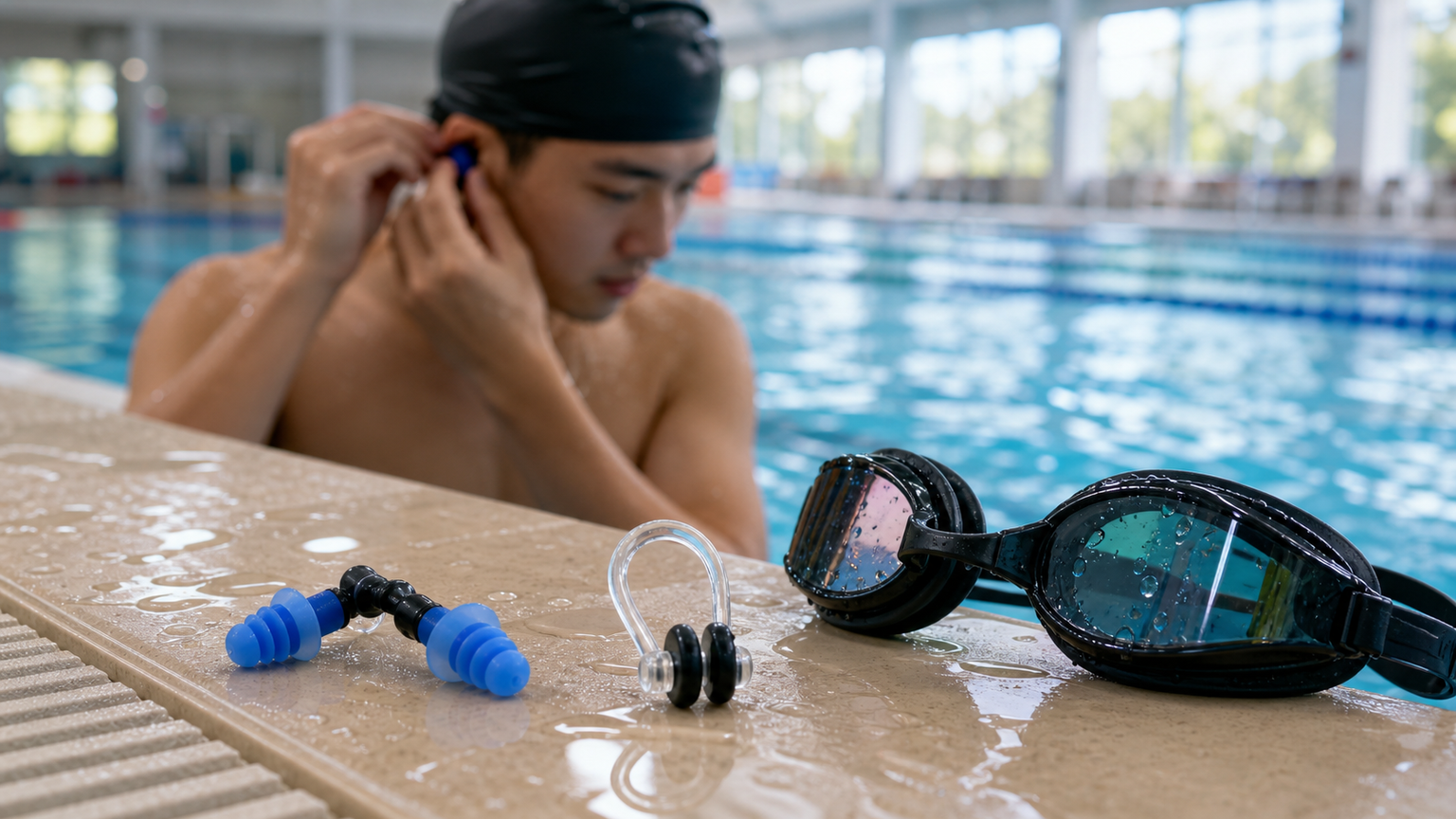
Among swimming-related health issues, “swimmer’s ear” (otitis externa) is one of the most overlooked yet quite bothersome problems. Water that repeatedly lingers in the ear canal creates an ideal environment for bacteria and fungi to multiply. Nose clips, meanwhile, prevent pool water from entering the nasal cavity, offering protection for swimmers who feel nasal irritation from chlorinated water. Although these two pieces of gear may seem minor, for Taiwanese swimmers training at high frequency, correctly using waterproof protective equipment can effectively reduce infection risk and maintain long-term training continuity.
An In-Depth Look at Swim Earplugs
Causes and Risks of Otitis Externa
Otitis externa is an infection of the skin lining the ear canal, commonly seen in frequent swimmers. The main mechanisms behind it are:
- Prolonged water retention in the ear canal disrupts the ear canal skin’s natural acidic environment (pH 4–5)
- Chlorine in pool water further irritates the ear canal skin, weakening its barrier function
- Bacteria (most commonly Pseudomonas aeruginosa) or fungi multiply rapidly in the moist environment
Symptoms include itching and pain in the ear canal (worsened by pulling on the outer ear), increased discharge, and in severe cases, temporary hearing loss, requiring treatment with antibiotic or antifungal ear drops.
Comparing Earplug Materials
| Material | Waterproofing | Comfort | Durability | Best For |
|---|---|---|---|---|
| Molded silicone earplugs | Excellent | High | High (reusable) | General training and competition use |
| Moldable silicone putty | Excellent (high fit) | Medium-high | Medium (about 5–10 uses) | Swimmers with unusually shaped ear canals |
| Latex earplugs | Medium | Medium | Medium | Budget-conscious everyday use |
| Foam earplugs | Low (not recommended for swimming) | High | Low | Suitable only for noise protection, not swimming |
| Custom silicone ear molds | Best | Highest | Highest | Frequent trainers, those needing hearing protection |
How to Correctly Wear Molded Silicone Earplugs
Many users report poor waterproofing from their earplugs, which is often due to incorrect insertion technique:
- Clean your hands and make sure the earplug surface is dry
- Gently twist the earplug and insert it into the ear canal in a spiral motion (never push it straight in)
- Gently pull the outer ear outward to straighten the ear canal, then adjust the earplug’s position
- Confirm the earplug forms a complete seal, and gently shake your head to check there’s no looseness
- Double-check the seal again right before entering the water
Applications of Moldable Silicone Putty Earplugs
Moldable silicone putty earplugs are a soft, wax-like material that can be shaped freely to fit an individual’s outer ear, sitting directly over the entrance of the ear canal (rather than being inserted inside it). They are especially effective for swimmers with irregularly shaped ear canals or those whose traditional earplugs tend to fall out. Brands such as Speedo Biofuse or Mack’s Pillow Soft are available at pharmacies in Taiwan.
Nose Clip Function and Buying Guide
When Nose Clips Are Needed
A nose clip isn’t essential gear for every swimmer. It’s primarily useful for:
- Backstroke and butterfly swimmers (entry angles make it easy for water to enter the nose)
- Beginners who haven’t yet mastered underwater exhalation technique
- Swimmers with sinusitis or sensitive nasal mucosa
- Aquatic skill events (synchronized/artistic swimming)
Choosing Nose Clip Material and Grip Strength
| Type | Grip Strength | Comfort | Best For |
|---|---|---|---|
| Soft silicone clip | Moderate | High | Everyday training use |
| Metal spring clip (silicone-coated) | Stronger | Medium | Competitive swimmers, butterfly/backstroke |
| Adjustable nose clip | Adjustable | High | Swimmers with non-standard nose bridge width |
A clip with too little grip strength tends to fall off on water entry impact, while one that’s too strong causes discomfort around the nasal bones with extended use. The ideal choice is one that stays secure on water entry without causing noticeable pressure.
Combining Earplugs and Nose Clips
For backstroke swimmers or competitive swimmers who roll frequently underwater, using earplugs and a nose clip together forms a complete waterproof protection setup. In formal competition, nose clips are especially common, particularly during butterfly and backstroke turns.
Common combo sets available in the Taiwan market:
- Speedo Biofuse series (earplug + nose clip set)
- Arena ear and nose protection set
- TYR silicone earplug set
A Complete Plan for Preventing Otitis Externa
Beyond wearing earplugs, complete ear canal protection also includes post-swim care:
- Post-swim drainage technique: Tilt your head to let gravity help drain water from the ear canal; gently pulling the outer ear can widen the canal to aid drainage
- Drying the ear canal: Pat (don’t rub) the outer ear dry with a towel, or use a hair dryer on a low, cool setting held at least 30 cm away to dry the ear canal
- Preventive ear drops: After each swim, use an equal mixture of acetic acid (white vinegar) and isopropyl alcohol (rubbing alcohol) as ear drops to help restore the ear canal’s acidic environment and speed up drying. Consult an ENT physician before use, especially if you have a history of a ruptured eardrum
- Avoid pushing cotton swabs deep into the ear canal: Cotton swabs can push debris deeper or damage the ear canal skin, and should only be used to clean the outer ear
Practical Recommendations
- Swimmers who train more than 3 times per week are strongly advised to use silicone earplugs as a preventive measure
- If you notice ear pain or increased discharge, stop swimming immediately and see a doctor — don’t keep swimming with earplugs and push through it
- For children’s swim classes: parents should check after every session that no water remains in the child’s ear canal, and help build the habit of tilting the head to drain water after swimming
- Custom ear molds (made by an ENT clinic or hearing aid shop) are the best investment for swimmers doing long-term, high-intensity training, costing around NT$1,500–3,000 and lasting several years
Conclusion
Although earplugs and nose clips are just accessories among swim gear, they play a role that shouldn’t be overlooked in protecting swimmers’ health and maintaining training continuity. Recurring otitis externa can force an athlete to stop training for weeks — a cost far greater than the price of a pair of silicone earplugs. Building the right waterproof protection habits lets every training session build on the last, safely.
Related Reading
- Swimming and Ear, Nose, and Throat Issues: Preventing and Managing Otitis Externa and Sinusitis
- The Complete Guide to Swimmer’s Ear Protection: Preventing Otitis Externa, Ear-Drying Techniques, and Choosing Earplugs
- Swimmer’s Ear Issues: Preventing Otitis Externa and Choosing Protective Earplugs
- Ear Care After Swimming: Preventing and Managing Swimmer’s Ear (Otitis Externa)
單車 重低音 藍芽喇叭 音質實測 SoundBot SB525 Real Sound Test
8 年前
洗單車神器 吹水機! 實際洗車用用看 暴力洗鍊條大法 | 公路車 | CT Yeh
4 年前
DJI OSMO Pocket 外接麥克風 測試 External Microphone Audio Adapter 原廠 聲音轉接頭 開箱 3.5mm
7 年前
大家都在開箱的...單車用藍芽對講耳機真的有幫助嗎? SENA BiKom 20 長距離旅遊 & 海鷗繞圈賽 實際體驗心得 / 公路車 / CT Yeh
9 個月前
詳測) 小米 電動打氣筒 公路車胎要充多久? 值得買嗎? 米家充氣寶 小心燙手!
7 年前
用了AirTag 單車就不怕被偷?盲點大測試 結果… |公路車|CT Yeh
5 年前
碟煞公路車 銑面器 !? 原來銑完差這麼多! 降低蹭碟機率! | TIME 公路車 保養小記錄 | CT Yeh
3 年前
一日北高/長距離團騎 常見問題補充篇 / 組團或跟團的眉角 / 壯車友容易被瘦車友慢性拉爆 / 原來屁股痛可能是這個原因...? / 風場配速法 / 公路車 / CT Yeh
2 年前