Introduction
For people in Taiwan who swim regularly, tight, itchy skin after a swim is practically routine. Many swimmers describe their skin as feeling “sunburned” afterward, with redness, itching, and even fine peeling across the body. These are all classic reactions to irritation and damage caused by pool chlorine (the disinfectant).
Taiwan’s public pools use chlorine compounds (mainly sodium hypochlorite) for disinfection in line with hygiene standards, maintaining a free available chlorine concentration of 0.5-1.0 mg/L. While this is essential for safe swimming, prolonged exposure to a chlorinated environment can still cause cumulative skin damage, especially for people with sensitive skin or atopic dermatitis.
How Chlorine Damages the Skin
Breaking Down the Skin’s Natural Protective Barrier
The outermost layer of healthy skin is covered by a protective film made of sebum, keratin, and natural moisturizing factors (NMF), known as the “acid mantle,” with a pH of roughly 4.5-5.5. This film prevents moisture loss and blocks external irritants and bacteria.
Pool water typically has a pH of 7.2-7.8, and combined with the oxidizing power of hypochlorite ions (OCl⁻), prolonged contact will:
- Break down the structure of keratin, loosening the stratum corneum and weakening the barrier function
- Dissolve sebum (the skin’s natural moisturizing oil), reducing the skin’s ability to retain water
- Reduce beneficial microbial flora on the skin’s surface, increasing infection risk
- Stimulate immune cells, triggering allergic reactions in sensitive individuals
The Cumulative Effect of Chloramines
Even more notable: when pool chlorine combines with human secretions (sweat, skin oils, urine), it forms “chloramines,” which are more irritating than the original hypochlorite. This is why a pool with a stronger “chlorine smell” isn’t actually “cleaner” — that unpleasant odor is a marker of high chloramine levels, which often indicates the pool isn’t being managed properly.
Common Manifestations of Chlorine-Related Skin Damage
| Symptom | Cause | Susceptible Groups |
|---|---|---|
| Dry, tight skin | Sebum dissolution, water loss | All swimmers, worse in autumn/winter |
| Itching or stinging | Damaged skin barrier exposing nerve endings | Sensitive skin, older adults |
| Redness | Mild inflammatory response | Fair skin or allergy-prone individuals |
| Peeling | Accelerated stratum corneum turnover to repair damage | Frequent swimmers (5+ times per week) |
| Eczema flare-ups | Chlorine damages the immune barrier, triggering inflammation | People with atopic dermatitis |
| Folliculitis | Bacterial invasion after pores open up | People with a history of folliculitis |
A Complete Skin Care Routine for Swimming
Pre-Swim Protective Measures
30 minutes before entering the water, you can take the following protective steps:
-
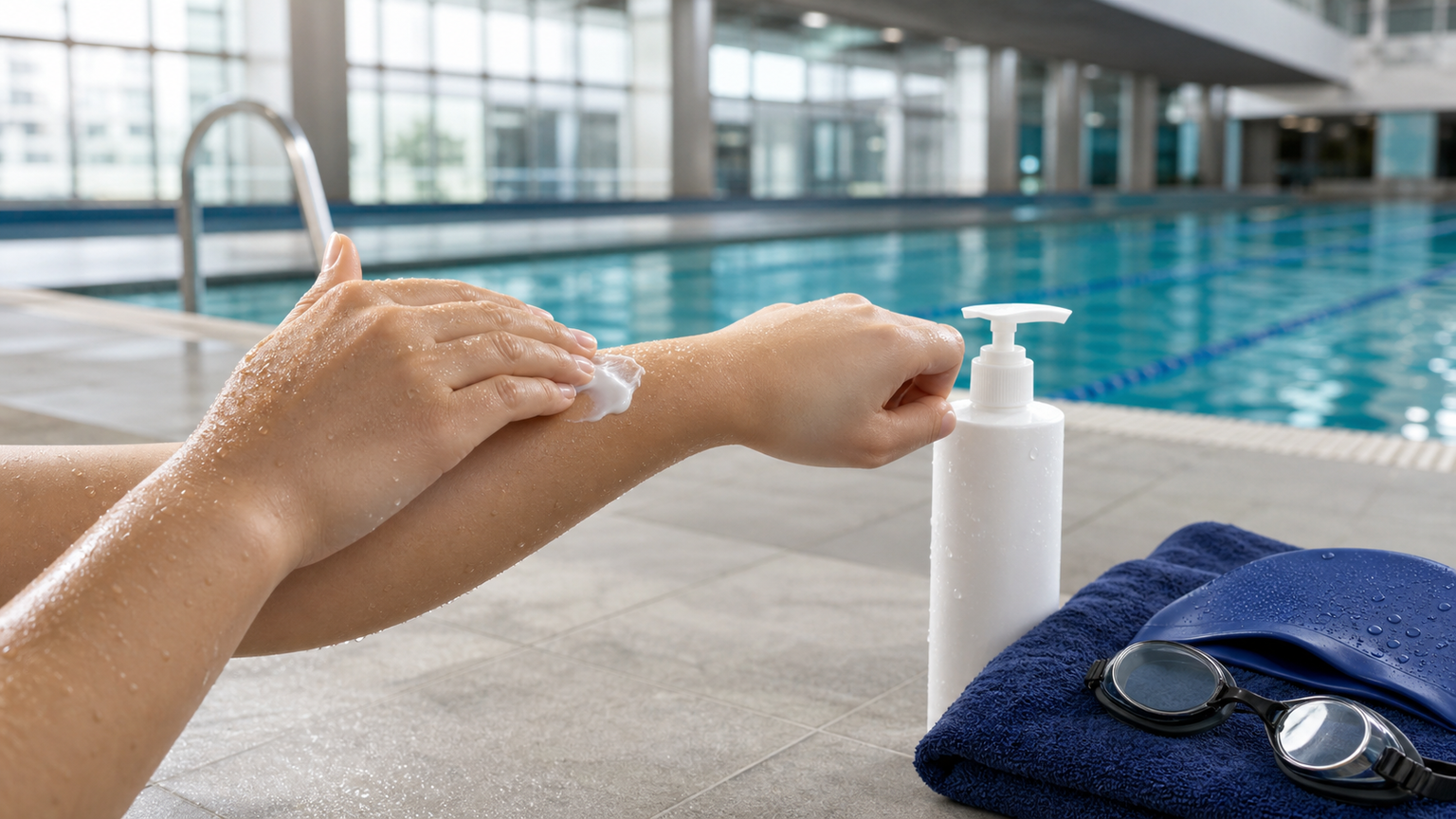
Apply a waterproof lotion or waterproof petroleum jelly (Vaseline): Apply a thin waterproof barrier to areas prone to dryness (elbows, knees, shoulders/neck, face) to reduce direct contact between chlorinated water and skin. Suitable for sensitive skin or those with eczema.
-
Wear protective gear: A swim cap (protects the scalp and hair) and watertight silicone goggles (protect the sensitive skin around the eyes) are essential. A nose clip can also reduce inhalation of chlorinated water and irritation to the respiratory mucosa.
-
Shower before entering the water: Letting your skin fully absorb clean water reduces how much pool chlorine the stratum corneum subsequently absorbs (“skin that’s already saturated with water absorbs less chlorine than dry skin”).
-
Avoid exfoliating products before swimming: Skip exfoliation or scrubs on swim days to avoid further weakening the skin barrier.
Post-Swim Recovery Routine
Every step after swimming is an opportunity to repair your skin — don’t rush through it:
Step 1: Rinse off as soon as possible (within 5 minutes of leaving the water)
The longer chlorinated water stays in contact with skin, the deeper the damage. Rinse your whole body thoroughly with clean water as soon as you get out, including easily overlooked areas like behind the ears and between the toes.
Step 2: Use a gentle, mildly acidic body wash (pH 5.5)
Choose a body wash labeled “pH 5.5,” “suitable for sensitive skin,” or “soap-free,” which helps quickly restore the skin’s mildly acidic environment. Popular choices in Taiwan include the CeraVe line and La Roche-Posay shower oils.
Step 3: Rinse with warm water (no hotter than 38°C)
Water that’s too hot further dissolves sebum, worsening dryness. Keep the water temperature between 36-38°C and limit shower time to 5-10 minutes.
Step 4: Moisturize immediately after drying off (within 3 minutes of leaving the shower)
The moment right after patting your skin dry, while it’s still slightly damp, is the “golden window” for moisturizing — the stratum corneum is open at this point and absorbs moisturizing ingredients most effectively.
Recommended ingredients:
- Ceramide: The core ingredient for repairing the skin barrier
- Hyaluronic acid: Highly effective at locking in moisture
- Shea butter: Rich, nourishing effect, ideal for dry areas
- Colloidal oatmeal: Anti-inflammatory and soothing, ideal for itchy, sensitive skin
Step 5: Treat facial skin separately
Facial skin is thinner and more sensitive than the rest of the body, so use a moisturizer formulated specifically for the face, followed by sunscreen after moisturizing if you’re heading back outside.
Extra Recommendations for Special Groups
People with Atopic Dermatitis (Eczema)
- Apply a thick layer of petroleum jelly (a waterproof barrier) to eczema-prone areas before swimming
- Choose pools with well-managed chloramine levels (a pool with a lighter chlorine smell generally indicates better disinfection management)
- Apply a medical-grade moisturizing cream (such as a steroid-containing moisturizer) for therapeutic moisturizing immediately after swimming
- If eczema clearly worsens after swimming, pause swimming and consult a dermatologist
Swimming in Autumn/Winter with Dry Skin
Autumn and winter in Taiwan are dry, and air-conditioning-driven dehumidification further reduces the skin’s baseline water-retention ability. When the swimming season changes, it’s worth stepping up your moisturizing routine: apply a waterproof cream before swimming, use a richer, oil-based moisturizing balm (rather than a light lotion) afterward, and consider limiting swimming to no more than 4 times a week to give your skin time to recover.
Practical Tips
-
Choose a well-managed pool: Pools with well-managed water quality (no strong chloramine odor, regular water changes, high water clarity) cause significantly less skin damage than poorly managed pools.
-
Bring your own moisturizing products: Don’t rely on the hand soap or body wash provided in the pool locker room — bring your own gentle cleanser and moisturizer.
-
Hair care: Apply a leave-in conditioner to your hair before swimming, and use a gentle shampoo and a deep conditioning hair mask at least once a week afterward to reduce chlorine-related dryness and split ends.
-
Monitor your skin’s response: If itching or a rash persists for more than 2 weeks despite following the above care routine, see a dermatologist to check for chlorine allergy or other skin conditions.
Conclusion
The health benefits of swimming far outweigh the mild skin effects of chlorine exposure, but that doesn’t mean skin protection should be ignored. Building a habit of “protect before swimming, repair after swimming” lets your skin maintain a healthy barrier while you enjoy exercising in the water. Once internalized, this routine becomes as natural a part of your life as swimming itself.
Related Reading
碟煞公路車 銑面器 !? 原來銑完差這麼多! 降低蹭碟機率! | TIME 公路車 保養小記錄 | CT Yeh
3 年前
洗單車神器 吹水機! 實際洗車用用看 暴力洗鍊條大法 | 公路車 | CT Yeh
4 年前
CT暗黑廚房) 車友必備 宇宙無敵鮮蚵湯 幫助訓練恢復 天然食補 好市多 超肥鮮蚵 破PR
7 年前
一起升級!海鷗盃LSD團練...JJSC Zone2招待 騎到手抖 / 公路車 / CT Yeh
1 天前
嘉義大埔、阿婆灣挑戰賽,美到以為在日本!ft. 環騎5 Cool 西拉雅188 / 公路車 / CT Yeh
7 個月前
洗完單車整隻手黑的解決妙招🤣 #bike
1 年前
水金九不厭五分 10度寒流冷到不願停!feat. 卡卡 / 公路車 / CT Yeh
6 個月前
自助洗車場 洗單車 50元有找 清鍊條大法 居然還有小小兵
7 年前