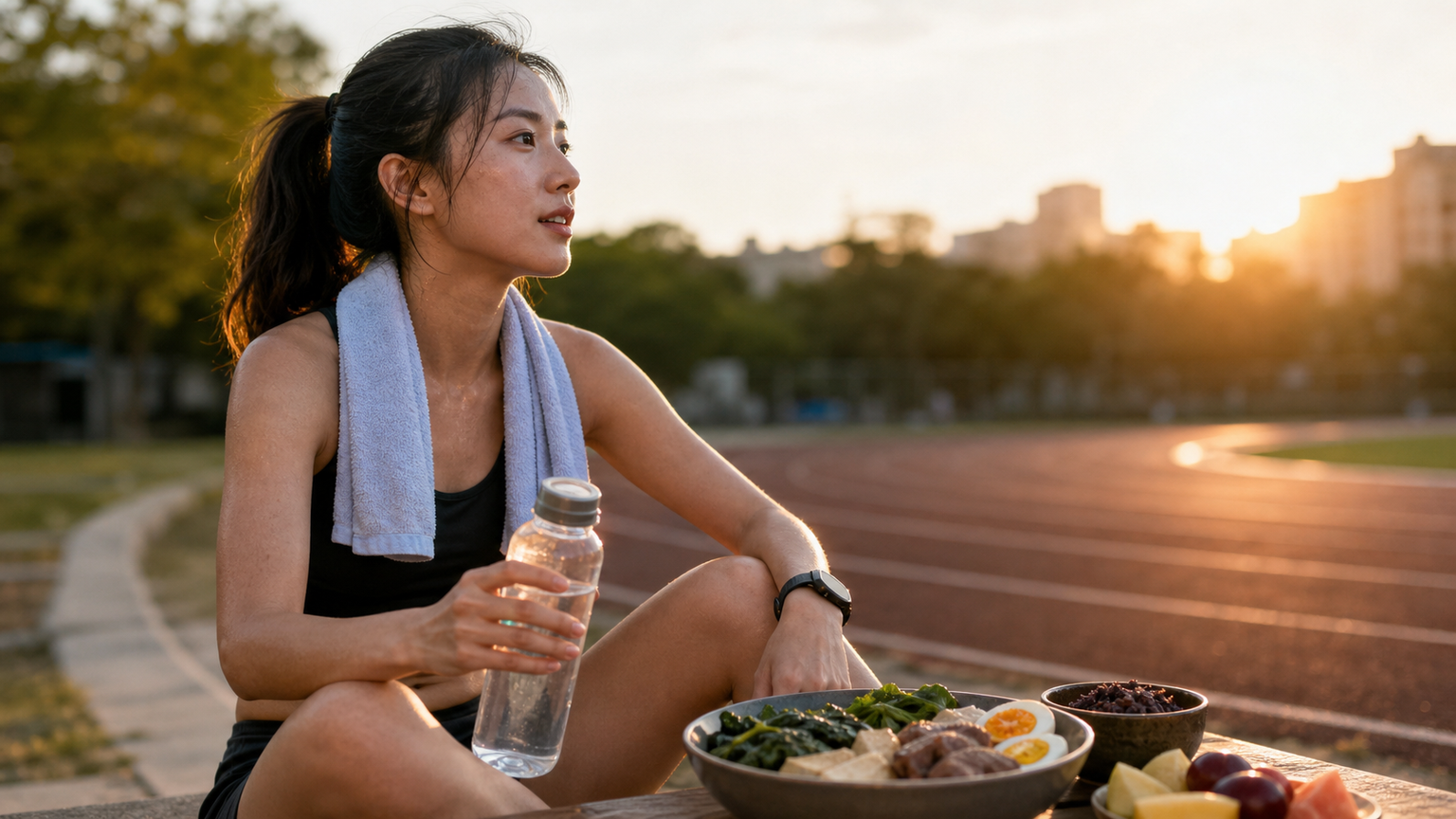
Introduction
Have you noticed that your training volume hasn’t decreased, yet your pace is inexplicably getting slower? Getting unusually winded on hills, struggling to recover after long runs, looking pale, or having brittle nails? These could all be signs of iron deficiency—a problem that is quite common among female runners in Taiwan, yet often overlooked.
Iron is the core element in synthesizing hemoglobin. Hemoglobin is responsible for transporting oxygen from the lungs to working muscles. Once iron levels are insufficient, oxygen-carrying capacity drops, and running performance is immediately affected.
Why Are Runners Especially Prone to Iron Deficiency?
Foot Strike Hemolysis
When running, the repetitive impact of the foot striking the ground creates micro-trauma that destroys red blood cells in the capillaries of the feet, releasing hemoglobin into the plasma and excreting it through the kidneys. Long-distance runners therefore lose iron at a faster rate than the general population.
Menstrual Iron Loss in Women
Women lose an average of 30–50 ml of blood per menstrual cycle, equivalent to 15–25 mg of iron. For female runners who are simultaneously dealing with the demands of running, the need for iron replenishment during the menstrual cycle is especially urgent.
Low-Intake Dietary Patterns
Many runners reduce meat consumption to control weight, or adopt vegetarian diets, leading to insufficient intake of heme iron (derived from animal sources, with high absorption rates).
Post-Training Inflammatory Response
After intense exercise, the body secretes inflammatory cytokines (IL-6), which in turn stimulates the secretion of hepcidin—a hormone that regulates iron absorption. Hepcidin levels rise within 3–6 hours after exercise, suppressing intestinal iron absorption. This means that supplementing iron immediately after high-intensity training results in very low absorption efficiency.
The Three Stages of Iron Deficiency
| Stage | Serum Ferritin | Hemoglobin | Symptoms |
|---|---|---|---|
| Iron Depletion (Stage 1) | Low (< 20 ng/mL) | Normal | Mild fatigue, not obvious |
| Iron-Deficient Erythropoiesis (Stage 2) | Very low (< 12 ng/mL) | Slightly low | Slow recovery after training, declining pace |
| Iron Deficiency Anemia (Stage 3) | Very low | Clearly low (< 12 g/dL) | Severe breathlessness, dizziness, rapid heartbeat |
Important Note: Even if hemoglobin is still within the normal range, low ferritin levels (Stage 1–2) can already affect running performance. This condition is known as “Iron Deficiency without Anemia” and is the hidden issue most easily overlooked by runners.
Dietary Sources of Iron
Iron in food comes in two types, with significantly different absorption rates:
Heme Iron—From Animal Sources
- Absorption rate: 15–35%
- Pork liver (100 g): approximately 15 mg
- Beef (100 g): approximately 2.5 mg
- Clams (100 g): approximately 14 mg
- Duck blood (100 g): approximately 11 mg (commonly found in Taiwanese night markets)
- Pig’s blood cake (100 g): approximately 10 mg
Non-heme Iron—From Plant Sources
- Absorption rate: 3–8%
- Red beans (100 g): approximately 4.9 mg
- Spinach (100 g): approximately 2.7 mg
- Tofu (100 g): approximately 1.5 mg
- Black sesame seeds (30 g): approximately 3 mg
- Red amaranth (100 g): approximately 3.9 mg
Dietary Tips to Enhance Iron Absorption
Promoting Iron Absorption
- Pair with Vitamin C: Pair each meal with vitamin C-rich foods such as tomatoes, oranges, or kiwifruit to increase non-heme iron absorption by 2–4 times.
- Pair Meat with Plant Iron: When eating red bean rice or spinach, pair with a small amount of pork to enhance overall iron absorption.
Avoiding Iron Absorption Inhibitors
- Calcium: Consume milk and iron-rich foods at least 1–2 hours apart, as calcium competes for the same absorption pathway.
- Polyphenols in Tea and Coffee: Avoid tea or coffee within 1 hour after meals to prevent interference with iron absorption.
- High-Fiber Foods (Phytates): Phytates in whole grains and legumes reduce iron absorption; fermentation or soaking can reduce phytate content.
When to Consider Iron Supplementation?
If blood tests show ferritin levels below 20 ng/mL, or if you have symptoms of iron deficiency, you should consider iron supplementation under a physician’s guidance. It is generally recommended to take supplements in the early morning on training days or on an empty stomach before training, avoiding immediate post-training intake (during the hepcidin peak, when absorption efficiency is low).
Practical Recommendations
- Get blood tests at least once a year: Include hemoglobin, serum ferritin, and transferrin saturation—don’t just look at hemoglobin.
- Consume animal-based iron foods at least 2–3 times per week: Pork liver, beef, clams, and duck blood are all high-quality iron sources easily available in Taiwan.
- Make good use of Taiwanese night markets: Traditional Taiwanese foods such as pig’s blood soup, clam soup, and duck blood are excellent for iron replenishment.
- Female runners should increase iron intake during menstruation: Deliberately increase consumption of iron-rich foods during the week before and after your period.
Conclusion
Iron deficiency is a problem that is easily overlooked yet has far-reaching effects, especially for female runners who train diligently. The good news is that Taiwanese food culture offers many natural sources of iron. As long as you know how to choose and combine them, you can effectively prevent anemia through diet and maintain optimal oxygen-carrying capacity on the track.
Related Reading
- Anemia Risk in Female Runners: Iron Requirements and Dietary Supplementation Strategies
- Identifying Runner’s Anemia and Dietary Intervention: Iron Management for Female Runners
- Iron Supplementation for Female Runners: Identifying Exercise-Induced Anemia and Dietary Strategies
- Iron Deficiency and Exercise-Induced Anemia in Female Runners: You May Not Know You’re Iron-Deficient
CT暗黑廚房) 車友必備 宇宙無敵鮮蚵湯 幫助訓練恢復 天然食補 好市多 超肥鮮蚵 破PR
7 年前
摔車後補裝備: 好市多新款單車安全帽& Specialized Romin 北高整路屁股都不痛的坐墊 | 一千元居然有MIPS | CT Yeh | 公路車
4 年前
單車 一日北高 ( 雙城 ) 肥宅雙人瘋狂行 紀錄片 REACTO
10 年前
一日北高常見問題大集合 | 攻略 | 路線 | 訓練 | 補給 | 自行車 單車 | 一日雙城 | 雙塔 | TWB北高360 | 屁股痛
6 年前
FTL 與 SYB 車隊專訪 西進武嶺 實用攻略分享! 2小時 如何練?!你不知道的眉角!新手準備武嶺必看 EP1 | 實力派女車友 | 精華版 | 公路車 | CTYeh
4 年前
Never Stop 西進武嶺 前後雙機 完整全程錄影 訓練台 實境
8 年前
CT 喇低賽) 單車 比賽總是沒照片? 攝影師的觀點大公開 姿勢就是力量! 請加速1.25倍收看
7 年前
下次拍照前要查清楚啦🤣 #cycling
7 個月前