Introduction
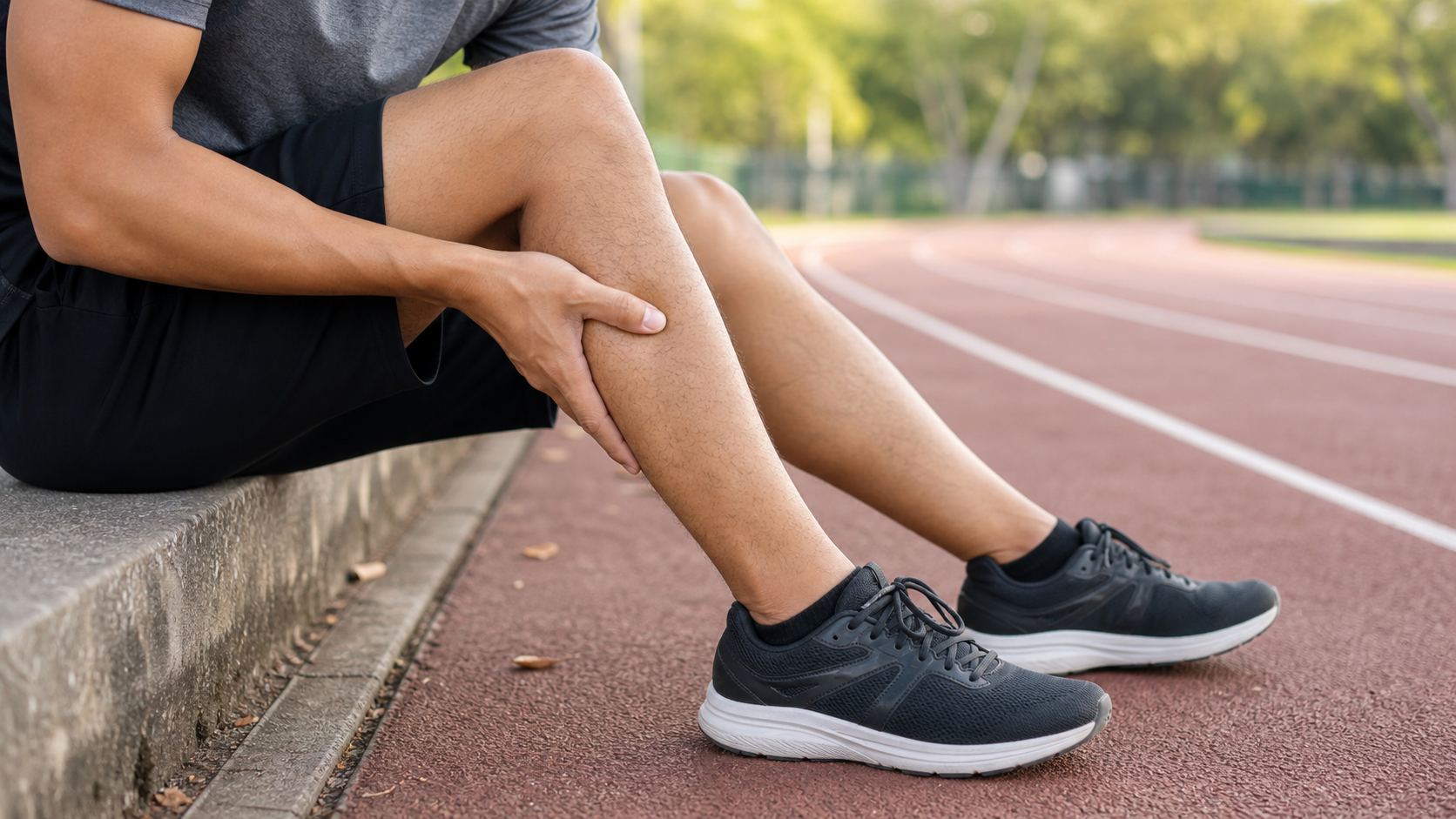
“My shin starts aching partway through a run, but it goes away once I stop” — this is practically the nightmare of every beginner runner. Shin splints, medically known as Medial Tibial Stress Syndrome (MTSS), are one of the most common overuse injuries in the running community. Studies show that up to 35% of novice marathon trainees experience this condition at some point.
More importantly, if left untreated, MTSS can progress into a genuine tibial stress fracture. The two conditions look similar on the surface but require very different management, so accurate differentiation is essential.
Causes and Anatomy of Shin Splints
The tibia is the primary weight-bearing bone of the lower leg, wrapped in multiple layers of muscle on its outer side. With each running stride, impact forces of roughly 2–3 times body weight are absorbed largely by the periosteum, the connective tissue layer covering the bone. When this repetitive stress accumulates faster than the bone can remodel and adapt, periosteal inflammation results — this is MTSS.
High-Risk Groups
| Risk Factor | Description |
|---|---|
| Sudden increase in training volume | Weekly mileage increases of more than 10%, or jumping abruptly from walking to running |
| Ill-fitting running shoes | Insufficient cushioning, or shoes that are too worn (over 800 km) |
| Hard running surfaces | Prolonged training on concrete or asphalt without the cushioning of softer terrain |
| Weak lower-leg musculature | Weak calf muscles and tibialis anterior, unable to effectively absorb impact |
| Excessive overpronation | Collapsed medial arch, increasing internal rotational stress on the tibia |
| Female runners | Relatively lower bone density and a larger Q-angle |
Typical Symptoms
- Diffuse pain or tenderness along the lower-inner third of the tibia, spread along the bone’s edge
- Pain at the start of a run that may briefly ease after warming up, then worsens again after a longer run
- Soreness the following morning upon waking, noticeably worse when going down stairs
- Mild localized swelling, without one sharply defined point of intense pain
How to Distinguish It From a Stress Fracture
This is the most critical clinical distinction. The two conditions share similar symptoms, but a stress fracture requires complete cessation of weight-bearing training for 6–8 weeks:
Warning signs suggestive of a stress fracture:
- Pain sharply localized to a single, precise point (one you could point to with a single finger), rather than diffuse along the bone’s edge
- Pain even during brisk walking or light loading
- Night pain (pain at rest)
- Tuning fork test: placing a vibrating tuning fork against the tibia and triggering sharp pain is highly suggestive of a fracture
If any of these signs are present, seek medical attention immediately. X-rays may appear normal in the early stages, so an MRI is often needed to confirm the diagnosis.
Acute-Phase Management (Weeks 1–2)
The primary principle for shin splints is “reduce the load, don’t stop completely”:
- Reduced training volume: Cut mileage to below 50% of your normal load, and stop running if pain exceeds a moderate level
- Icing: Ice the affected area for 15 minutes after each session, up to 2–3 times a day
- Foot support: Runners with excessive overpronation can try commercially available arch-support insoles
- Cross-training: Aqua jogging or swimming to maintain cardiovascular fitness without loading the tibia
- Avoid hard surfaces: Train on a track or grass instead
Rehabilitation and Strengthening Program (Weeks 3–8)
Once pain is under control, move into the strengthening phase, focused on improving the lower leg’s shock-absorbing capacity:
Eccentric calf strengthening (the rehab exercise with the strongest scientific evidence):
- Stand at the edge of a step and rise onto your toes using both feet (the concentric phase, performed with both legs)
- Shift your weight onto one leg and slowly lower your heel below the step (the eccentric phase), taking 3–4 seconds
- 15 repetitions per set, 3 sets, performed daily
Tibialis anterior strengthening:
- Seated ankle dorsiflexion: pull the top of the foot upward against resistance from a resistance band, 3 sets × 20 reps
- Toe-tap walking (heel walking): 1–2 minutes at a time, to strengthen the tibialis anterior
Balance and proprioception training:
- Single-leg standing (alternating eyes open and closed)
- Balance board training
Progressive Return-to-Running Plan
Once you can walk for two consecutive days without pain, return to running gradually with the following schedule:
- Week 1: Alternate walking and jogging (1 minute each) for a total of 20 minutes
- Week 2: Jog for 3 minutes, walk for 1 minute, for a total of 30 minutes
- Week 3: Continuous jogging for 20–30 minutes
- After that, increase weekly mileage by no more than 10%
Practical Recommendations
Choosing running shoes: Since most road running in Taiwan takes place on concrete surfaces, choose shoes with good cushioning and replace them every 600–800 km. If you have an overpronation issue, look for shoes with “motion control” features.
Adjusting your running cadence: Shortening your stride and increasing your cadence (aim for 170–180 steps per minute) can significantly reduce the impact force transmitted to the tibia with each step.
Training cycle planning: After every 3 weeks of training, schedule an easy week with reduced volume, giving your bones time to adapt to the new load.
Conclusion
Shin splints are a common challenge in a runner’s journey — they don’t mean you’re not cut out for running. The key is to listen to your body, reduce training load promptly, and build lower-leg resilience through a systematic strengthening program. Most runners recover fully after 4–8 weeks of proper management, and many who establish sound training habits never experience a recurrence.
Related Reading
Never Stop 西進武嶺 前後雙機 完整全程錄影 訓練台 實境
8 年前
西進武嶺 免費訓練分析服務 Intervals | 練不夠還是練過頭?你哪一種類型選手?AI模型告訴你! | 備戰神器 | 公路車 訓練 | CT Yeh
4 年前
一日北高常見問題大集合 | 攻略 | 路線 | 訓練 | 補給 | 自行車 單車 | 一日雙城 | 雙塔 | TWB北高360 | 屁股痛
6 年前
一日北高/長距離團騎 常見問題補充篇 / 組團或跟團的眉角 / 壯車友容易被瘦車友慢性拉爆 / 原來屁股痛可能是這個原因...? / 風場配速法 / 公路車 / CT Yeh
2 年前
滑雪新手們慘摔學習全紀錄(請開字幕),滑雪好好玩 | Snowboard + Ski | 岩原 スキー場 | 滑雪APP使用 | GoPro Max
6 年前
FTL 與 SYB 車隊專訪 西進武嶺 實用攻略分享! 2小時 如何練?!你不知道的眉角!新手準備武嶺必看 EP1 | 實力派女車友 | 精華版 | 公路車 | CTYeh
4 年前
iPhone內建一秒變長腿🤣 車友必備#cycling
2 年前
摔車後補裝備: 好市多新款單車安全帽& Specialized Romin 北高整路屁股都不痛的坐墊 | 一千元居然有MIPS | CT Yeh | 公路車
4 年前