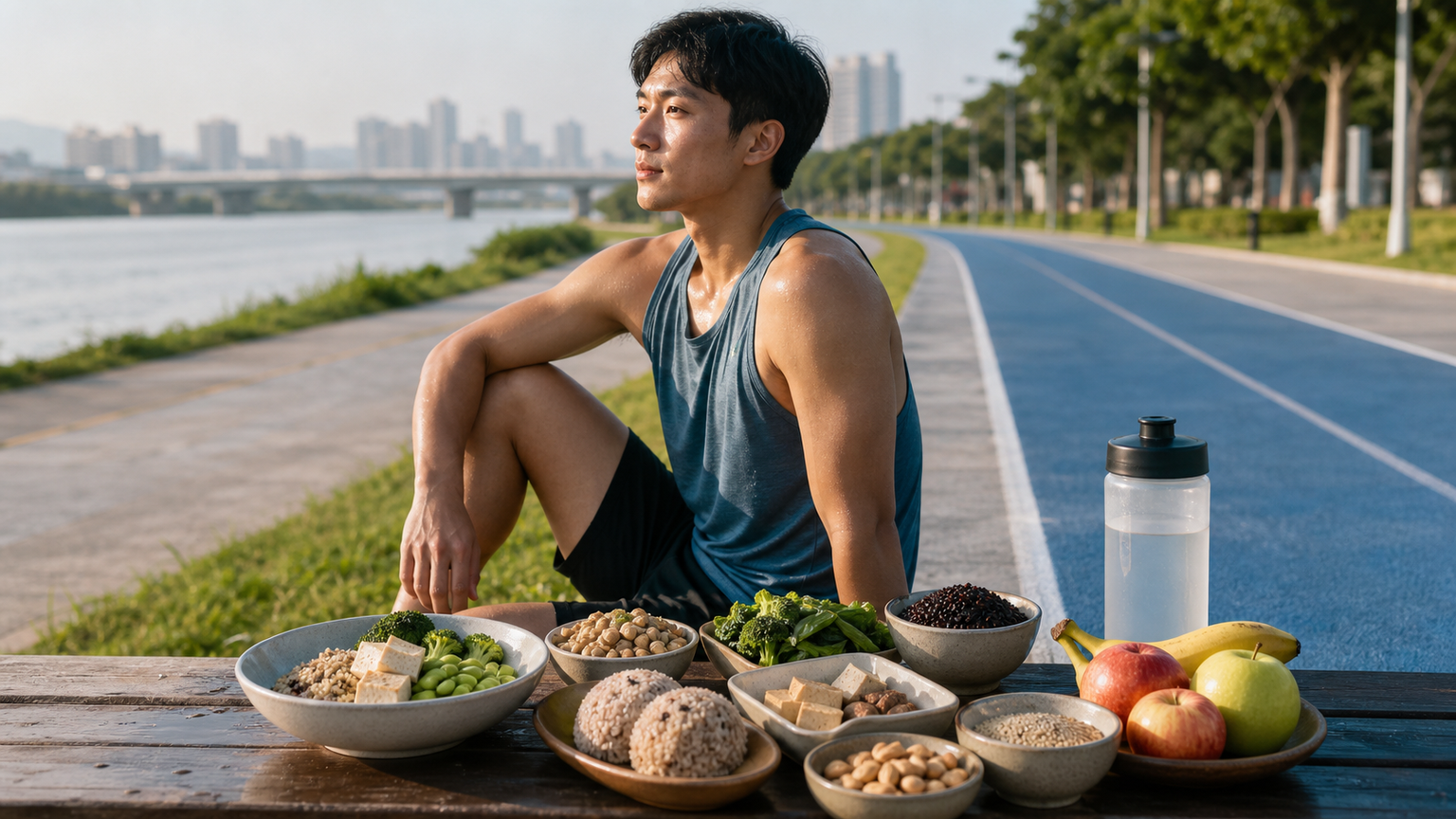
Introduction
In recent years, Taiwan has seen a surge in plant-based eating trends. From flexitarians to vegans, more and more runners are trying to reduce or completely eliminate animal products during their training. However, “Will running on a plant-based diet leave me feeling weak?” remains a question on many people’s minds.
The answer is: vegan runners can absolutely achieve excellent results—provided their diet is well-planned. Research shows that a well-designed plant-based diet can provide all the nutrition needed for running, and may even offer additional benefits for post-training inflammation recovery thanks to its rich antioxidant content. However, without proper planning, it is indeed easy to develop gaps in certain nutrients.
Key Nutritional Challenges for Vegan Runners
Challenge 1: Protein Completeness
The biggest issue with plant-based protein is not “insufficient quantity” but “incomplete quality.” Most plant proteins lack one or more essential amino acids (such as lysine and methionine), so food combining is needed to obtain a complete amino acid profile.
Naturally Complete Proteins (Plant-Based):
- Soy and soy products (tofu, soy milk, natto, edamame)
- Quinoa
- Buckwheat
- Hemp seeds
Challenge 2: Low Iron Absorption Rate
Plant-based iron (non-heme iron) has an absorption rate of only 3–8%, far lower than the 15–35% of animal-based iron. Vegan runners are advised to increase their daily iron requirement to 1.8 times that of the general population.
Challenge 3: Vitamin B12
B12 is found almost exclusively in animal foods. If strict vegans do not supplement, long-term deficiency can lead to anemia and nerve damage. This is the nutrient vegan runners need to pay the most attention to.
Challenge 4: Omega-3 Fatty Acids
The conversion of ALA (alpha-linolenic acid) from plant foods into usable EPA and DHA is very inefficient (< 5–10%), which may affect the anti-inflammatory regulation needed for long-distance running.
Plant-Based Protein Complementing Strategies
By combining different foods, the amino acid deficiencies of any single food can be compensated for:
| Combination | Complementing Principle | Everyday Taiwanese Examples |
|---|---|---|
| Grains + Legumes | Grains lack lysine, legumes supply it; legumes lack methionine, grains supply it | Rice + tofu, red bean rice, soy milk with mantou |
| Legumes + Nuts/Seeds | Complementary amino acids, increased overall absorption | Soy milk with sesame, tofu with peanut butter |
| Whole Grains + Vegetables + Legumes | Provides broad amino acid coverage | Brown rice + stir-fried dried tofu + spinach |
Good news: You don’t need to complete all complementing within a single meal. As long as your daily diet includes a variety of plant-based protein sources, your overall intake can still achieve completeness.
Daily Protein Targets for Vegan Runners
Because plant-based protein has a slightly lower digestibility (lower PDCAAS score), the recommended protein intake for vegan runners should be approximately 10–15% higher than that of omnivorous runners:
- Light training (20–40 km/week): 1.4–1.6 g per kg of body weight
- Moderate training (40–70 km/week): 1.6–1.8 g per kg
- Race preparation (70+ km/week): 1.8–2.0 g per kg
For example, a 60 kg runner in race preparation needs 108–120 g of protein daily, which can be achieved through the following combination:
- 750 ml unsweetened soy milk (approx. 22 g)
- 200 g firm tofu (approx. 16 g)
- 100 g edamame (approx. 11 g)
- 100 g quinoa rice (approx. 4 g)
- 30 g peanut butter (approx. 8 g)
- Other vegetables and grains to make up the remainder
Key Supplements for Vegan Runners
The following supplements are more important for vegan runners and should be used under the guidance of a physician or nutritionist:
- Vitamin B12: 2–3 mcg daily, or a high dose (1,000–2,000 mcg) weekly
- Vitamin D3 (vegan version sourced from lichen): 1,000–2,000 IU daily
- Algal Oil Omega-3: The best plant-based source of DHA/EPA, 250–500 mg DHA daily
- Iron: Supplement under medical supervision if blood tests show deficiency
- Zinc: Absorption rate is lower in plant-based diets; consider supplementing 8–11 mg daily
Local Dietary Strategies for Vegan Runners in Taiwan
Taiwan has a rich vegetarian culture, with vegetarian restaurants and bento shops found everywhere. Here are high-protein vegetarian options:
- Vegetarian chicken (gluten products): Approximately 15–20 g of protein per 100 g, making it a quality source of vegetarian protein
- Fried tofu puffs: High protein density, great in soups or braised dishes
- Dried tofu: Approximately 15 g of protein per 100 g; paired with rice, it’s a great post-training choice
- Black soy milk: Slightly higher in protein than regular soy milk, and richer in iron as well
- Vegetarian bento: Choose options rich in soy products, paired with a variety of colorful vegetables
Practical Recommendations
- Consume at least three different plant-based protein sources daily to ensure a complete amino acid profile.
- Pair vitamin C with iron to enhance absorption: Whenever you eat plant-based iron foods, add a serving of tomatoes, oranges, or other high-vitamin C foods.
- Get regular blood tests: Track ferritin, B12, and vitamin D levels every 6 months to detect deficiencies early.
- Don’t switch to a vegan diet during race preparation: If you’re accustomed to a lacto-ovo vegetarian diet, don’t suddenly change your eating pattern during race prep, to avoid the nutritional adaptation period affecting your training.
Conclusion
Vegan runners can absolutely achieve high-level training and race performance. The key lies in understanding the characteristics of a plant-based diet and carefully planning daily protein and micronutrient intake. Taiwan’s abundant soy products and vegetarian culture actually provide an excellent dietary environment for vegan runners—as long as you know how to make good use of them, you can demonstrate the power of a plant-based diet on the track.
Related Reading
- Vegetarian Nutrition Strategies for Road Running: A Guide to Plant-Based Protein Sources and Iron Supplementation
- Dietary Strategies for Vegan Cyclists: Complete Nutritional Supplementation for a Plant-Based Diet
- Vegetarian Diets for Swimmers: A Complete Guide to Plant-Based Protein
- The Complete Guide for Vegan Athletes: Protein, Key Micronutrients, and Supplementation Strategies for a Plant-Based Diet
CT暗黑廚房) 車友必備 宇宙無敵鮮蚵湯 幫助訓練恢復 天然食補 好市多 超肥鮮蚵 破PR
7 年前
一日北高常見問題大集合 | 攻略 | 路線 | 訓練 | 補給 | 自行車 單車 | 一日雙城 | 雙塔 | TWB北高360 | 屁股痛
6 年前
單車 一日北高 ( 雙城 ) 肥宅雙人瘋狂行 紀錄片 REACTO
10 年前
一日北高/長距離團騎 常見問題補充篇 / 組團或跟團的眉角 / 壯車友容易被瘦車友慢性拉爆 / 原來屁股痛可能是這個原因...? / 風場配速法 / 公路車 / CT Yeh
2 年前
太平山單車員工旅遊 | 這樣玩CP值最高!| 公路車
5 年前
一日北高前的高裝檢 | 北高 360 | 挑戰11小時的裝備 | 一日雙塔 | 補給
6 年前
Never Stop 西進武嶺 前後雙機 完整全程錄影 訓練台 實境
8 年前
靠單車減肥35公斤 心得分享與整理
7 年前