文章導覽
One of Cycling’s Most Heated Debates
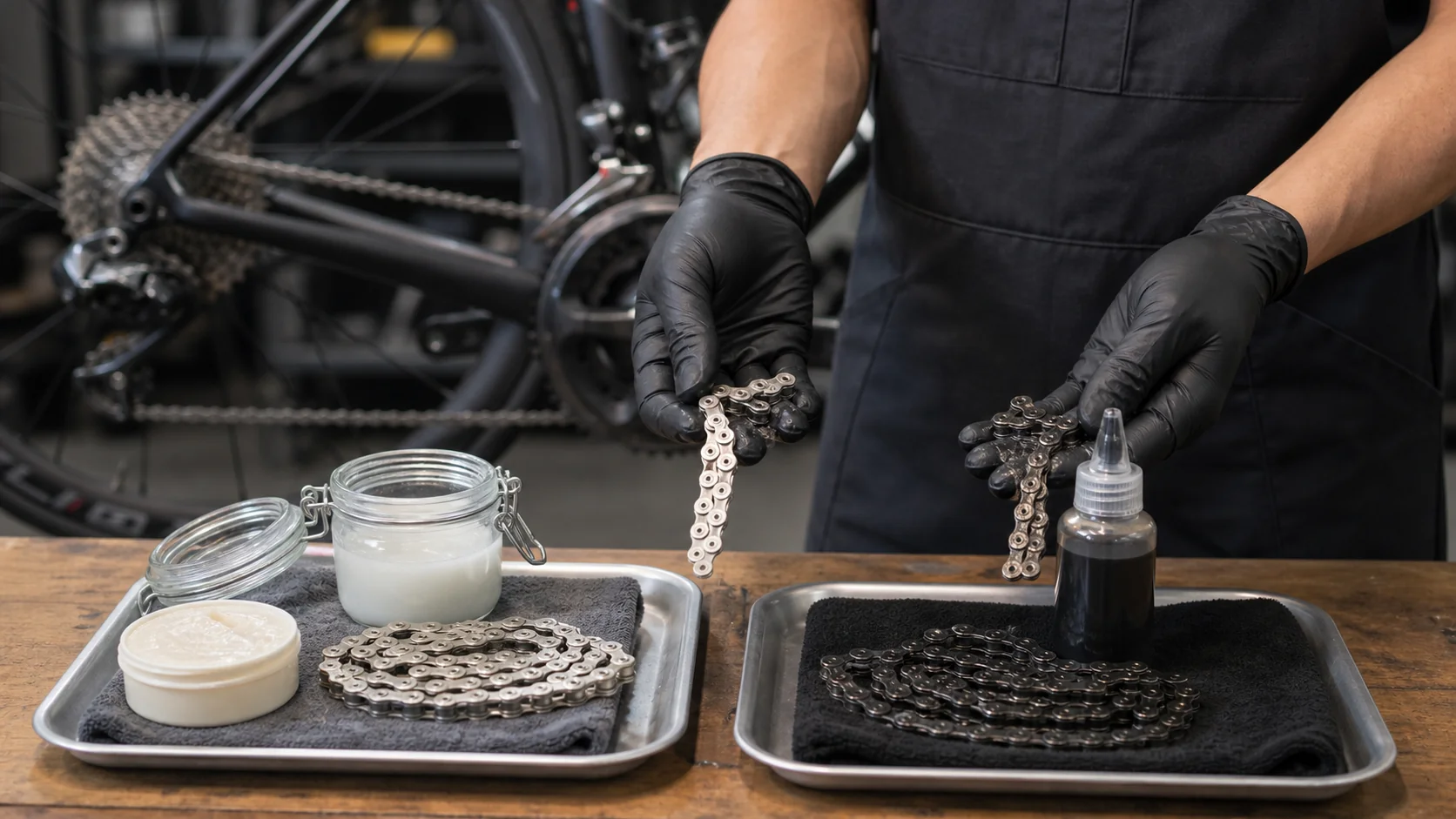
Aside from “disc brakes vs. rim brakes” and “Shimano vs. SRAM,” “chain wax vs. wet lubricant” is probably the topic most likely to spark an argument among cyclists.
Let’s let the data do the talking.
The Basic Differences
| Item | Hot Wax | Wet Lube | Drip Wax |
|---|---|---|---|
| Application method | Chain is dipped into melted wax | Applied drop by drop onto each link | Applied drop by drop (like a lube) |
| Cleanliness | ★★★★★ Extremely clean | ★★ Attracts grime | ★★★★ Fairly clean |
| Water resistance | ★★ Poor | ★★★★★ Excellent | ★★★ Moderate |
| Durability (dry) | 400-600 km | 150-250 km | 300-400 km |
| Durability (wet) | 100-150 km | 200-400 km | 150-200 km |
| Chain wear | Extremely low (12x difference) | Baseline | Low |
| Prep work | Tedious (requires full degreasing) | None | Simple degreasing |
| Long-term cost | Lower | Higher | Moderate |
The Advantages of Wax Lubrication
According to long-term testing by Australia’s Zero Friction Cycling lab, chains lubricated by hot-wax immersion wear roughly 12 times slower than chains using traditional wet lubricants.
That translates to:
- Chain lifespan with wet lube: 3,000-5,000 km
- Chain lifespan with hot wax: 15,000-20,000 km
And a wax-lubricated chain will barely stain your pant legs.
The Drawbacks of Wax Lubrication
1. The prep work is a real hassle
To use hot wax, your chain must be completely degreased. New chains ship coated in anti-rust oil, so you need to scrub it thoroughly with a strong degreaser until the chain surface is entirely free of oil.
2. Requires dedicated equipment
- A slow cooker or dedicated wax melter
- Chain wax (Molten Speed Wax, Silca Secret Chain Blend, etc.)
- A thermometer (wax breaks down if it gets too hot)
3. Weak in wet conditions
Wax performs far worse in wet conditions than dry ones. After riding through a rainstorm, you may need to re-wax right away.
The Advantages of Wet Lube
- Convenience: just drip it on and wipe it down
- Water resistance: still provides protection after riding in the rain
- No special equipment needed: one bottle does the job
The Drawbacks of Wet Lube
- Mess: oil attracts dust and grit, turning into a black grinding paste
- Faster wear: grit mixed into the oil accelerates wear
- Higher long-term cost: shorter chain lifespan means more frequent replacement
The Middle Ground: Drip Wax
If you want the cleanliness of wax without the hassle of hot-wax immersion, drip wax is a great option:
- Popular products: Silca Super Secret, Squirt, CeramicSpeed UFO Drip
- Application: applied drop by drop, just like a wet lube
- Performance: falls between hot wax and wet lube
- Convenience: much easier than hot waxing
What’s Best for Taiwan?
Taking Taiwan’s climate into account:
| Scenario | Recommendation |
|---|---|
| Fair-weather riders | Drip wax (clean + convenient) |
| Commuters (rain or shine) | Wet lube (water resistant) |
| Weekend riders chasing performance | Hot wax immersion (best protection) |
| After riding in the rain | Top up with wet lube |
| Race day | Hot wax or high-performance drip wax |
Common Brands and Where to Buy in Taiwan
| Brand | Type | Where to Buy |
|---|---|---|
| Finish Line Wet | Wet | Bike shops, Shopee |
| Finish Line Dry | Dry | Bike shops, Shopee |
| Squirt | Drip wax | Import bike shops, online |
| Silca Super Secret | Drip wax / hot wax | Distributors, online |
| Muc-Off | Various types | Bike shops |
| Molten Speed Wax | Hot wax | Online |
Conclusion
There’s no single “best” choice — only the choice that’s “best for you.”
- If you want the lowest maintenance cost and the longest chain life, choose hot wax
- If you want convenience and all-weather protection, choose wet lube
- If you want a balance of both, choose drip wax
Whichever you choose, regular maintenance matters more than which lube you pick. A chain using cheap wet lube but cleaned every week will always outlast a chain using premium wax that never gets any attention.
Related Reading
- Chain Waxing vs. Traditional Lubricant: Which Maintenance Method Suits You Better?
- The Complete Guide to Bicycle Chain Maintenance: When and How to Use Dry vs. Wet Lubricant
- Hands-On Bicycle Chain Waxing Tutorial: The Full Process from Degreasing to Wax Immersion
- Bicycle Chain Cleaning and Lubrication: How to Choose Between Dry and Wet Chain Oil