The Lifestyle Revolution of Bike Commuting: A Complete Guide to Cycling to Work in Taiwan's Cities
Introduction
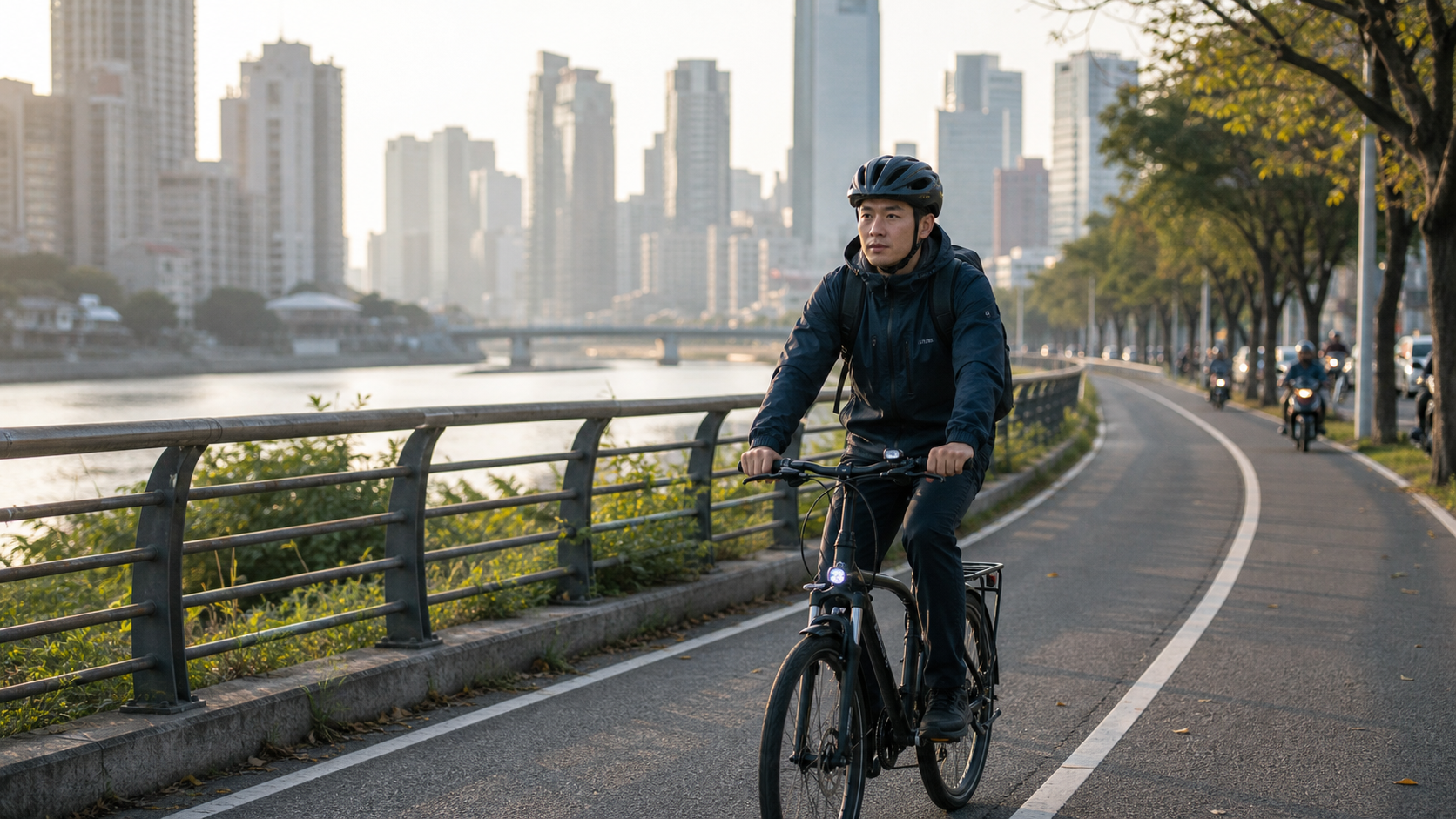
In the mornings of Taipei, Taichung, and Kaohsiung, more and more office workers in waterproof jackets and lightweight backpacks are weaving through traffic on bicycles. According to statistics from the Ministry of Transportation and Communications, Taiwan’s bike-commuting population has been steadily growing in recent years, and the expansion of YouBike 2.0 has made “borrowing a bike to work” a daily option in urban life. But those who truly want to make cycling their primary commuting method often face the same question: how do you upgrade from “riding occasionally” to “riding every day”?
This article provides a complete commuting strategy tailored to Taiwan’s urban environment, from gear selection to habit formation.
Choosing Your Bike: Three Main Options for Commuter Bikes
The needs of a commuter bike are completely different from those of a recreational bike. The focus is not on speed, but on reliability, comfort, and maintenance costs.
| Bike Type | Suitable Distance | Features | Budget Range |
|---|---|---|---|
| City Bike | 3–15 km | Upright riding position, internal hub gears, fenders | NT$8,000–30,000 |
| Folding Bike | 1–10 km | Can be taken on public transit, easy to park | NT$6,000–50,000 |
| Road Bike (Entry-Level) | 10–30 km | Fast and efficient, requires additional accessories | NT$20,000–60,000 |
If your commute is within 8 km, a city bike or folding bike is the most practical choice; if it exceeds 10 km and your fitness allows, an entry-level road bike with added fenders and a rack will actually save you the most time.
Essential Accessories Checklist
Commuting to work is not a race—safety and convenience come first:
- Front and rear lights: Taiwan regulations require lights for nighttime riding; USB-rechargeable models are the most convenient
- U-lock: The top choice for urban parking, far superior to cable locks in theft prevention
- Rear rack or backpack: A lightweight backpack (10–15L) offers the most flexibility; a rack with pannier bags is ideal for carrying a change of clothes
- Fenders: Essential for Taiwan’s plum rain season, preventing mud from splashing onto your back
- Phone mount: Necessary for navigation; choose a model with vibration absorption to protect your phone
Route Planning: The Smart Way to Avoid Traffic
For bike commuting in Taiwan’s cities, route selection often matters more than gear. Here are a few key principles:
Make the Most of Riverside Bike Paths
Along the Tamsui River, Xindian River, and Keelung River in Taipei, there are over 100 km of riverside bike paths that can connect nearly the entire Greater Taipei Basin without ever touching regular roads. Many commuters ride from New Taipei City along the rivers into downtown Taipei, with no red lights and no traffic the entire way—a riding experience far superior to regular roads.
Use Google Maps Bicycle Mode
Google Maps’ cycling navigation is already quite mature in Taiwan, prioritizing riverside paths and bike lanes. When planning a route, you can select “Avoid highways” and enable the “Bicycle-friendly” option.
Establish Backup Routes
Roads can become severely flooded during the plum rain season and around typhoons, so it’s advisable to plan 2 routes in advance: one fast route for regular days, and one alternative for bad weather.
Workplace Readiness: Making Sure Colleagues Don’t Think Your Cycling Is a Hassle
Many people give up bike commuting not because of physical exertion, but because of “managing their condition after arriving at the office.” Here are a few practical strategies:
- Check for shower facilities in advance: Many office buildings or gyms in Taiwan offer employee access, costing about NT$300–600 per month
- Keep two sets of work clothes: Leave one set at the office to save yourself the hassle of carrying a change of clothes every day
- Carry anti-sweat wipes: An emergency solution when there are no shower facilities, paired with quick-dry tops to reduce discomfort
- Bring items in batches: You don’t need to carry everything every day—bring more on Monday and take things back on Friday
Practical Advice
A gradual plan for beginners: You don’t need to ride every day from day one. Start with 2–3 days per week, and only increase the frequency after you’re familiar with the route and your body’s response. The goal for the first month is to “make bike commuting an effortless habit,” not to “achieve it every single day.”
Weather coping strategies: Taiwan’s summer heat is the biggest challenge. Consider departing before 7:00 AM when temperatures are relatively lower; for the return trip, you can take public transit and adjust flexibly based on the weather. During the plum rain season, keep a lightweight rain jacket ready—there’s no need to give up entirely just because it’s raining.
Form a cycling group with colleagues: Find coworkers on the same route and ride together. Not only does it improve safety, but it also boosts motivation to keep going. Many companies even have informal “bike to work” groups.
Conclusion
Bike commuting is not just a practical choice for saving money and reducing carbon emissions—it’s a way to rediscover the rhythm of urban life. When you begin to feel the city’s temperature through your own effort, the daily commute stops being an extension of stress and becomes a morning ritual that sets the tone for the day. Taiwan’s cycling infrastructure continues to improve, and now is the perfect time to start your bike-commuting life.
Related Reading
- Commuter Cycling and Urban Life: A Practical Guide and Route Suggestions for Bike Commuting in Taipei
- Urban Commuter Bikes: How to Choose a Bike for City Riding in Taiwan
- The Daily Life of a Bike Commuter: How Taipei Office Workers Replace the MRT with Bicycles
- The Complete Beginner’s Guide to Bike Commuting: Building Your Commuting Gear from Scratch
單車 一日北高 ( 雙城 ) 肥宅雙人瘋狂行 紀錄片 REACTO
10 年前
高雄綠園道鐵路自行車道 / 外地人能輕鬆駕馭 還是整路崩潰? / 2025 全線開通 春節實地探索一次!(附GPS連結)/ 公路車 / CT Yeh
1 年前
太平山單車員工旅遊 | 這樣玩CP值最高!| 公路車
5 年前
車隊介紹) 台北 一年開團365天 車隊 Apollo Ride 晨騎 好選擇 ( 陽明山 風櫃嘴 冷水坑 平等里 聖人 關渡 大稻埕 ) 找人騎車
7 年前
2023自行車展!與環台賽選手一同表演賽 / 全自動AI Fitting?/ TIME新車發表/神秘充電桌等 精華分享 VLOG | CT Yeh | 公路車
3 年前
公路車 | 塔塔加驚險員工旅遊 | 還好手腳快沒被抓交替!
5 年前
2026 車錶排行榜!誰是最多車友正在使用?練家子最愛哪款?🏆 (2萬名車友數據) / 公路車 / CT Yeh
5 個月前
2025 自行車錶排行榜 兩萬車友大數據 / Garmin Bryton 排名會大洗牌嗎? / 全新的碼表前身分析 /公路車 / CT Yeh
1 年前