Introduction
Modern office workers face diverse and persistent sources of stress—project deadlines, performance reviews, interpersonal conflicts, commuting fatigue… Chronic stress doesn’t just affect your mood; it also leads to poorer sleep quality, lowered immunity, and an increased risk of cardiovascular disease. Exercise is a stress management tool universally recognized by the medical community, and among all forms of exercise, swimming possesses a unique stress-relief mechanism that other sports cannot easily replicate. This article will analyze, from the perspectives of neuroscience and psychology, why swimming is the most effective natural stress reliever.
The Three Major Stress-Relief Mechanisms of Swimming
Mechanism One: The Neuro-Calming Effect of Rhythmic Movement
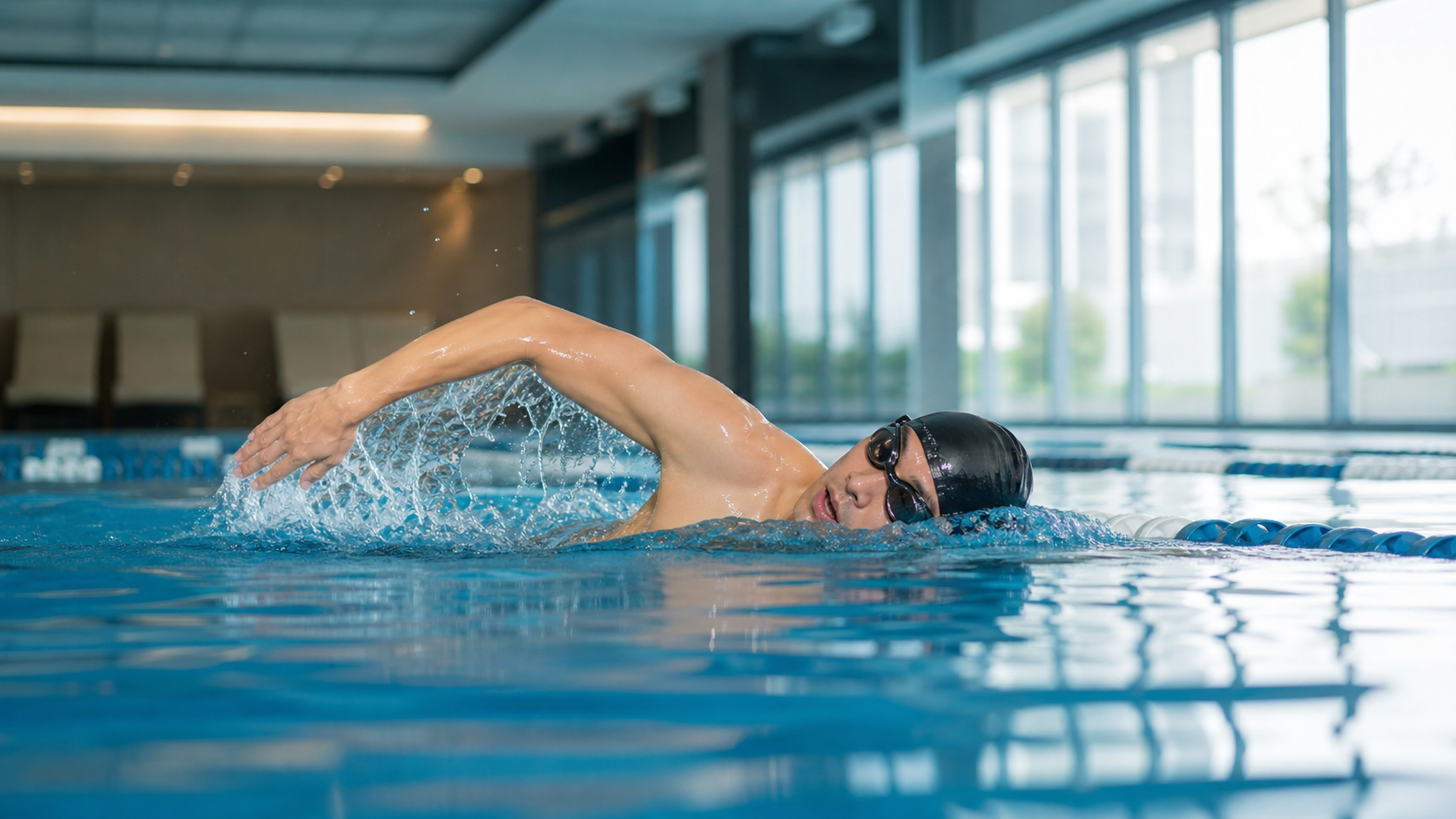
Swimming movements are highly rhythmic—the pull, kick, and breath of freestyle repeat the same sequence of motions in every cycle. Neuroscience research shows that repetitive rhythmic movements activate the brain’s “Default Mode Network,” easing the overactivity of the prefrontal cortex (the region responsible for analysis, planning, and worrying). This is similar to the neural mechanisms of meditation and yoga, but swimming achieves the same effect in a more dynamic way.
Mechanism Two: The Psychological Space Created by Sensory Isolation
With a swim cap and goggles on, and your ears submerged in water, external visual and auditory stimuli are largely blocked out. In an age of information overload, this forced “sensory shutdown” is extremely precious for modern people. While swimming, you can’t scroll through your phone or take calls—this seemingly inconvenient limitation actually provides a rare “forced mindfulness” experience.
Mechanism Three: The Neurochemical Effects of Aerobic Exercise
Exercise (especially aerobic exercise) promotes the secretion of Brain-Derived Neurotrophic Factor (BDNF), increasing neurogenesis in the hippocampus (which is associated with memory and emotional regulation); it also stimulates the release of endorphins, dopamine, and serotonin, creating the so-called “runner’s high.” Swimming can trigger these same neurochemical changes, and the buoyancy of water provides a soothing sensation to the body, making this feeling of well-being more enduring.
Scientific Data on Swimming for Stress Relief
| Indicator | Before Swimming | 30 Minutes After Swimming | Duration of Effect |
|---|---|---|---|
| Cortisol (Stress Hormone) | Baseline | Decreased by 15–25% | 2–4 hours |
| Anxiety Scale Score | Baseline | Decreased by 20–30% | Same day |
| Blood Pressure | Baseline | Systolic pressure decreased by 5–8 mmHg | 6–12 hours |
| Sleep Onset Latency | Baseline | Shortened by 15–20 minutes | That night |
The above data is compiled from related sports psychology and physiology research; individual results may vary
Best Timing and Methods for Office Workers to Swim for Stress Relief
Swimming After Work (Most Recommended)
After work is one of the time periods when cortisol (the stress hormone) is at its highest. Swimming within an hour after work can effectively “flush away” the stress hormones accumulated throughout the day, allowing you to return home in a calmer state. Recommendations:
- Go directly from the office to the pool; don’t go home first (the willpower cost of leaving the house again is high)
- Keep swimming sessions to 30–45 minutes to avoid excessive fatigue affecting nighttime sleep
- Maintain a “light-to-moderate intensity” for swimming; the goal is relaxation, not hard training
Morning Swimming (Suitable for Early Birds)
Morning swimming can establish a positive neurochemical foundation before the day begins, allowing you to face work stress with greater emotional resilience. Public pools in major cities like Taipei and Taichung typically open at 6 AM, and many office workers have developed the morning habit of “swimming first, then commuting.”
Lunchtime Swimming (An Efficient Stress Interruption)
If there’s a pool near your office (public pools are available around Taipei’s Xinyi District, Nangang Software Park, and Neihu Technology Park), lunchtime swimming is the most efficient way to relieve stress. Just 25 minutes of easy swimming, plus a quick shower and change, and the entire process can be completed within 60 minutes. Research shows that brief aerobic exercise during lunch breaks can improve afternoon work focus by 20–30%.
Techniques to Make Swimming More Effective for Stress Relief
Using Swimming for Mindfulness Practice
Instead of letting your thoughts drift toward work worries while swimming, try the “Mindful Swimming Method”:
- Focus on sensations: Pay attention to the feel of the water against your palms with each stroke, the temperature of the water flowing over your body, and the resistance of your feet as you kick
- Count your breaths: Breathe every three strokes, silently counting “one, two, three, breathe” to anchor your attention to the present rhythm
- Observe bodily sensations: Which muscles are working? Is your body tense? Actively relax your shoulders and neck while swimming
Pairing Swimming with Music
Waterproof Bluetooth earphones have become quite common in recent years (such as the Shokz OpenSwim bone-conduction waterproof earphones), allowing you to listen to music or podcasts while swimming. Research shows that swimming in rhythm with music can further enhance positive emotions during exercise. Choose music with a BPM of 120–140, which naturally matches the tempo of moderate-intensity swimming.
Combining Swimming with Other Stress-Relief Methods
Swimming is already a powerful stress-relief tool on its own, but combining it with the following activities yields even better results:
- Swimming + Bathing (or warm water bath): Stay in the warm shower for an extra 5 minutes after swimming to let your muscles fully relax in the warmth
- Swimming + Meditation: Find a quiet corner after swimming and do 5–10 minutes of mindfulness meditation to deepen the effect while your nervous system is still in a relaxed state
- Swimming + Socializing: Swim with friends and chat by the pool afterward; the combined effect of social interaction and exercise can significantly boost subjective well-being
Practical Tips
- Keep your swim gear at the office or in your car: Remove the barrier of “having to go home to get things first,” so you can head straight to the pool after work anytime
- Create a “swimming ritual”: Take three deep breaths before entering the pool and tell yourself, “Work stays outside the water; right now, there’s only swimming”
- Don’t bring your phone into the locker room: The time spent changing is an important transition from work mode to rest mode—keep it phone-free
- Record your mood after swimming: Use your phone’s notes app to log your emotional state (on a scale of 1–10) before and after swimming; after a few weeks, you’ll see how significant swimming’s stress-relief effect really is
Conclusion
In modern life filled with to-do lists and message notifications, swimming offers a scarce and precious sanctuary. Every moment you submerge into the water is a brief farewell to stress; every stroke’s rhythm is a gentle soothing of your nervous system. Make swimming your “digital detox” ritual a few times a week—your brain will thank you.
Related Reading
- Swimming and Stress Release: The Mental Health Benefits of Water Exercise
- Swimming for Stress Relief: Blue Space and Mental Health
- Swimming and Stress Management: Practical Methods of Water Meditation and Research on the Mental Health Benefits of Regular Swimming
- A Weekly Swimming Plan for Fitness: Maximizing the Benefits of Three Sessions a Week for Office Workers
西進武嶺 免費訓練分析服務 Intervals | 練不夠還是練過頭?你哪一種類型選手?AI模型告訴你! | 備戰神器 | 公路車 訓練 | CT Yeh
4 年前
[教學] Premiere 影片 手震 修正 教學 防抖 單眼 影像 GoPro 穩定 Video Stabilization
8 年前
3D 列印車褲墊 / 舒適改善? / 無痕 x 分區壓縮 / ATK & Decider系列 / JE22黑科技 / #公路車 #CTYEH
11 個月前
靠單車減肥35公斤 心得分享與整理
7 年前
CT暗黑廚房) 車友必備 宇宙無敵鮮蚵湯 幫助訓練恢復 天然食補 好市多 超肥鮮蚵 破PR
7 年前
洗單車神器 吹水機! 實際洗車用用看 暴力洗鍊條大法 | 公路車 | CT Yeh
4 年前
[防寒衣體驗] 鐵人魂 三鐵 防寒衣試穿會 於松運 深水游泳池 鯨魚池
8 年前
近視雷射三個月後悔嗎?單車族/工程師必看,Smart TransPRK 術後血淚史與後遺症全公開 / CT Yeh
4 個月前