Introduction
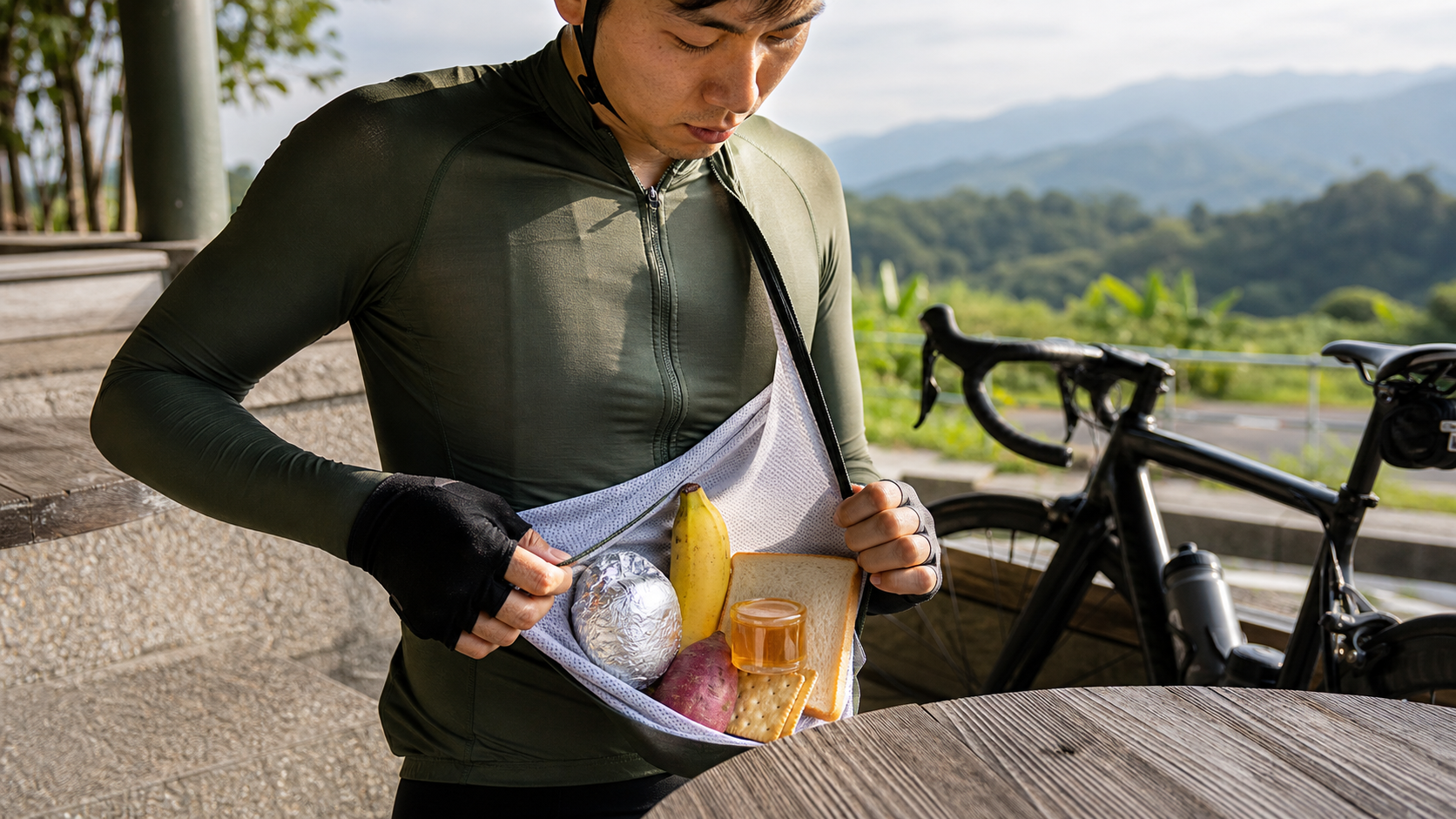
The hand extended by a pro team at a feed zone often hands riders not a refined energy bar, but a rice ball wrapped in foil, a piece of banana, or a homemade rice cake. Solid food plays a far more important role in long-distance riding than most riders realize—it doesn’t just provide carbohydrates; it also delivers the psychological satisfaction of “eating,” helping maintain mental stability during 5–10 hour endurance challenges.
Taiwan is a place rich in refueling resources, where convenience stores, traditional markets, and homemade food can all become your fueling partners. This article provides a complete comparison of common Taiwanese solid refueling foods across three dimensions: suitability, digestibility, and portability.
Principles for Choosing Solid Food
Before evaluating any food, let’s first establish the core selection criteria for solid food during rides:
- High carb, low fat, low fiber: Provides quick energy without slowing digestion
- Easy to bite and swallow: Wearing a helmet and gloves makes handling complex foods inconvenient
- Tolerant of temperature changes: Taiwan summers exceed 35°C, so food must not spoil or melt quickly
- Easy to carry: Must fit in a feed bag or jersey pocket and be accessible with one hand
- Not too salty or too sweet: Mild flavors are less likely to trigger nausea
Complete Comparison of Common Taiwanese Cycling Refueling Foods
| Food | Carbs (g) | Digestion Speed | Portability | Summer Heat Resistance | Overall Rating |
|---|---|---|---|---|---|
| Rice ball (salmon/tuna) | 40–50 | Medium | ★★★★ | ★★★ (< 3hr) | 9/10 |
| Banana (medium) | 25–30 | Medium-fast | ★★★ | ★★★★ | 8/10 |
| White toast + honey | 30–35 | Medium-fast | ★★★ | ★★★★ | 7/10 |
| Mochi/tangyuan | 35–45 | Medium | ★★★★ | ★★★★ | 7/10 |
| Sweet potato (boiled) | 30–40 | Medium | ★★★ | ★★★★ | 7/10 |
| Crackers (soda) | 20–25 | Fast | ★★★★★ | ★★★★★ | 7/10 |
| Red bean bun | 50–60 | Medium-slow | ★★★★ | ★★★ | 6/10 |
| Pineapple cake | 25–30 | Medium-slow | ★★★★★ | ★★★ | 6/10 |
| Peanut brittle | 15–20 | Slow | ★★★★★ | ★★★★ | 5/10 |
| Braised snacks (egg/tofu) | 5–10 | Slow | ★★★ (needs bag) | ★★ (spoils easily) | 4/10 |
Detailed Analysis of Each Food
Rice Ball (Most Recommended)
Taiwanese convenience store rice balls are a godsend for cycling refueling. White rice provides fast carbs, and the protein filling (salmon, tuna) won’t excessively slow digestion. The salt content is moderate, replenishing sodium lost through sweat. The downside is that it may spoil after 3 hours (in summer); it’s recommended to keep it in the outer jersey pocket for ventilation.
Best time to eat: First 2 hours (when intensity is lower)
Banana (Natural Energy Bar)
Bananas contain a mix of fructose and glucose carbs, digest at a moderate pace, and also provide potassium (about 420 mg per banana), which helps prevent cramps. The downside is that they easily get squashed in a feed bag. Solution: keep a small piece of peel wrapped around the banana, or cut it into segments and place in a small ziplock bag.
Best time to eat: Suitable throughout the ride, especially before climbs
Mochi (Traditional Taiwanese Refueling)
Glutinous rice-based mochi has a high carb density and small volume, making it suitable for long-distance riding. Individually packaged commercial varieties (such as daifuku or peanut mochi) are easy to open. Note: glutinous rice digests slower than white rice, so reduce the portion when riding at high intensity.
Best time to eat: During low-to-moderate intensity sections
Sweet Potato (Taiwanese Traditional Refueling Star)
The roasted sweet potato stalls along the Sun Moon Lake bike path are no coincidence. Sweet potatoes contain complex carbs (with a high proportion of amylose), digest at a steady pace, and provide sustained energy. Boiled sweet potatoes are easier to digest than roasted ones. Cut into small pieces and place in a bag for easy carrying.
Best time to eat: At refueling points on rides exceeding 3 hours
Soda Crackers (Emergency Energy Source)
They don’t melt in high heat, withstand long-term carrying, and provide salt. Although their carb density isn’t as high as a rice ball, they can be eaten at any intensity, making them a fallback option for long-distance riding. Pairing them with a sip of energy gel or a honey packet works even better.
Refueling Strategy Timeline
- First 2 hours: Rice ball or mochi (normal digestive capacity)
- 2–5 hours: Banana, sweet potato, soda crackers (light food as the main focus)
- After 5 hours: Energy gels as the primary source, with solid food limited to bananas and soda crackers as supplements (gastrointestinal fatigue; reduce solid food intake)
Practical Tips
- Feed bag preparation principle: Pack according to the timeline—put the early-stage food in the outermost layer and the later-stage energy gels in the inner layer.
- Add salt or salted plums: For rides exceeding 5 hours, adding a small amount of salty food can stimulate appetite and replenish sodium.
- Avoid high-fat foods: Butter, fried items, pork cutlet bento boxes—they look filling but digest slowly and can easily cause discomfort.
- Test how foods react during rides: Proactively test various solid foods during regular long training rides to understand your own gastrointestinal response.
- Summer food preservation: Wrap rice balls in foil pouches to slow down warming, or place a small cold pack in your backpack.
Conclusion
Taiwanese riders are blessed with an advantage—walk into any convenience store and you can find quality cycling refueling food. Rice balls, bananas, mochi—these ordinary Taiwanese foods can deliver astonishing energy replenishment during long-distance rides. The key isn’t using the most expensive imported energy bars, but understanding the characteristics of food and eating the right thing at the right time.
Related Reading
- 2026 Energy Bar and Solid Refueling Buying Guide: Balancing Cravings and Fullness on Long Rides
- Combining Solid and Liquid Refueling for Long Rides: Flavor Fatigue, GI Load, and Practical Combination Logic
- Cycling Race Refueling Strategy: What to Put in Your Pockets and When to Eat It
- The Energy Refueling Science of the Tour de Taiwan: What Do Pro Riders Actually Eat During Races?
CT暗黑廚房) 車友必備 宇宙無敵鮮蚵湯 幫助訓練恢復 天然食補 好市多 超肥鮮蚵 破PR
7 年前
單車 一日北高 ( 雙城 ) 肥宅雙人瘋狂行 紀錄片 REACTO
10 年前
一日北高/長距離團騎 常見問題補充篇 / 組團或跟團的眉角 / 壯車友容易被瘦車友慢性拉爆 / 原來屁股痛可能是這個原因...? / 風場配速法 / 公路車 / CT Yeh
2 年前
靠單車減肥35公斤 心得分享與整理
7 年前
台中大雪山 膏王領騎 震到都沒畫面了 公路車
5 年前
一日北高前的高裝檢 | 北高 360 | 挑戰11小時的裝備 | 一日雙塔 | 補給
6 年前
太平山單車員工旅遊 | 這樣玩CP值最高!| 公路車
5 年前
#公路車 #Fitting 靠人工智慧APP 幫你調整單車
6 年前