Introduction
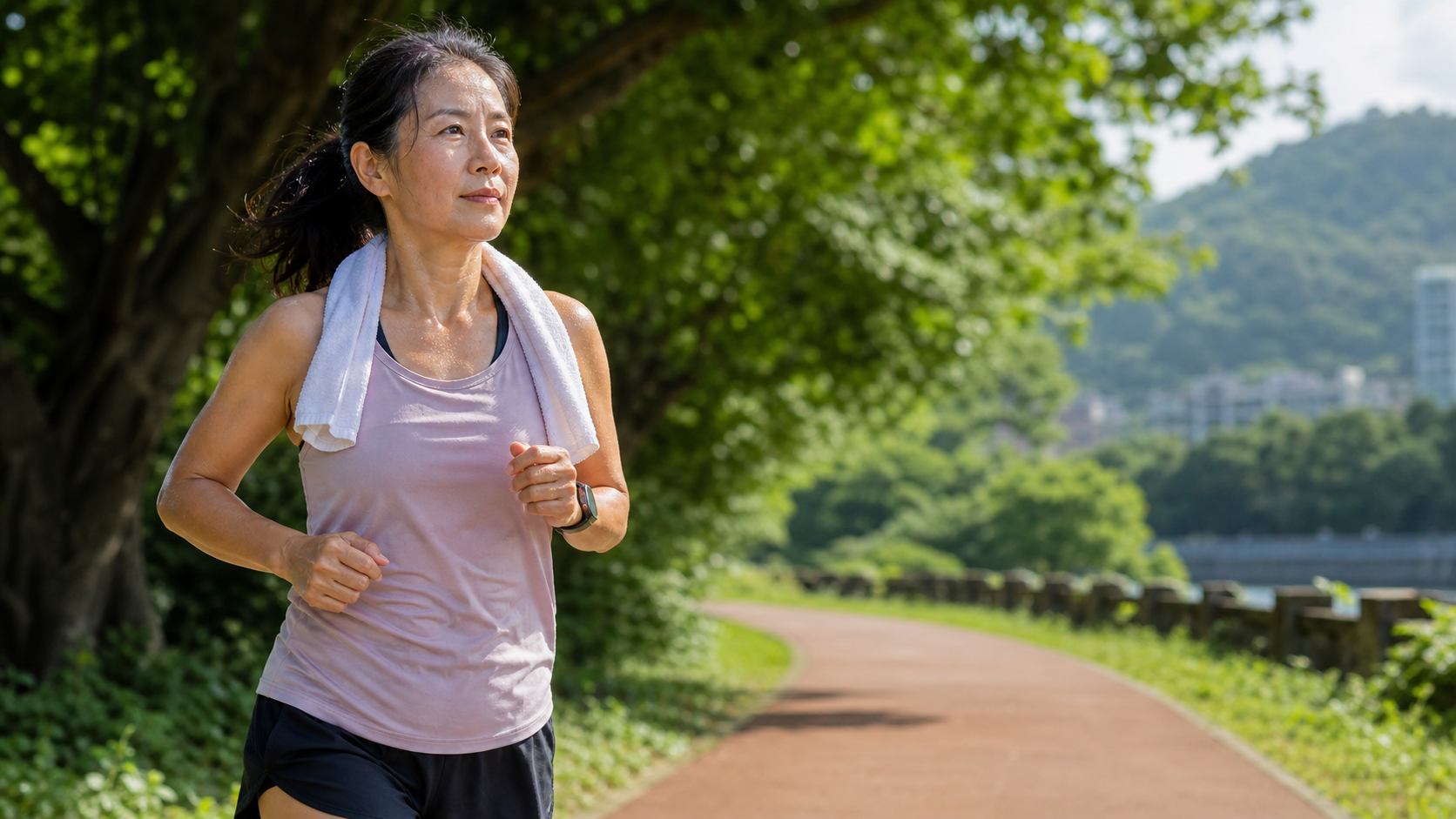
Menopause is defined as 12 consecutive months without menstruation. The average age of menopause for women in Taiwan is around 51, but precursor symptoms (perimenopause) can begin as early as the mid-40s. For running enthusiasts, menopause brings not only symptoms such as hot flashes and sleep disturbances, but also profound effects on running performance, injury risk, and recovery capacity.
However, menopause should not be a reason to stop running. In fact, regular running training is one of the most scientifically supported “non-pharmacological approaches to managing menopausal symptoms.” By understanding the mechanisms of hormonal changes and adjusting training strategies accordingly, many Taiwanese women have achieved their personal best performances after menopause.
Five Major Effects of Declining Estrogen on Running
| Area of Impact | Mechanism | Specific Manifestations |
|---|---|---|
| Decreased muscle mass | Estrogen protects muscle protein; after its cessation, muscle loss accelerates | The same pace requires more effort, and VO₂max declines |
| Reduced bone density | Estrogen inhibits osteoclasts; after its cessation, bone loss occurs at 2–3% per year | Increased risk of stress fractures |
| Fat redistribution | Visceral fat increases, metabolic efficiency declines | Weight gain with the same diet; running feels heavier |
| Articular cartilage degeneration | Estrogen has anti-inflammatory effects; after its cessation, cartilage protection weakens | Increased joint pain and morning stiffness |
| Impaired thermoregulation | The hypothalamic thermoregulatory center is sensitive to estrogen | Hot flashes, excessive sweating, and greater susceptibility to overheating during running |
Training Adjustments During Perimenopause and After Menopause
Perimenopause (ages 40–50, irregular menstruation)
During this stage, estrogen begins to fluctuate, and running performance may show “unexplained declines” or “inconsistent ups and downs.” This is a normal physiological phenomenon.
- Reduce over-reliance on high-intensity training: Estrogen fluctuations make recovery capacity unstable; interval training frequency can be reduced from 2 sessions per week to 1
- Increase strength training: 2–3 sessions of weight training per week helps counteract muscle loss and also stimulates bone regeneration
- Prioritize sleep quality: Sleep disturbances affect running recovery; establish a regular bedtime and avoid running right before bed
After Menopause (typically after age 50)
Hormone levels stabilize at a new low, and the body begins to adapt. This is the time to re-establish a stable training plan:
- Accept the natural decline in speed: After menopause, VO₂max naturally declines by about 1–2% per year, but regular training can significantly slow this trend
- Use RPE (Rating of Perceived Exertion) instead of pace as a training metric: Both heart rate and pace can run higher due to hormonal changes, making subjective perception more reliable
- Manage hot environments: Taiwan’s summer heat and humidity are particularly challenging for menopausal runners; prioritize running in the morning or evening and actively hydrate
The Importance of Strength Training for Menopausal Runners
After menopause, strength training is no longer an “auxiliary” option but a necessity as important as running itself:
- Bone protection: The mechanical stimulus of weight-bearing exercises (squats, deadlifts) is the most effective way to stimulate bone regeneration
- Muscle preservation: Full-body strength training twice a week (including squat, push, and pull movements) can slow sarcopenia
- Metabolic boost: Increasing muscle mass helps raise resting metabolic rate, countering menopausal weight gain
- Balance training: Declining estrogen also affects proprioception; perform single-leg balance and balance board exercises to reduce fall risk
Hormone Replacement Therapy (HRT) and Running
Hormone Replacement Therapy (HRT) is a medical option for relieving menopausal symptoms and has indirect positive effects on running performance:
- Reduces hot flashes, making outdoor running more comfortable
- Some studies suggest it can slow muscle and bone loss
- However, HRT is not suitable for every woman; individual risks and benefits should be discussed in detail with a gynecologist
Dietary Strategies for Menopausal Runners
- Increased protein needs: A daily intake of 1.5–2 grams of protein per kilogram of body weight is recommended to counteract muscle loss
- Calcium and Vitamin D: 1200 mg of calcium and 800–2000 IU of Vitamin D daily to support bone health
- Reduce alcohol and caffeine: Both can exacerbate hot flashes and disrupt sleep
- Phytoestrogen foods: Tofu, soy milk, and flaxseeds contain phytoestrogens, which may provide mild symptom relief for some women
Practical Advice
- Track your menopausal symptoms and training log: Identify the triggers for hot flashes (temperature, intensity, diet) and avoid them in your training plan
- Find menopause-friendly running partners: Many running communities across Taiwan are formed by middle-aged and older women; mutual understanding and support are the best motivation
- Get regular bone density screenings: After menopause, a DEXA scan every 1–2 years is recommended
- Be flexible with training: During menopause, some days will be particularly difficult (lack of sleep, severe hot flashes); allow yourself to adjust or skip a workout
- Don’t give up your marathon dreams: Female runners in their 50s, 60s, and 70s around the world continue to complete marathons and even ultramarathons after menopause
Conclusion
Menopause is a turning point in a woman’s running journey, not the finish line. Hormonal changes bring challenges, but they also bring an opportunity to reconnect with your body. Many Taiwanese female runners truly fell in love with running after age 50, because running became their best weapon against menopausal symptoms and for maintaining physical and mental health. Adjust expectations, adjust training strategies, and fuel properly—the stories of menopausal female runners are far from over.
Related Reading
西進武嶺 免費訓練分析服務 Intervals | 練不夠還是練過頭?你哪一種類型選手?AI模型告訴你! | 備戰神器 | 公路車 訓練 | CT Yeh
4 年前
2025 自行車錶排行榜 兩萬車友大數據 / Garmin Bryton 排名會大洗牌嗎? / 全新的碼表前身分析 /公路車 / CT Yeh
1 年前
2026 車錶排行榜!誰是最多車友正在使用?練家子最愛哪款?🏆 (2萬名車友數據) / 公路車 / CT Yeh
5 個月前
白沙屯媽祖進香在家走!UREVO 坡度自調走步機 / 可連接訓練遊戲APP MyWhoosh / 邊看直播邊走起來 / CT Yeh
11 個月前
靠單車減肥35公斤 心得分享與整理
7 年前
[教學] Premiere 影片 手震 修正 教學 防抖 單眼 影像 GoPro 穩定 Video Stabilization
8 年前
Garmin Edge 1050 旗艦車錶 全台首測!/ 環法冠軍指定 / 對比Edge 1040改進哪些? / 公路車 / CT Yeh
2 年前
單車AI教練!全新 ChatGPT4o 幫你分析訓練成果!排武嶺課表,分析騎車姿勢! 太神了! / 公路車 / CT Yeh / feat. 緯緯
2 年前