Introduction
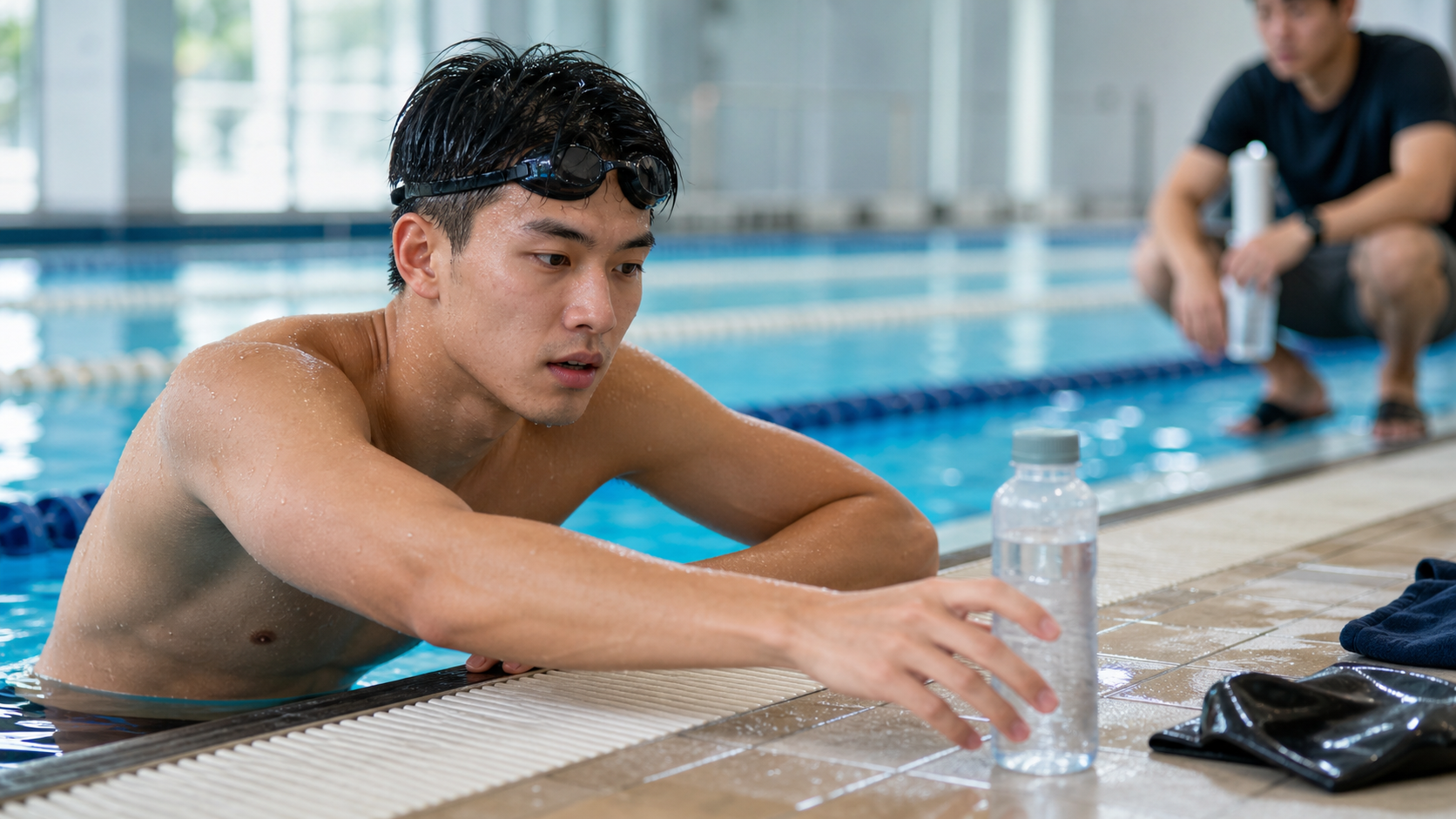
“How can I possibly get dehydrated when I’m swimming in water?” This is a common misconception among swimming beginners and even seasoned athletes. In reality, because swimmers are surrounded by water, they tend to overlook their body’s hydration needs. Research shows that after prolonged swim training, athletes’ sweat loss is comparable to that of other endurance sports. However, because they can’t feel the sweat while in the water, and the thirst response is partially suppressed, their fluid intake falls far short of actual requirements.
Sweat Loss During Swimming
Why Do We Sweat Profusely While Swimming?
Swimming is no less intense than running, and the heat generated by metabolism must be dissipated through sweating. Although the body is immersed in water, the sweat glands still function normally, and the sweat is diluted and dispersed directly into the pool, making it completely imperceptible.
Approximate sweat loss at different swimming intensities:
| Swimming Intensity | Sweat Loss per Hour | Notes |
|---|---|---|
| Easy technique drills (25°C water temp) | 400–500 mL | Low metabolic rate, less loss |
| Moderate-intensity training (28°C water temp) | 500–800 mL | Most training scenarios |
| High-intensity intervals (28–30°C) | 700–1000 mL | Common in competitive training |
| Open water swimming (summer) | 800–1200 mL | High water temp + sun exposure |
Key Data: A 2% reduction in body weight indicates mild dehydration, which can cause aerobic capacity to drop by 10–20%; a 3–4% reduction significantly impairs cognitive function and reaction speed.
Electrolyte Loss Should Not Be Overlooked
Sweat contains electrolytes such as sodium, potassium, chloride, and magnesium. After prolonged swimming, the loss of these minerals can cause:
- Muscle cramps (sodium, magnesium deficiency)
- Increased fatigue (potassium loss)
- Headaches, nausea (hyponatremia, especially after excessive plain water intake following long-distance races)
Hydration Timing and Methods
Pre-Training Hydration Preparation
Good hydration status is established before training begins:
- 2 hours before training: Drink 400–600 mL of water or a low-concentration sports drink
- 30 minutes before training: Top up with another 200–300 mL
- Check hydration status: Observe urine color — pale yellow (straw-colored) indicates good hydration; dark yellow means you need to drink more water
Urine color and hydration status reference:
| Urine Color | Hydration Status | Recommended Action |
|---|---|---|
| Clear and colorless | Overhydrated | Reduce water intake, replenish electrolytes |
| Pale yellow/straw-colored | Well hydrated | Maintain current intake |
| Dark yellow | Mildly dehydrated | Increase water intake immediately |
| Orange-yellow/brown | Severely dehydrated | Rehydrate copiously immediately and seek medical attention |
Mid-Training Hydration Strategy
The challenge of hydrating during swim training is that you can’t simply stop to drink at any time, but there are several ways to overcome this:
Short sessions (within 60 minutes):
- If well hydrated before training, short low-intensity sessions may not require mid-session hydration
- If there are rest intervals between sets, use the 30–60 second rest periods to drink 100–150 mL of sports drink
Long sessions (over 60 minutes):
- Drink 150–200 mL every 15–20 minutes during rest intervals
- For training exceeding 90 minutes, it is recommended to switch to an electrolyte-containing sports drink rather than plain water
- Keep a water bottle at the poolside and develop the habit of hydrating during every rest break
Open water swimming:
- Familiarize yourself with aid station locations before the race
- Consider using a hydration pack or a planned refueling strategy
- Open water environments (sun exposure, high water temperature) cause greater sweat loss, so hydration needs are higher
Post-Training Hydration Recovery
Post-training hydration goal: Replenish 125–150% of lost fluids
Calculation method:
- Weigh yourself before and after training (undressed, dried off)
- Every 1 kg of body weight lost = approximately 1 liter of fluid lost
- Replenish 1.25–1.5 times the amount lost within 4–6 hours after training
Example: 70 kg before training, 69.2 kg after training, 800 mL lost, requiring 1000–1200 mL to be replenished.
Electrolyte Replenishment Strategy
When Do You Need to Add Electrolytes?
- Training sessions exceeding 60 minutes
- High-intensity interval training
- Swimming in hot environments or high water temperatures
- Heavy personal sweating or frequent cramping issues
Electrolyte Sources Available in Taiwan
| Source | Advantages | Considerations |
|---|---|---|
| Sports drinks (Pocari Sweat, Supau) | Convenient, good taste | Higher sugar content, use in moderation during training |
| Homemade electrolyte water | Low cost, controllable sugar content | Requires self-mixing of salt and sugar ratios |
| Electrolyte capsules (GU Roctane, etc.) | Low sugar, easy to carry | Must be taken with water |
| Coconut water | Natural source of potassium | Relatively low in sodium, needs additional salt |
| Salt-containing foods (plums, salted plums) | Fits Taiwanese food culture | Effective for salt replenishment |
Warning on Hyponatremia
If you drink large amounts of plain water after prolonged swimming without replenishing sodium, hyponatremia can occur. Symptoms include headache, nausea, confusion, and in severe cases, it can be life-threatening. Prevention methods:
- Mix electrolytes into your fluids when rehydrating after long swims (over 2 hours)
- Do not drink excessive amounts of water in a short period
- Post-race recovery drinks should contain adequate sodium
Practical Recommendations
- Always keep a water bottle in your swim bag: Develop the habit of drinking before and after training; don’t wait until you’re thirsty.
- Plan hydration, don’t wait for thirst: The thirst sensation typically only appears when dehydration has already reached 1–2%, which is too late to start hydrating.
- Track body weight in a training log: Compare your weight before and after each session to understand your personal sweat loss rate and develop an individualized hydration plan.
- Plan ahead for open water races: Check aid station locations and estimate your water intake at each station to ensure adequate hydration throughout the event.
Conclusion
The hidden dehydration risk in swimming is often underestimated, but its impact on training performance, muscle function, and cognitive response is real. Establishing good hydration habits — systematically replenishing fluids and electrolytes before, during, and after training — is essential to maximize the benefits of swim training while protecting your health. Swim fast in the water, but also drink right.
Related Reading
- Hydration for Swimmers: A Replenishment Plan for Imperceptible Loss During Training
- Hydration During Swim Training: The Challenge of Replenishing in a Chlorinated Environment
- Fluids and Electrolytes for Swimmers: Replenishment Strategies for Long-Distance Swimming
- The Science of Hydration: How to Calculate Your Personal Sweat Rate and Fluid Needs
靠單車減肥35公斤 心得分享與整理
7 年前
2016/05/13 單車 冷水坑下滑
10 年前
CT暗黑廚房) 車友必備 宇宙無敵鮮蚵湯 幫助訓練恢復 天然食補 好市多 超肥鮮蚵 破PR
7 年前
西進武嶺 免費訓練分析服務 Intervals | 練不夠還是練過頭?你哪一種類型選手?AI模型告訴你! | 備戰神器 | 公路車 訓練 | CT Yeh
4 年前
洗單車神器 吹水機! 實際洗車用用看 暴力洗鍊條大法 | 公路車 | CT Yeh
4 年前
松運深水池拍攝 作品 防寒衣品牌
8 年前
#公路車 #Vo2Max #最大攝氧量 測驗 體驗 | 心肺測試
6 年前
一日北高/長距離團騎 常見問題補充篇 / 組團或跟團的眉角 / 壯車友容易被瘦車友慢性拉爆 / 原來屁股痛可能是這個原因...? / 風場配速法 / 公路車 / CT Yeh
2 年前