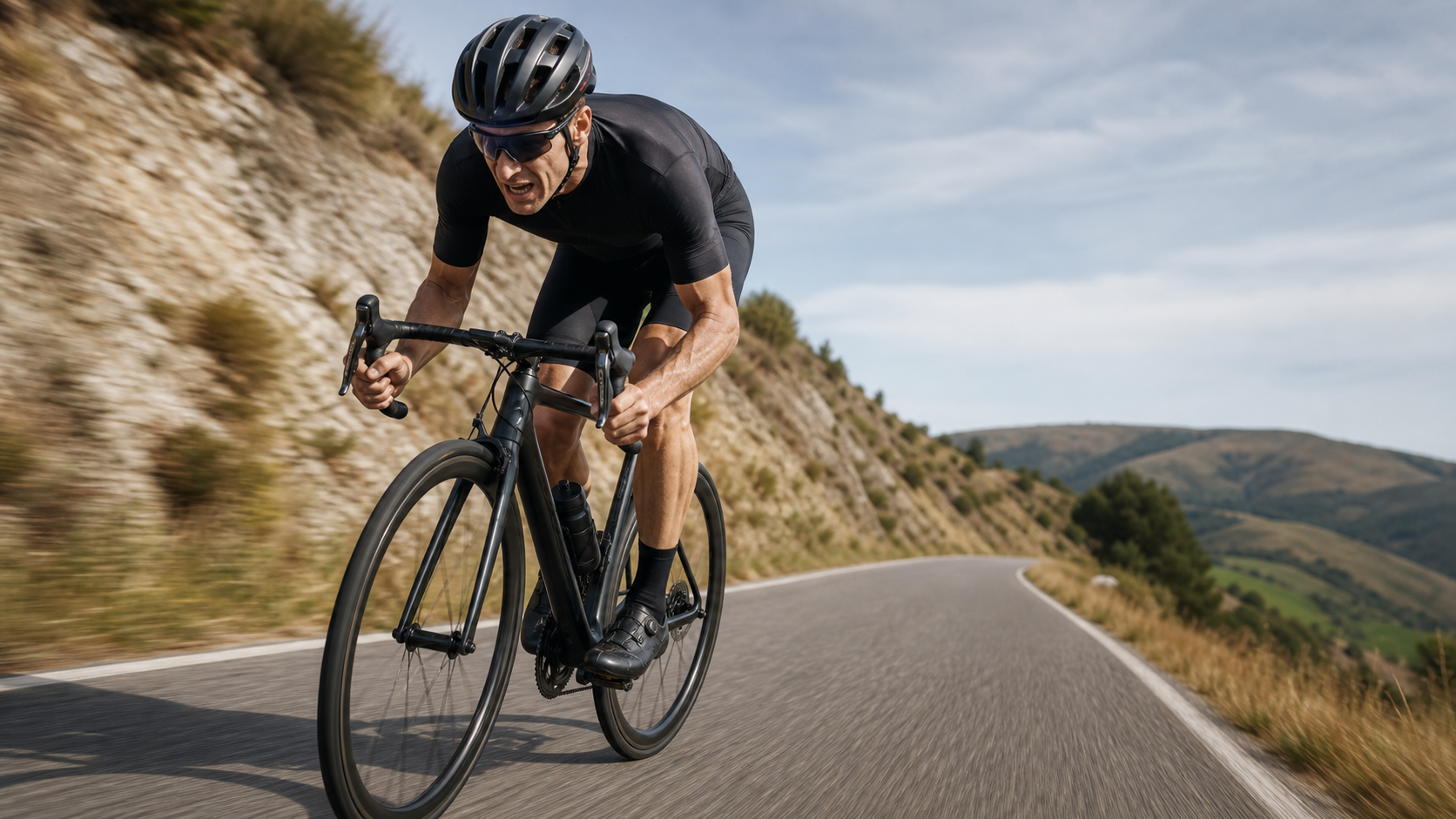
Introduction
In the cycling training system, Maximal Anaerobic Power (MAP) represents the highest instantaneous power a rider can output under anaerobic conditions, typically measured as the average wattage over 5 or 10 seconds. For road race sprinters, track cyclists, or amateur riders aiming to stand out in a bunch sprint, MAP is a training metric that cannot be overlooked.
The Physiological Basis of Maximal Anaerobic Power
The Phosphocreatine System (PCr System)
The first 5–10 seconds of a sprint rely primarily on the phosphocreatine system for energy supply. The characteristics of this system are:
- Extremely fast response: No oxygen required, activates immediately
- Limited capacity: Stores support roughly 6–10 seconds of maximal output
- Long recovery time: Full recovery requires 3–5 minutes
The Role of Fast-Twitch Muscle Fibers
MAP levels are closely related to the proportion and quality of fast-twitch muscle fibers (Type II). Although muscle fiber ratios have certain genetic limitations, the recruitment capacity and explosive power of fast-twitch fibers can be significantly improved through training.
MAP Training Plan Design
Core Principles
Effective MAP training must follow these principles:
- Full recovery: Adequate recovery between each sprint set (typically a 1:5 to 1:10 work-to-rest ratio)
- Maximal effort: Every sprint must be a true 100% effort
- Low fatigue background: Schedule MAP training on high-quality days of the training week, avoiding fatigued states
- Progressive overload: Increase sprint repetitions or shorten recovery time week by week
Main Workout Types
| Workout Name | Sprint Duration | Recovery Time | Sets | Training Goal |
|---|---|---|---|---|
| Phosphocreatine Sprint | 6–8 seconds | 3–5 minutes | 6–10 reps | Peak power |
| Short Acceleration | 10–15 seconds | 2–3 minutes | 8–12 reps | Sustained explosive power |
| Transitional Anaerobic | 20–30 seconds | 2–3 minutes | 6–8 reps | Anaerobic capacity |
| Extra Hill Sprint | 8–12 seconds | Ride back down | 6–8 reps | Explosive power under resistance |
The Special Benefits of Hill Sprints
Performing short sprints on a 4–6% incline offers the following advantages compared to flat-road sprints:
- Lower cadence: Forces high-torque output, beneficial for muscular strength development
- Reduced speed dependence: Achieves high power at lower speeds, lowering technical demands
- Natural rhythm control: The gradient itself provides resistance, making each sprint’s intensity more consistent
Recommended workout (hill version):
Warm-up: 20–30 minutes of easy riding, including 3–4 moderate-intensity activation efforts
Main set: 8×10-second hill sprints (4–6% grade), recover 2–3 minutes riding slowly downhill
Cool-down: 15 minutes of low-intensity riding
Power Tracking and Progress Assessment
Key Metrics
Riders using power meters can track the following values:
- 5-second peak power: Represents the ceiling of pure explosive power
- 10-second average power: Maximum phosphocreatine capacity
- 30-second average power: Phosphocreatine plus early glycolytic system
- W/kg ratio: Explosive power relative to body weight, fairer for sprint comparisons
Reference Ranges for General Amateur Riders
| Level | 5-Second Peak Power (W/kg) |
|---|---|
| Beginner | 8–10 W/kg |
| Amateur | 10–13 W/kg |
| Advanced Amateur | 13–16 W/kg |
| Elite | 16–20+ W/kg |
Supplementary Training Methods
Incorporating Weight Training
MAP improvement cannot rely solely on cycling training; strength training (particularly lower-body explosive power) is an effective supplement:
- Jump Squat: Use 30–50% of body weight as load, emphasizing jump speed
- Single-Leg Box Jump: Trains unilateral explosive power, mimicking the asymmetrical action of pedaling
- Romanian Deadlift: Strengthens explosive power of the posterior chain muscles (glutes, hamstrings)
Application of Indoor Trainers
Indoor trainers (such as ERG mode on Zwift or TrainerRoad) are particularly well-suited for MAP training because:
- Target power can be precisely set
- External factors are eliminated (traffic, road conditions)
- Data is easy to record and compare
Practical Recommendations
- Maximum of 2 MAP sessions per week: Excessive high-intensity sprinting causes central nervous system fatigue and requires longer recovery time.
- Build the foundation in the pre-season: MAP training should be built on a solid aerobic base and should not be introduced too early in the initial training period.
- Pay attention to thorough warm-ups: A complete warm-up of at least 20–30 minutes, including progressive acceleration efforts, is mandatory before MAP training.
- Record each peak value: Establish personal records (PRs) and test regularly to understand progress.
Conclusion
Improving maximal anaerobic power requires patience and systematic training design. Short duration, high intensity, and full recovery are the three core elements. Combined with the precise quantification of a power meter, every session can have clear goals and outcome assessments. For amateur riders in Taiwan, even without a power meter, the simple principle of “maximal sprint + full recovery” can effectively enhance sprint explosive power within a few months, allowing you to show true speed at the finish line of your next group race.
Related Reading
- High-Power Output Training: Improving Sprint Strength and Anaerobic Capacity
- Sprint Power Development Training: A Complete Workout Plan from Neuromuscular to Anaerobic Explosive Power
- Cycling Power Sprint Training: Workout Design for 5-Second to 30-Second Maximal Power
- Neuromuscular Power Intervals: Building Explosive Power with 10-Second Maximal Sprints
#公路車 #Vo2Max #最大攝氧量 測驗 體驗 | 心肺測試
6 年前
全台首發!邁金P715踏板功率計!市場價格撼動者再出招 / 功率對比實測 / FAVERO ASSIOMA 可參考! / 公路車 / CT Yeh
1 年前
西進武嶺 免費訓練分析服務 Intervals | 練不夠還是練過頭?你哪一種類型選手?AI模型告訴你! | 備戰神器 | 公路車 訓練 | CT Yeh
4 年前
CT暗黑廚房) 車友必備 宇宙無敵鮮蚵湯 幫助訓練恢復 天然食補 好市多 超肥鮮蚵 破PR
7 年前
西進武嶺 自製新版AI配速表產生器 x 賽前攻略 抱佛腳! 沒有功率計也可以產生配速表嗎?有什麼其他眉角賽前要注意的呢? | 西進武嶺 / 東進武嶺 KOM 攻略 | 公路車 | CT Yeh
4 年前
[教學] Dashware 教學 如何製作有 速度 功率 心律的 騎車影片 Guages Video
8 年前
單車AI教練!全新 ChatGPT4o 幫你分析訓練成果!排武嶺課表,分析騎車姿勢! 太神了! / 公路車 / CT Yeh / feat. 緯緯
2 年前
#公路車 #西進武嶺 配速配瓦實驗 坡度分析 四小時內攻略 建大盃 NeverStop #西進武嶺攻略
6 年前