Introduction
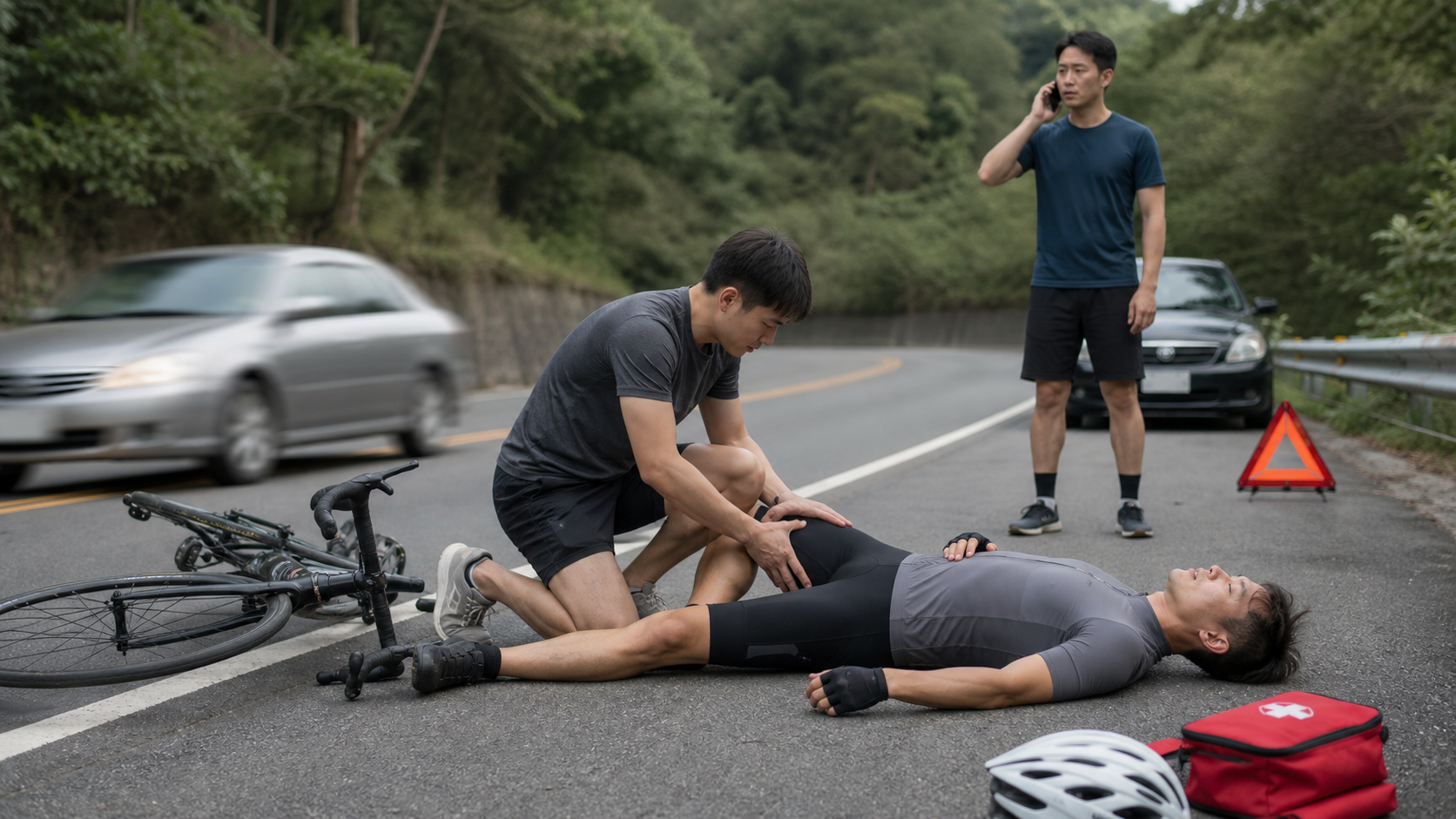
No matter how cautious a rider is, the possibility of an accident can never be completely ruled out. Once an accident occurs, most people’s first reaction is panic—frantically making phone calls, or trying to move an injured rider who has fallen, without realizing that these actions may cause even greater harm.
Proper on-scene accident handling is divided into several key stages: ensuring safety, assessing injuries, administering first aid, reporting the incident, and preserving documentation. Each stage has its own considerations. Being mentally prepared and equipped with knowledge before an accident happens is what allows you to stay calm and make the right decisions at the critical moment.
The First Step at the Scene: Ensure Safety
Do Not Rush to Move the Injured Rider
This is the most important principle, and also the most frequently violated one:
- High-speed impacts can cause cervical spine injuries; improper movement may lead to secondary spinal damage, resulting in permanent paralysis
- Before confirming the injured rider’s consciousness and spinal condition, do not move the injured rider
- The only exception: if there is immediate danger at the scene (e.g., vehicles still moving, fire), only then may you carefully relocate the rider
Protect the Scene to Prevent Secondary Accidents
| Action | Purpose |
|---|---|
| Turn on flashing lights (rear light flashing) | Alert approaching traffic from behind |
| Place warning devices 30–50 meters behind the accident | Give following vehicles sufficient reaction distance |
| Direct others to help control traffic | Prevent secondary collisions |
| Move yourself to a safe position | Do not become the next injured person |
Injury Assessment and First Aid Basics
Consciousness Assessment (AVPU Method)
Quickly assess the injured rider’s level of consciousness:
- A (Alert): Awake, responds normally to conversation
- V (Voice): Responds to voice (responds when name is called)
- P (Pain): Responds only to painful stimuli
- U (Unresponsive): No response at all
For V, P, or U states, call 119 immediately and describe the injured rider’s level of consciousness.
Management of Common Cycling Accident Injuries
Head Impact:
- Keep the injured rider still and motionless
- If vomiting occurs, place them on their side (recovery position) to prevent choking, but keep the head, neck, and spine in a straight line while on their side
- Even if there is only mild dizziness, medical evaluation is recommended (concussion symptoms may appear delayed)
Fracture Management:
- Do not attempt to realign the bone
- Use clothing to immobilize (do not tie too tightly) to reduce secondary injury during movement
- Observe the color and temperature of the extremity beyond the injury; if it turns pale and cold, there may be vascular damage
Severe Bleeding:
- Apply direct pressure to the wound with clean cloth (or bare hands)
- Maintain pressure for at least 10 minutes; do not stop pressing just because bleeding appears to have stopped
- Do not use a tourniquet (use of a tourniquet by non-medical personnel may cause limb necrosis)
Abrasion Cleaning:
- Rinse the wound thoroughly with plenty of clean water
- Remove visible gravel and foreign objects
- Do not wipe with tissue paper (fiber residue may remain)
Reporting Procedures in Taiwan
Immediate Phone Reporting
| Situation | Number to Call | Description |
|---|---|---|
| Someone injured/emergency medical need | 119 | Fire/ambulance priority |
| Traffic accident/involves a third party | 110 | Police handle liability |
| Need roadside assistance | 1901 (Directorate General of Highways) | Highway section assistance |
Information to provide when calling 119:
- Accident location (street name, nearest landmark, GPS coordinates)
- Number of injured persons
- General condition of the injured (consciousness, bleeding, fractures)
- Your contact phone number
On-Scene Documentation (Very Important)
For subsequent insurance claims and liability clarification, be sure to preserve the following information at the scene:
- Take photos: full view of the accident scene, vehicle positions, road markings, the injured rider (with the injured rider’s consent)
- Record the other party’s information: name, national ID number, license plate, insurance information
- Obtain the police report number: required for subsequent insurance claims
- Ask witnesses: leave contact information for witnesses and obtain third-party testimony
Points to Note After Police Arrive
- State the facts truthfully; do not over-admit fault in the confusion (phrases like “It’s my fault, it’s all my fault” should not be said at the scene)
- Cooperate with police in drawing the accident scene diagram
- Request a copy of the road traffic accident scene diagram (you are entitled to obtain one)
Follow-Up: Medical Care and Insurance
Medical Visit Considerations
- Even if you feel only slightly injured, a medical visit is recommended: concussion and internal bleeding may not show symptoms until several hours later
- Keep all medical documents: diagnosis certificates, emergency room receipts, and hospitalization records are all necessary documents for claims
- The diagnosis certificate should state the cause of injury: “traffic accident” rather than just “external injury”
Insurance Claim Process
- Obtain the road traffic accident certificate (can be applied for at the police station after the accident)
- Prepare the diagnosis certificate, medical receipts, and your personal insurance policy
- Submit a claim application to the insurance company (there is usually a time limit; for accident insurance, it is typically within 6 months)
Practical Advice
- Obtain a first aid certification: The Red Cross Society of Taiwan and the National Fire Agency both offer first aid courses for the general public (CPR+AED); riders are strongly encouraged to take them
- Prepare a first aid kit: For long-distance rides, it is recommended to carry a basic first aid kit (antiseptic wipes, elastic bandages, adhesive bandages, triangular bandages)
- Set up emergency contacts on your phone: Set up iOS “Emergency SOS” or Android “Emergency Information” features so that if you cannot call for help yourself, rescue personnel can quickly find your contacts
Conclusion
Every decision at an accident scene requires a calmness that must be trained in advance for high-stress situations. Understanding first aid basics, remembering emergency numbers, and knowing how to preserve on-scene documentation—these preparations may not be needed on most riding days, but at the critical moment, they can be the deciding factor in how well an injured rider recovers, or even whether they survive. We hope every rider learns these skills, yet never has to use them.
Related Reading
- On-Scene First Aid for Cycling Road Accidents: Abrasions, Impacts, and Fractures
- Cycling Accident Handling and Legal Knowledge: A Complete Rights Guide for Taiwanese Riders
- Emergency Response After Cycling Accidents: On-Scene Management of Abrasions, Fractures, and Head Impacts
- What to Do After an Accident? A Complete SOP for Cycling Crashes
單車 一日北高 ( 雙城 ) 肥宅雙人瘋狂行 紀錄片 REACTO
10 年前
下次拍照前要查清楚啦🤣 #cycling
7 個月前
山港 環東台北160K 自行車約騎活動
9 年前
公路車 爬坡 破PR 紀錄 小技巧 分享
6 年前
摔車後補裝備: 好市多新款單車安全帽& Specialized Romin 北高整路屁股都不痛的坐墊 | 一千元居然有MIPS | CT Yeh | 公路車
4 年前
#公路車 #Fitting 靠人工智慧APP 幫你調整單車
6 年前
碟煞公路車 銑面器 !? 原來銑完差這麼多! 降低蹭碟機率! | TIME 公路車 保養小記錄 | CT Yeh
3 年前
Canyon 公路車斷把手 五年老車特規還能修嗎? 維修保養全記錄 feat. 501單車監理站 | 公路車 | CT Yeh
4 年前