Introduction
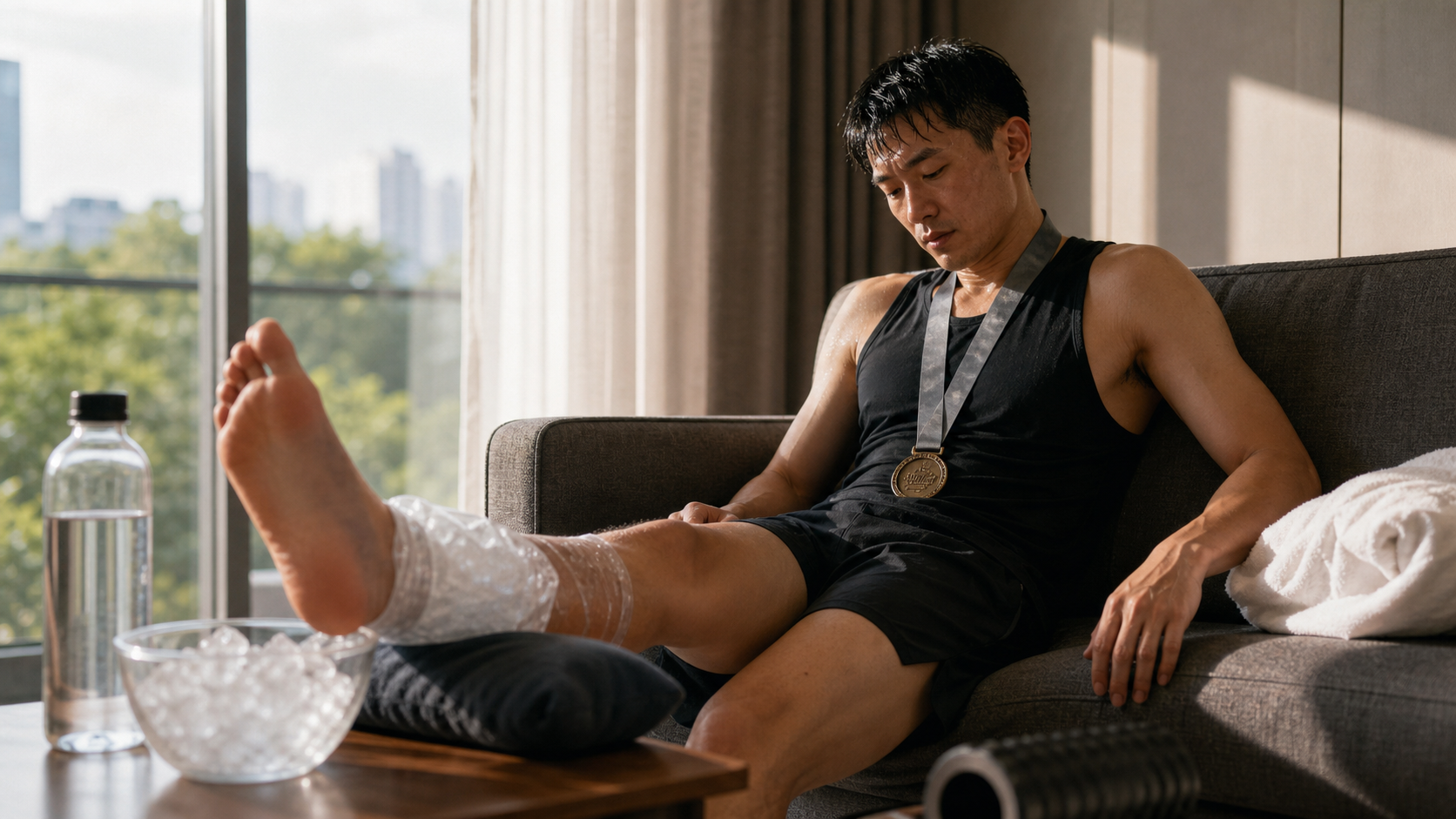
You’ve crossed the finish line, the medal hangs around your neck, but the marathon’s challenge to your body has just entered a new chapter—recovery. Many runners experience stiff legs, a suppressed immune system, and poor sleep quality in the days following the race, yet rush back to the track within a week or two or even schedule their next race, resulting in injury or long-term fatigue. The “One Minute Per Mile” rule offers a simple, intuitive recovery timeline backed by solid exercise physiology.
What is the “One Minute Per Mile” Rule
This rule was popularized by running coach Jeff Galloway: After completing a marathon, take one day of recovery for every mile (1.6 km) run before returning to high-intensity training.
A marathon is 26.2 miles, so full recovery requires approximately 26 days, or about a month. This number doesn’t mean “no running at all,” but rather that no high-intensity intervals or race-pace training should be scheduled before this period.
What Happens to the Body After a Marathon
The damage a marathon inflicts on the body far exceeds what most runners imagine:
| System | Damage Description | Recovery Time |
|---|---|---|
| Muscles | Micro-tears, DOMS (Delayed Onset Muscle Soreness), disruption of cellular structure | 7–14 days |
| Connective Tissue | Micro-trauma to tendons and ligaments, depletion of joint fluid | 14–21 days |
| Immune System | “Open window” in the 72 hours post-race, increased infection risk | 72–96 hours |
| Endocrine System | High cortisol, low testosterone, fluctuating thyroid hormones | 7–14 days |
| Gastrointestinal System | Intestinal ischemia during running, mucosal damage | 3–7 days |
| Nervous System | Central nervous system fatigue (lack of motivation, sluggish reactions) | 7–21 days |
Most notable is “structural damage”—these muscle cell-level injuries continue repairing long after the pain subsides. Returning to high-intensity training too early simply means re-injuring tissue that hasn’t healed.
The Four-Week Recovery Plan
Week 1 (Days 1–7 Post-Race): Complete Active Recovery
- Days 1–2: Rest is the priority; light walking for 15–20 minutes is acceptable
- Days 3–4: Cold water baths or ice baths (10–15°C, 10–15 minutes) can help reduce inflammation
- Days 5–7: If leg pain has subsided, try 20–30 minutes of very easy jogging (heart rate < 130 bpm)
- Key Points: Avoid strenuous activity, increase protein intake (1.6–2.0 g/kg body weight/day), and get adequate sleep
Week 2 (Days 8–14): Light Aerobic Recovery
- 30–40 minutes of easy running daily, keeping heart rate at 65–70% of maximum heart rate
- Introduce low-impact cross-training: swimming, cycling, yoga
- Assess leg muscle and joint condition; if there are any specific pain points (as opposed to general muscle soreness), pause running activities
Week 3 (Days 15–21): Progressive Recovery
- Gradually increase to 40–50 minutes of easy running
- May add 1–2 sessions of 10–15 minutes of tempo running (but not at interval intensity)
- Longest single run should not exceed 12 km
Week 4 (Days 22–28): Return to Normal Training Base
- Weekly mileage returns to 60–70% of pre-race levels
- May add one shorter interval session (800m × 4–6 reps)
- Long run distance should not exceed 16–18 km
Effective Methods to Accelerate Recovery
Physical Methods:
- Cold Water Immersion: Perform within 30–60 minutes post-race, water temperature 10–15°C, for 10 minutes; this is one of the most research-supported acute recovery methods
- Compression Tights/Sleeves: Wear for 4–6 hours post-race to promote venous return and reduce lower limb swelling
- Foam Rolling: Can begin after days 3–5; avoid during the acute phase of days 1–2 (as it may worsen micro-tear damage)
- Sports Massage: Most effective 48–72 hours post-race; accelerates the removal of metabolic waste
Nutritional Methods:
- The 30-Minute Golden Window Post-Race: Consume 30–40g of protein + 60–80g of carbohydrates to initiate muscle repair
- Anti-inflammatory Foods: Turmeric, omega-3 fatty acids (salmon, walnuts) help reduce systemic inflammatory responses
- Adequate Hydration: Replenish 150% of body weight lost within 6 hours post-race, typically requiring 1.5–2L
Practical Advice
- Don’t rush to “maintain training feel” after the race: After 4–5 months of the toughest training plan, giving yourself 1–2 weeks of genuine rest post-race is fully deserved
- Listen to your body, not the plan: Recovery progress varies from person to person; if you still have pressure-related pain in your legs after 2 weeks, consult a sports medicine physician
- Set the earliest date for your next race: Allow at least 8–12 weeks between two full marathons so the next one can have a complete preparation training block
- Psychological recovery matters equally: Whether you hit or missed your race goal, a short-term motivational vacuum (Post-Marathon Blues) is normal—it’s a hormonal adjustment that typically resolves on its own within 2–3 weeks
- Keep a recovery log: Record daily leg sensations and resting heart rate (if it’s 5–8 bpm or more above your normal, your body is still recovering) to help determine when to resume training
Conclusion
The marathon finish line is the start of another training cycle, but this new cycle must be built on a foundation of complete recovery. The “One Minute Per Mile” rule gives us a simple time frame, while scientific recovery strategies maximize the quality of that period. Treat the body that just ran 42 km with care—it deserves this respect, and it’s the only way it can burn bright again on the next race course.
Related Reading
西進武嶺 免費訓練分析服務 Intervals | 練不夠還是練過頭?你哪一種類型選手?AI模型告訴你! | 備戰神器 | 公路車 訓練 | CT Yeh
4 年前
2018 田中馬拉松 全程健跑 VR 360 環景錄影 體驗現場狂野加油氣氛! Insta 360
7 年前
Live) 備戰2019彰化經典百K 賽前攻略 (已完賽請看新影片
7 年前
2019 夏季KOM 5小 完賽心得 準備攻略 東進武嶺 夏季登山王之路 Taiwan KOM Challenge
7 年前
FTL 與 SYB 車隊專訪 西進武嶺 實用攻略分享! 2小時 如何練?!你不知道的眉角!新手準備武嶺必看 EP1 | 實力派女車友 | 精華版 | 公路車 | CTYeh
4 年前
實景訓練台) 彰化經典百K 高強度喵團 90分鐘 跟著一起練功 2019 Indoor workout Changhua Classic 100 Taiwan
7 年前
一日北高 11小時 賽後心得分享篇 | TWB北高360 | 一日雙城 | 單車 | 公路車
6 年前
台灣旅行團參加 第7回まえばし赤城山ヒルクライム大会 雙視點
8 年前