Introduction
Many runners spend months training, only to ruin their condition in the three days before the race through poor planning—walking too much at the expo, trying unfamiliar foods that upset their stomach, and having sleep disrupted by nerves. The three days before the race are not for building fitness; they are the critical period for “protecting the fitness you’ve already built” and getting your body to the starting line in optimal condition. A detailed itinerary is the final mile in fully converting your training results into race performance.
Three Days Before the Race (D-3): Travel Day and Expo
Transportation and Accommodation
If the race requires traveling to the venue (such as an out-of-town event), D-3 is the best time to travel:
- Avoid long-distance travel on D-1; travel fatigue directly affects pre-race sleep
- Choose accommodation within a 10–15 minute walk of the starting line to reduce pre-race morning travel stress
- Confirm the hotel has an adjustable-temperature bed (ambient temperature on the night before the race affects sleep quality)
The Right Way to Visit the Expo
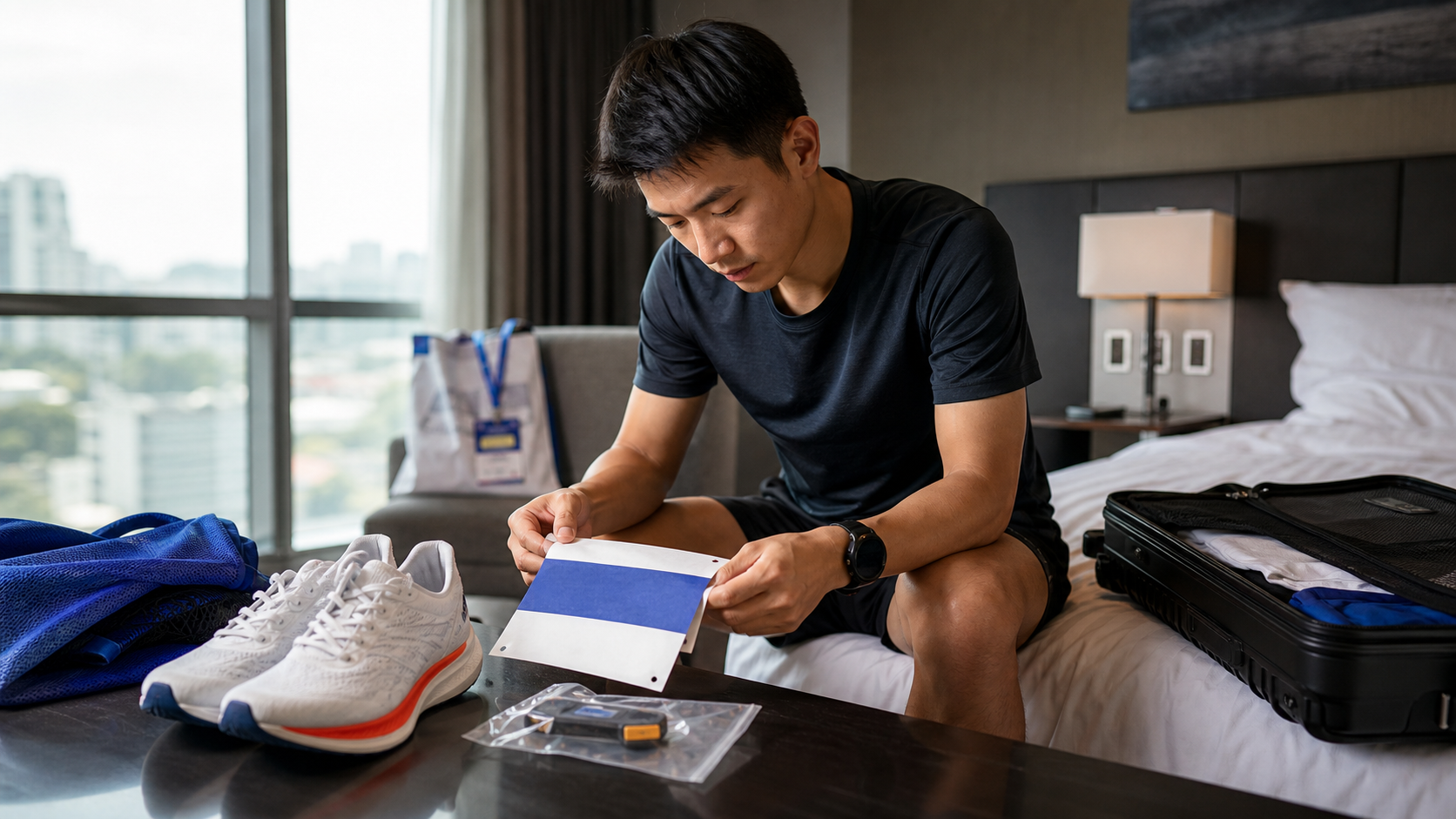
The marathon expo is a necessary stop for picking up your chip and bib, but it’s also a trap for draining your energy:
What to do right:
- Set a time limit for your stay: 1–1.5 hours maximum
- After picking up your chip, immediately verify your bib information (name, race category) is correct
- Limit standing and walking time—large expo floors are often hard surfaces, and prolonged standing causes unnecessary fatigue in your legs
- Wear well-cushioned shoes to the expo, not sandals
What to avoid:
- Sampling large amounts of unfamiliar food at nutrition booths
- Waiting in line to buy lots of merchandise (you can buy it after the race)
- Walking extensively around the venue for enthusiastic photo-taking
D-3 Training Schedule
- Easy jog for 20–30 minutes to check how your legs feel; no intensity work
- If your legs feel tight, schedule 15 minutes of light stretching or a foot soak (40°C, 10 minutes)
Two Days Before the Race (D-2): Final Preparation and Body Care
Nutrition Plan
D-2 is the day to seriously begin the “final carb-loading push”:
Breakfast: White rice + eggs + vegetables (familiar foods)
Lunch: Pasta / white rice + light protein (chicken, fish)
Dinner: Familiar high-carbohydrate foods; do not try new restaurants or new dishes
| Meal | Carbohydrate Intake | Protein | Fat | Notes |
|---|---|---|---|---|
| Breakfast | 70–80g | 20g | Low | Familiar foods |
| Lunch | 80–100g | 25g | Low | Avoid high fiber |
| Dinner | 80–100g | 20g | Low | No new foods |
| Late-night snack (optional) | 30–40g | — | — | Banana or white toast |
Foods to avoid: High-fiber vegetables (broccoli, legumes), high-fat foods (fried foods, red meat), alcohol, carbonated beverages
Gear Checklist
D-2 is the best time to confirm all race gear:
- [ ] Bib + chip confirmed and pinned to your shirt
- [ ] Race shoes (confirm no new wear points)
- [ ] Race outfit (moisture-wicking fabric, snug fit that doesn’t chafe)
- [ ] Energy gels (confirm type and quantity, portioned out according to plan)
- [ ] Watch (charged to 100%, GPS settings confirmed)
- [ ] Sunglasses / hat (depending on weather needs)
- [ ] Lip balm, anti-chafe balm (for long-distance friction areas: inner thighs, armpits, nipples)
- [ ] Race-day breakfast ingredients (if staying at a hotel, confirm the breakfast menu or bring your own)
D-2 Training
- Easy run for 15–20 minutes or complete rest (depending on personal preference)
- May include 4–6 strides of 15–20 seconds to activate the neuromuscular system
One Day Before the Race (D-1): Sleep Management and Final Mental Preparation
D-1 Nutrition
Breakfast: Normal carbohydrate breakfast (same as D-2)
Lunch: Light, familiar, low-fiber (white rice, steamed chicken, cooked vegetables)
Dinner (night before the race): This meal is the most important and the easiest to get wrong
- Recommended: white rice + stir-fried vegetables + chicken, portion size 20–30% larger than usual
- Timing: eat 3–4 hours before bedtime to allow full digestion
- Avoid: foods you’ve never tried, spicy hot pot, high-fiber salads, excessive fluid intake (limit liquids 2 hours before bed)
Race-Day Morning Plan
Arrange every detail of race morning in advance:
- Wake-up time: 2.5–3 hours before the start
- Breakfast time: 2–2.5 hours before the start
- Depart for the starting line: 60–75 minutes before the start
- Queue for corral entry: 30–45 minutes before the start
Sleep Strategy
Research shows that sleep quality on the two nights before the race (D-2 and D-1) matters more than the D-1 night alone—because difficulty falling asleep on D-1 night due to nerves is completely normal, and worrying too much about not sleeping only makes it harder to fall asleep.
Recommended approach:
- Ensure adequate sleep (7–8 hours) on D-2 night; this is the real “backup sleep”
- On D-1 night, after setting your alarm, accept the reality that you “might not sleep well” to reduce anxiety
- Avoid any stimulating content on D-1 night (social media, news, race analysis videos)
- Keep the room temperature at 18–22°C (the optimal temperature range for falling asleep)
Practical Tips
- Write your pre-race plan as a checklist: Don’t rely on memory; write down every to-do item and nutrition plan from D-3 to D-1
- Protect your feet: Wear comfortable, supportive shoes throughout the expo and pre-race activities; no new shoes
- Avoid excessive social commitments: Minimize dinner plans or social activities in the three days before the race to conserve energy
- Test race-day breakfast in advance: Only use foods on race day that you’ve tested during long-run training sessions; trying something for the first time is the biggest risk
- Check the weather early and adjust your plan: On D-3, check the race-day weather forecast; if there’s high heat or rain, adjust your fueling and clothing plan in advance
Conclusion
Managing the details of the three days before the race is the final line of defense for bringing your full preparation to the starting line. These three days are not for building fitness; they are for “not making mistakes”: no injured legs, no upset stomach, no ruined sleep. Follow the plan, manage the details, stay calm, and all your training investment will be fully repaid after the starting gun fires.
Related Reading
- Marathon 48-Hour Pre-Race Itinerary: Scheduling Transportation, Accommodation, and Nutrition
- Marathon Race-Day Strategy: Scientific Pacing and Fueling Plans
- Marathon Timing Chips and Pre-Race Gear Packets: Essential Checklist and Preparation Process for Race Packet Pickup
- What to Eat and How Many Hours to Sleep the Night Before a Marathon: The Critical 12-Hour Pre-Race Checklist
單車 一日北高 ( 雙城 ) 肥宅雙人瘋狂行 紀錄片 REACTO
10 年前
Live) 備戰2019彰化經典百K 賽前攻略 (已完賽請看新影片
7 年前
單車賞雪 裝備準備及注意事項分享 | 公路車
5 年前
一日北高前的高裝檢 | 北高 360 | 挑戰11小時的裝備 | 一日雙塔 | 補給
6 年前
FTL 與 SYB 車隊專訪 西進武嶺 實用攻略分享! 2小時 如何練?!你不知道的眉角!新手準備武嶺必看 EP1 | 實力派女車友 | 精華版 | 公路車 | CTYeh
4 年前
CT 喇低賽) 武嶺牽車 才是王道 西進牽車四小時內秘訣 攝手位置 如何判斷 防抽筋小秘訣
7 年前
西進武嶺 自製新版AI配速表產生器 x 賽前攻略 抱佛腳! 沒有功率計也可以產生配速表嗎?有什麼其他眉角賽前要注意的呢? | 西進武嶺 / 東進武嶺 KOM 攻略 | 公路車 | CT Yeh
4 年前
日本🇯🇵岡山&島波海道 單車之旅 (上集) / 機場停車省錢秘笈?/ 旅館有單車組裝室 / 差點上不了機場捷運 / 公路車 / CT Yeh
2 年前