Monitoring Tools for Cycling Cardiopulmonary Training: Accuracy Comparison of Heart Rate Straps vs. Optical Heart Rate Sensors
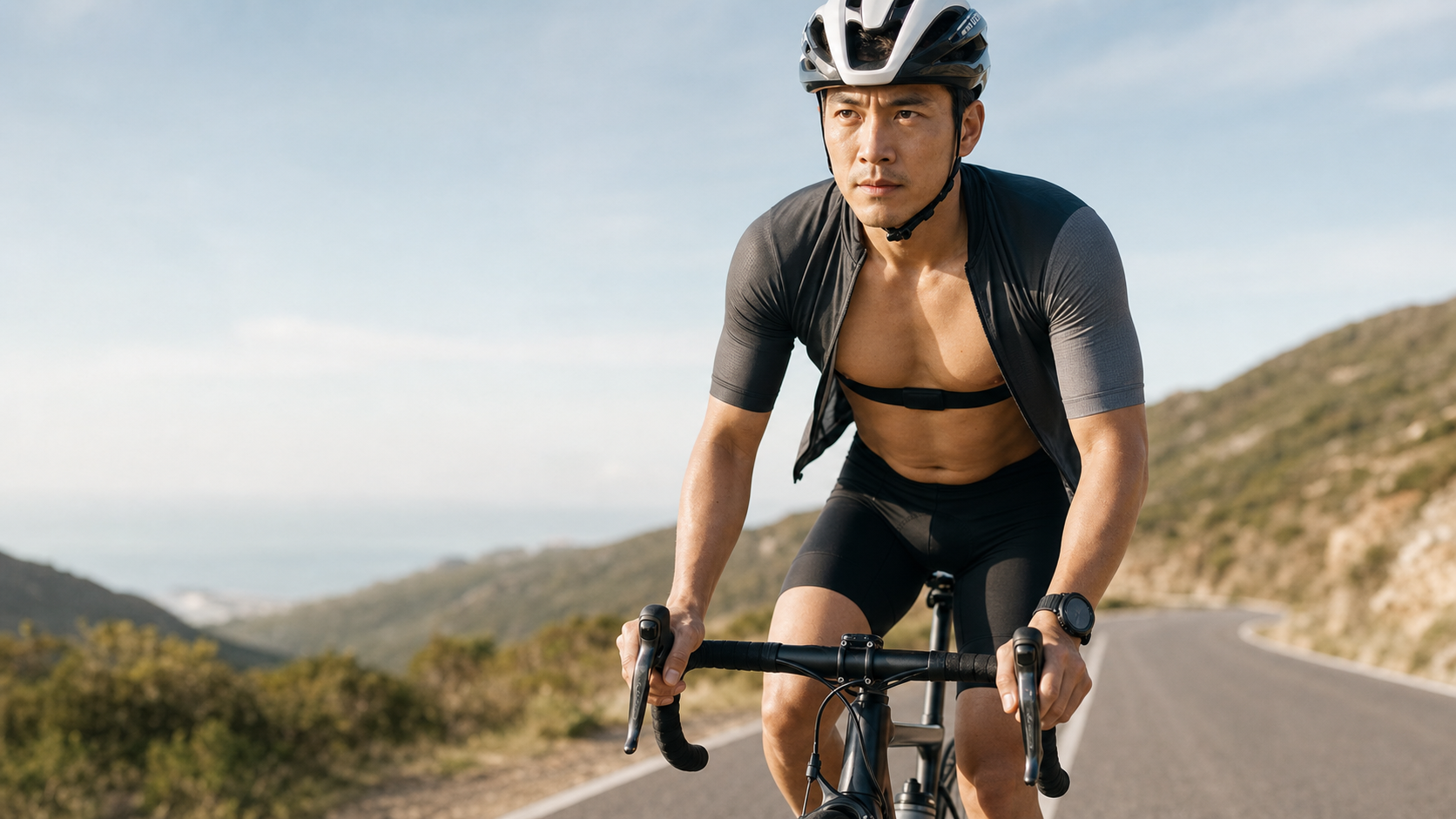
Introduction
Heart rate is one of the most important physiological monitoring metrics in cycling training. Accurate heart rate data is a prerequisite for precisely executing Zone 2 training, VO2max intervals, and threshold training. However, differences in monitoring tool accuracy often cause athletes to unknowingly use incorrect heart rate data, leading to wrong intensity judgments.
There are currently two main heart rate monitoring technologies on the market: chest strap (or arm band) electrode heart rate monitors and optical (PPG) heart rate sensors (typically integrated into smartwatches or cycling computers). Each has its own pros and cons and suits different usage scenarios.
How the Two Technologies Work
Chest Strap Electrode Heart Rate Monitors (ECG-type)
These detect cardiac electrical potential changes through skin electrodes (the same principle as medical ECG), directly measuring the R-R interval of the heart’s electrical signal with extremely high accuracy. Representative products: Garmin HRM-Pro, Polar H10, Wahoo Tickr X.
Optical Heart Rate Sensors (PPG)
Photoplethysmography uses LED light to illuminate the skin and detect blood volume changes (pulse waveform) to estimate heart rate. Integrated into smartwatches (Garmin, Apple Watch, Polar Vantage), arm bands (Polar OH1, Garmin HRM-Fit), and other devices.
Accuracy Comparison: Cycling Scenarios
| Test Scenario | Chest Strap Heart Rate Monitor | Optical Watch | Optical Arm Band |
|---|---|---|---|
| Steady Zone 2 riding | ★★★★★ | ★★★★ | ★★★★ |
| Progressive intensity riding | ★★★★★ | ★★★ | ★★★★ |
| High-intensity intervals (rapid heart rate changes) | ★★★★★ | ★★ | ★★★ |
| Full-effort sprint | ★★★★★ | ★ | ★★ |
| Recovery period after riding | ★★★★★ | ★★★ | ★★★ |
| HRV measurement | ★★★★★ | ★★ | ★★★ |
Main sources of optical heart rate error:
- Motion Artifact: Wrist vibration during cycling interferes with the PPG signal, with the largest errors occurring on gravel roads, descents, or during sprints
- Response lag: Optical heart rate responds 15–30 seconds slower than electrode heart rate when heart rate rises or falls rapidly, making it unable to precisely track heart rate dynamics during high-intensity intervals
- Skin contact quality: A loosely worn watch, sweat and oils, and skin pigmentation (slightly larger errors for individuals with darker skin) all affect accuracy
Real-World Impact: When Does Choosing the Wrong Tool Cause Problems?
Scenario 1: VO2max interval training
The target heart rate for 4×4-minute intervals is 90–95% of HRmax. If the optical heart rate sensor displays a value 10–15 bpm lower than the actual heart rate due to motion artifacts or lag, the athlete may misjudge the intensity as insufficient and push harder, accumulating excessive fatigue.
Scenario 2: Heart rate drift monitoring during Zone 2 long rides
Optical watches have smaller errors during steady low-intensity riding, but if you want to track precise heart rate drift curves over a 3-hour ride, a chest strap remains more reliable.
Scenario 3: HRV monitoring
HRV calculation requires precise R-R interval data. The R-R estimation error of optical PPG is too large for accurate HRV analysis (some high-end arm bands such as the Polar OH1 have improved this issue).
Practical Purchasing Recommendations
Choose a chest strap when:
- Your primary focus is high-intensity intervals, VO2max training, or threshold training
- You need to track HRV
- You already own a smart cycling computer (Garmin, Wahoo) and can pair a chest strap via ANT+ or Bluetooth
- Your budget allows (quality chest straps such as the Polar H10 retail for approximately NT$1,800–2,500 in Taiwan)
When an optical watch or arm band is sufficient:
- Your primary focus is Zone 1–2 aerobic training
- Daily commuting or recreational riding with no strict intensity control requirements
- You prefer an all-in-one device (calls, navigation, heart rate integration)
The optical arm band (e.g., Polar OH1) as a compromise:
The arm band’s secure attachment is more stable than the wrist, producing fewer motion artifacts. Its accuracy falls between that of a chest strap and a watch, making it a good alternative for riders who dislike the restrictive feel of a chest strap.
Practical Tips
- Don’t rely on a single number for intensity judgment: Combining heart rate data with perceived exertion (RPE) and breathing status is the most reliable way to assess intensity
- Calibrate your devices regularly: Ensure the electrode pads on your heart rate monitor are moistened (chest strap), and that your watch is worn snugly against the skin (optical), to reduce contact errors
- Compare the readings of both devices: If you own both a chest strap and a watch, record the differences during the same ride to understand your equipment’s error range
- Always use a chest strap for high-intensity training: This is the most important principle. Optical is acceptable for Zone 2, but for Zone 4–5 high-intensity training, please use a chest strap
Conclusion
The choice of heart rate monitoring tool directly affects the reliability of your training data, which in turn affects the effectiveness of your training plan. For Taiwanese riders who take heart rate training seriously, a high-quality chest strap heart rate monitor is an investment with excellent value for money—the improvement in training precision it delivers far exceeds its price. A craftsman must first sharpen his tools—with the right tools, every minute of heart rate training delivers maximum benefit.
Related Reading
- Heart Rate Strap vs. Optical Heart Rate Watch: Accuracy Comparison and Sports Scenario Recommendations
- Running Heart Rate Monitoring: In-Depth Accuracy Comparison Between Heart Rate Straps and Optical Heart Rate Sensors
- Running Heart Rate Straps vs. Optical Heart Rate: Choosing Based on Accuracy and Usage Scenarios
- Heart Rate Monitoring Device Comparison: Optical Heart Rate vs. Heart Rate Strap Accuracy and Usage Scenarios
2026 車錶排行榜!誰是最多車友正在使用?練家子最愛哪款?🏆 (2萬名車友數據) / 公路車 / CT Yeh
5 個月前
Garmin Edge 1050 旗艦車錶 全台首測!/ 環法冠軍指定 / 對比Edge 1040改進哪些? / 公路車 / CT Yeh
2 年前
2022 前十五大自行車錶 !? 兩萬名車友大數據統計 | 你的上榜了嗎? | 菁英車友都用哪些錶? | Bryton Garmin 誰能拔得頭籌?| 車錶推薦 | 公路車 CT Yeh
4 年前
2025 自行車錶排行榜 兩萬車友大數據 / Garmin Bryton 排名會大洗牌嗎? / 全新的碼表前身分析 /公路車 / CT Yeh
1 年前
超開放的自行車錶!可以玩遊戲裝APP!?/ SRAM合併的 Hammerhead Karoo深入開箱!/ 即時爬坡偵測 / 全球導航地圖 / Garmin Bryton / CT Yeh
1 年前
2023 自行車錶排名 大數據 23,000位車友用什麼錶? Garmin Edge 對決 Bryton Rider 誰市佔高? 你用的上榜了嗎? | 公路車 | CT Yeh
3 年前
Garmin Edge 540/840 Solar 台灣首發開箱!完整車錶功能 道路實測 / ClimbPro 爬坡提示超級牛 / 強大續航實測 / 公路車 / CT Yeh
3 年前
西進武嶺 免費訓練分析服務 Intervals | 練不夠還是練過頭?你哪一種類型選手?AI模型告訴你! | 備戰神器 | 公路車 訓練 | CT Yeh
4 年前