Introduction
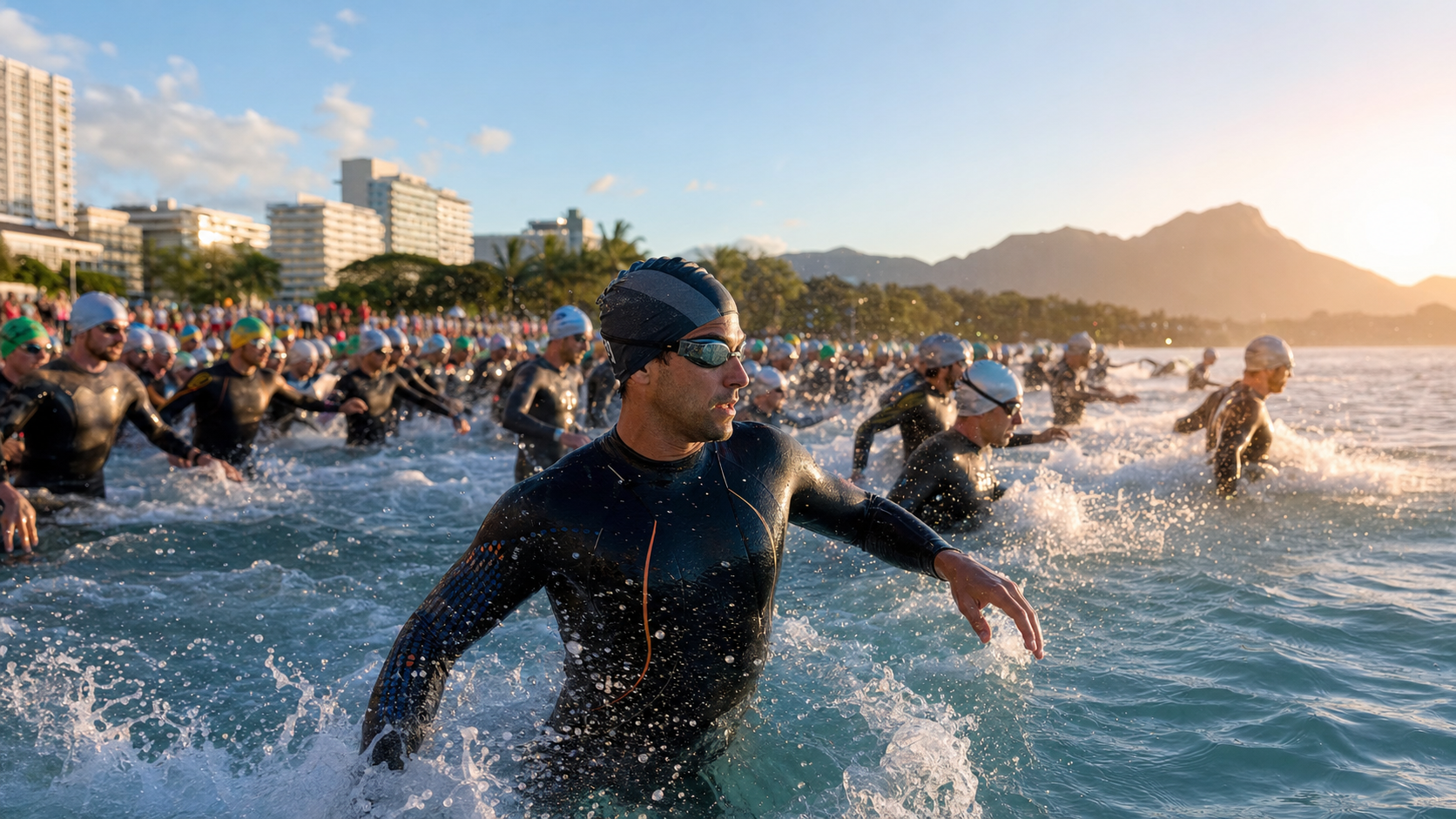
If you have never participated in a triathlon, it may be hard to imagine what a mass start really looks like: hundreds of athletes plunge into the water at the same time, all trying to swim in the same direction, with a barrage of strokes, kicks, and body contact coming at you. For first-timers, this is usually the most terrifying five minutes of the race. But for experienced triathletes, there is a method to the mass start. Choosing the right position and applying the right coping strategies can help you find a relatively calm space amid the chaos.
Formats of Mass Starts
Triathlon swims typically use the following start formats:
| Start Format | Characteristics | Commonly Seen In |
|---|---|---|
| Beach mass start | Everyone runs into the water at once; the most chaotic | Main wave of large events |
| In-water mass start | Standing in shallow water waiting; slightly more controlled | Some small and mid-sized events |
| Platform start | Waves start by declared time; less crowded | IRONMAN series races |
| Rolling start | Athletes start individually; almost no body contact | Adopted by some events |
Even with wave starts, each wave can still have 50–200 people entering the water at the same time, and the first 200 meters remain quite crowded.
Starting Position Selection Strategy
Choosing Your Longitudinal Position Based on Ability
The start line is usually a lateral line. Along this line, athletes of different abilities should choose different longitudinal positions:
- Strong swimmers (150m pace under 1:40) : Stand at the very front to claim the inside lane, using the first wave to get out and find relatively clear water after a short distance
- Mid-pack swimmers (1:40–2:20) : Stand in the middle-to-back area, waiting for the front swimmers to move out before advancing, to avoid being swum over
- Slower swimmers (150m pace over 2:20) : Choose the far outside or the very back, sacrificing a bit of starting advantage for a safer swimming space
Choosing Your Lateral Position Based on the Course
Many athletes habitually stand in the middle, but the middle is often the most crowded spot.
Advanced strategies:
- If the course turns left first, standing on the right side of the start line gives you a tighter inside angle at the turn, shortening your actual swimming distance
- If your stroke naturally drifts to one side, deliberately position yourself in the opposite direction at the start so the natural drift helps you hold your line
- The outside is slightly longer, but the water is more open—a good choice for those who want to avoid contact
Techniques for Handling Body Contact
Body contact is almost unavoidable in open-water swimming, especially in the first 300–500 meters after the start and around every turn buoy.
Dealing with Being Kicked
The most common occurrence is being hit on the head, face, or arms by the kicks of swimmers ahead of you. This can cause a brief loss of direction and a psychological jolt.
The right response:
- After being kicked, do not stop immediately. Swim 3–5 stroke cycles first to let your body regain its rhythm
- If you suspect your goggles have been knocked askew and are leaking, find a relatively calm area before adjusting—do not stop in a panic
- Mentally accept that being kicked is normal and not personal. Do not get angry or flustered
Techniques for Actively Keeping Distance
- In the first 15–20 minutes after the start, most people naturally spread out and the water clears. Just get through that period
- If you find yourself in an especially crowded area, speed up or slow down slightly to move into a less dense lane nearby
- Deliberately swim slightly behind and off to the side of someone else, which lets you use their draft while avoiding direct contact
Drafting Strategy
Swimming directly behind or slightly behind and to the side of the swimmer ahead can reduce drag by 15–25%, saving significant energy. This is completely legal in the triathlon swim leg.
Best drafting position: Directly behind the person’s legs at a distance of 50–80 cm, where water disturbance is minimal. Too close and you risk being kicked; too far and you lose the benefit.
Buoy Turn Strategy
Every turn buoy is the most congested and collision-prone area.
Turn strategy recommendations:
- Strong swimmers take the tightest inside turn (shortest distance) but should be ready for contact
- Average swimmers can take a slightly wider turn to go around the crowd in front of the buoy
- Start confirming your position 30–50 meters before reaching the buoy—do not wait until you are right on it to make a sudden turn
Practical Advice
- Join a simulated mass-start practice before race day: Triathlon training camps across Taiwan typically hold open-water practice days before races. It is highly recommended that you attend
- Mental preparation: a mass start is an experience, not a disaster: Note how your first mass start feels; by the second one, you will be far more used to it
- Choose wide-field goggles: In a chaotic crowd, wide-field goggles make it easier to see people on both sides of you
- Do a practice swim in your wetsuit before the start: A wetsuit changes how you feel in the water, so a mass-start practice in your wetsuit is not optional
- If you truly panic, flip onto your back and float: In a less crowded outside area, floating on your back for 30 seconds to regulate your breathing is perfectly acceptable
Conclusion
The mass start is a unique challenge in triathlon and part of the sport’s appeal. With advance preparation, strategic positioning, and mental adjustment to body contact, you can turn the five minutes you fear most into a composed and orderly beginning. After the mass start, the crowd naturally disperses; your job is to pass through that chaotic phase safely and calmly, then swim the rest of the course at your own pace.
Related Reading
- Mass-Start Collisions: Body Protection and Positioning in the Triathlon Swim
- Open-Water Swim Start Strategy: Positioning and Pacing in a Mass Start
- Triathlon Mass Start Survival Guide: Mass Start Strategy and Self-Protection in the Melee
- Open-Water Triathlon Swim Start Strategy: Handling Crowd Conflict and Sighting Techniques
福隆鐵人團練隨拍
8 年前
[防寒衣體驗] 鐵人魂 三鐵 防寒衣試穿會 於松運 深水游泳池 鯨魚池
8 年前
CT 喇低賽) 武嶺牽車 才是王道 西進牽車四小時內秘訣 攝手位置 如何判斷 防抽筋小秘訣
7 年前
Live) 備戰2019彰化經典百K 賽前攻略 (已完賽請看新影片
7 年前
一日北高/長距離團騎 常見問題補充篇 / 組團或跟團的眉角 / 壯車友容易被瘦車友慢性拉爆 / 原來屁股痛可能是這個原因...? / 風場配速法 / 公路車 / CT Yeh
2 年前
戰略) Zwift Race 如何咬在第一集團 如何評估自己要開多少推力 (請開1.5倍速看)
7 年前
下次拍照前要查清楚啦🤣 #cycling
7 個月前
#東進武嶺 全程實況錄影 5小時半 #夏季KOM #太魯閣 Taiwan KOM Challenge Reality Video Taroko scenery
7 年前