Triathlon Swim-to-Bike Transition T1 Technique: Training Methods for Quickly Removing the Wetsuit
Introduction
Every second you fought to save in the swim leg can be given right back in the transition area if your technique is not polished. For many triathletes, the first transition area (T1, the zone where you change from swim to bike) is the most chaotic part of the race. The wetsuit clings wet and tight to your skin, your hands are slightly stiff from the cold water, and the sounds of other athletes moving around you fill the air. Under these conditions, quickly stripping off your gear and grabbing your bike equipment requires repeated practice to build muscle memory.
T1 Basic Process and Time Analysis
A typical T1 process includes the following steps:
| Step | Description | Target Time (with training) | Common Beginner Time |
|---|---|---|---|
| 1. Remove goggles and swim cap | Done while running | 5–10 seconds | 15–20 seconds |
| 2. Unzip the wetsuit | Find the pull cord, pull it open | 3–5 seconds | 10–20 seconds |
| 3. Remove wetsuit (upper body) | Push off the shoulders, shake out arms | 10–15 seconds | 30–60 seconds |
| 4. Remove wetsuit (lower body) | Step on it, pull legs free | 10–15 seconds | 30–60 seconds |
| 5. Put on helmet and goggles | — | 15–20 seconds | 30–60 seconds |
| 6. Put on cycling shoes (depending on setup) | — | 10–15 seconds | 20–40 seconds |
| 7. Grab bike and run to mount line | — | 10–20 seconds | 10–20 seconds |
| Total | 63–100 seconds | 2–4 minutes |
The difference in T1 time between a well-trained athlete and a beginner often exceeds one minute. This is quite significant in sprint-distance races.
Wetsuit Quick-Removal Technique Breakdown
Step 1: Unzip While Running (Most Important)
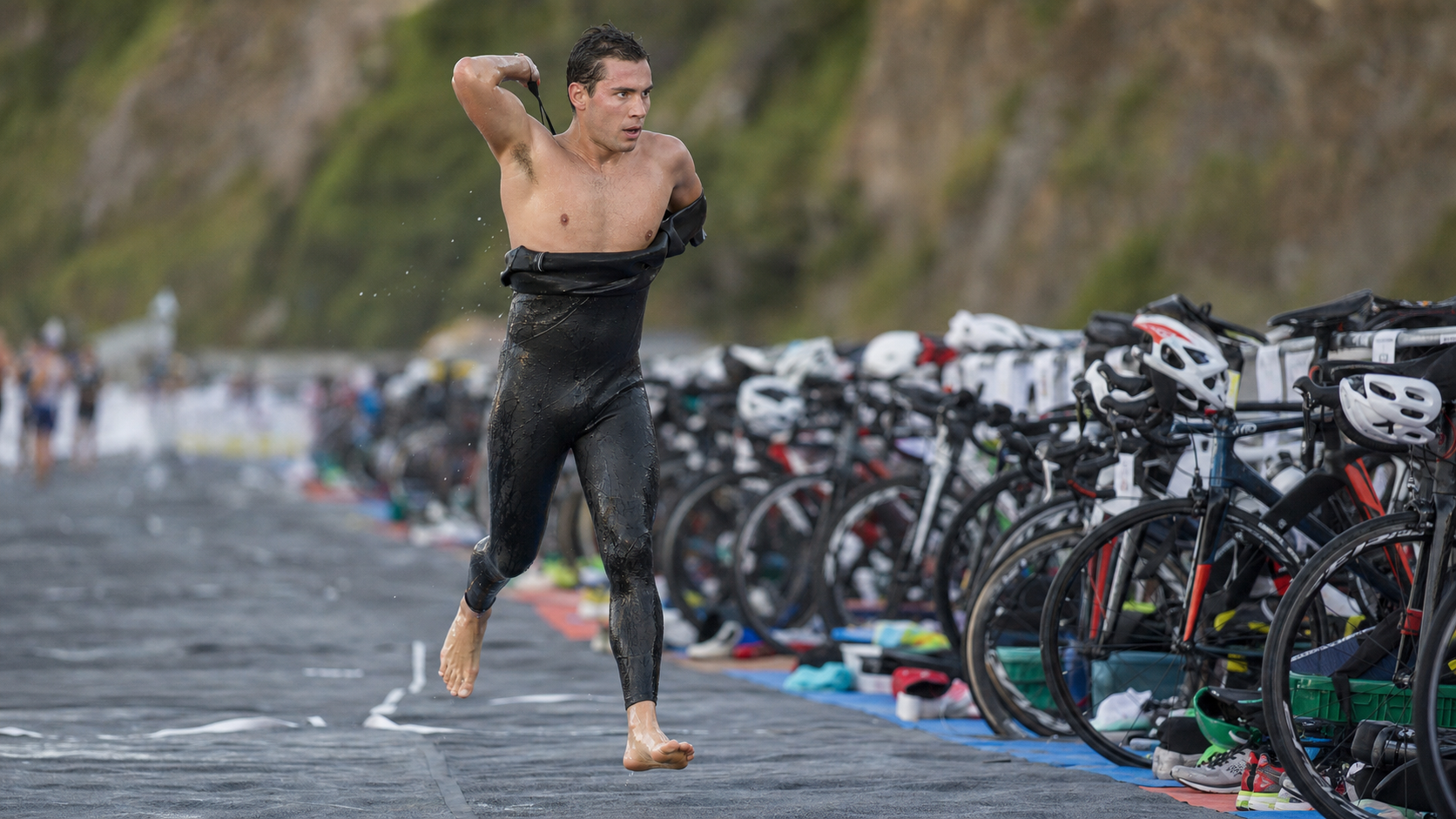
As soon as you get out of the water, you should start dealing with the wetsuit while running, rather than waiting until you reach your gear station.
- Push goggles up onto your forehead (don’t waste time taking them off and putting them in a bag)
- While running, find the zipper cord on your back and pull it all the way down with one hand
- Many wetsuits have a zipper that runs from the back of the neck down to the waist; make sure you pull it all the way to fully open the upper body
Training Tip: Put on your wetsuit at home and practice finding the zipper cord and pulling it open within two seconds, until you can locate it instantly without looking.
Step 2: Shake Out Both Arms
Once the zipper is open, cross your hands to grab the collar, push downward and outward at the same time, forcefully shoving the wetsuit off your shoulders and shaking out both arms.
- Common Mistake: Trying to remove it slowly, only to have the wet neoprene cling to your skin and make the process slower and slower
- Correct Method: Be forceful and decisive—one motion to get the upper body completely out
- Technical Detail: If your arms get stuck, try rotating your wrists first so your palms face outward, making it easier to pull free
Step 3: Step on the Wetsuit Ankles to Remove Legs
After the upper body is out, the wetsuit naturally falls around your waist:
- Grab the wetsuit at the waist with both hands and forcefully push it down over your thighs, knees, and calves
- When it reaches the ankles, step on the wetsuit with one foot and forcefully pull the other ankle upward
- Repeat with the other foot
- Once the wetsuit is on the ground, kick it aside
Key Technique: Apply enough pressure when stepping down to ensure the wetsuit doesn’t move along with your foot. Some people apply silicone lubricant to the inside of the wetsuit ankles, which significantly reduces friction.
Training Methods at Home
Many athletes only wear a wetsuit on race day and have never practiced quick removal. Here’s how to practice at home:
5-Minute Practice Routine (2–3 times per week, during the final 4 weeks of the training season):
- Put on the wetsuit (you can wet it in the bathroom first to simulate race conditions)
- Time yourself: from starting the zipper to fully removing the wetsuit
- Goal: complete removal within 20–25 seconds
- Repeat 3–5 times to turn the motion into a reflex
Using Silicone Lubricant: Before the race, apply silicone lubricant to your ankles, inner wrists, and the back of your neck. This is a legal and widely used technique that can greatly speed up removal.
Other T1 Time-Saving Tips
- Wear the swim cap over the goggles: Many people put their goggles under the swim cap and have to remove them separately after exiting the water. The correct approach is to wear the goggles directly and put the swim cap over the goggle straps, so you can just pull off the cap after exiting the water.
- Adjust the helmet in advance: Practice buckling your helmet while wearing the wetsuit so this action becomes automatic.
- How you rack your gear in T1 affects transition speed: Place the helmet face-up on the handlebars and shoes on the pedals to minimize the number of items you need to pick up.
Practical Advice
- Simulate T1 at the end of every training session: After swimming, rehearse the T1 process in the locker room to build the habit
- Check the wetsuit condition the day before the race: Confirm the zipper works properly and the pull cord is intact
- A wet environment makes removal easier: After your pre-race warm-up, don’t fully take off the wetsuit—keeping it wet makes removal smoother than when it’s completely dry
- Know the race rules: Some events require athletes to place the wetsuit in a designated area
Conclusion
T1 speed comes down to the muscle memory built through repeated practice. When you’re already rehearsing the T1 process in your head during the final 100 meters of the swim, and you can complete each step reflexively once you reach shore, you’ve mastered the art of T1. The few seconds saved in every practice session add up to the difference in race placing.
Related Reading
- Improving Swim Transition (T1) Efficiency: Optimizing Seconds for Wetsuit Removal, Shoeing Up, and Mounting
- Triathlon T1 Transition Efficiency: Optimizing Seconds for Wetsuit Removal and Goggle Storage
- Triathlon Swim Exit to T1: 5 Key Moves to Save 30 Seconds
- Triathlon Transition Area T1 Optimization: Efficient Switching from Water to Bike
[防寒衣體驗] 鐵人魂 三鐵 防寒衣試穿會 於松運 深水游泳池 鯨魚池
8 年前
FTL 與 SYB 車隊專訪 西進武嶺 實用攻略分享! 2小時 如何練?!你不知道的眉角!新手準備武嶺必看 EP1 | 實力派女車友 | 精華版 | 公路車 | CTYeh
4 年前
西進武嶺 免費訓練分析服務 Intervals | 練不夠還是練過頭?你哪一種類型選手?AI模型告訴你! | 備戰神器 | 公路車 訓練 | CT Yeh
4 年前
CT 喇低賽) 武嶺牽車 才是王道 西進牽車四小時內秘訣 攝手位置 如何判斷 防抽筋小秘訣
7 年前
福隆鐵人團練隨拍
8 年前
#東進武嶺 全程實況錄影 5小時半 #夏季KOM #太魯閣 Taiwan KOM Challenge Reality Video Taroko scenery
7 年前
Live) 備戰2019彰化經典百K 賽前攻略 (已完賽請看新影片
7 年前
一日北高前的高裝檢 | 北高 360 | 挑戰11小時的裝備 | 一日雙塔 | 補給
6 年前