Introduction
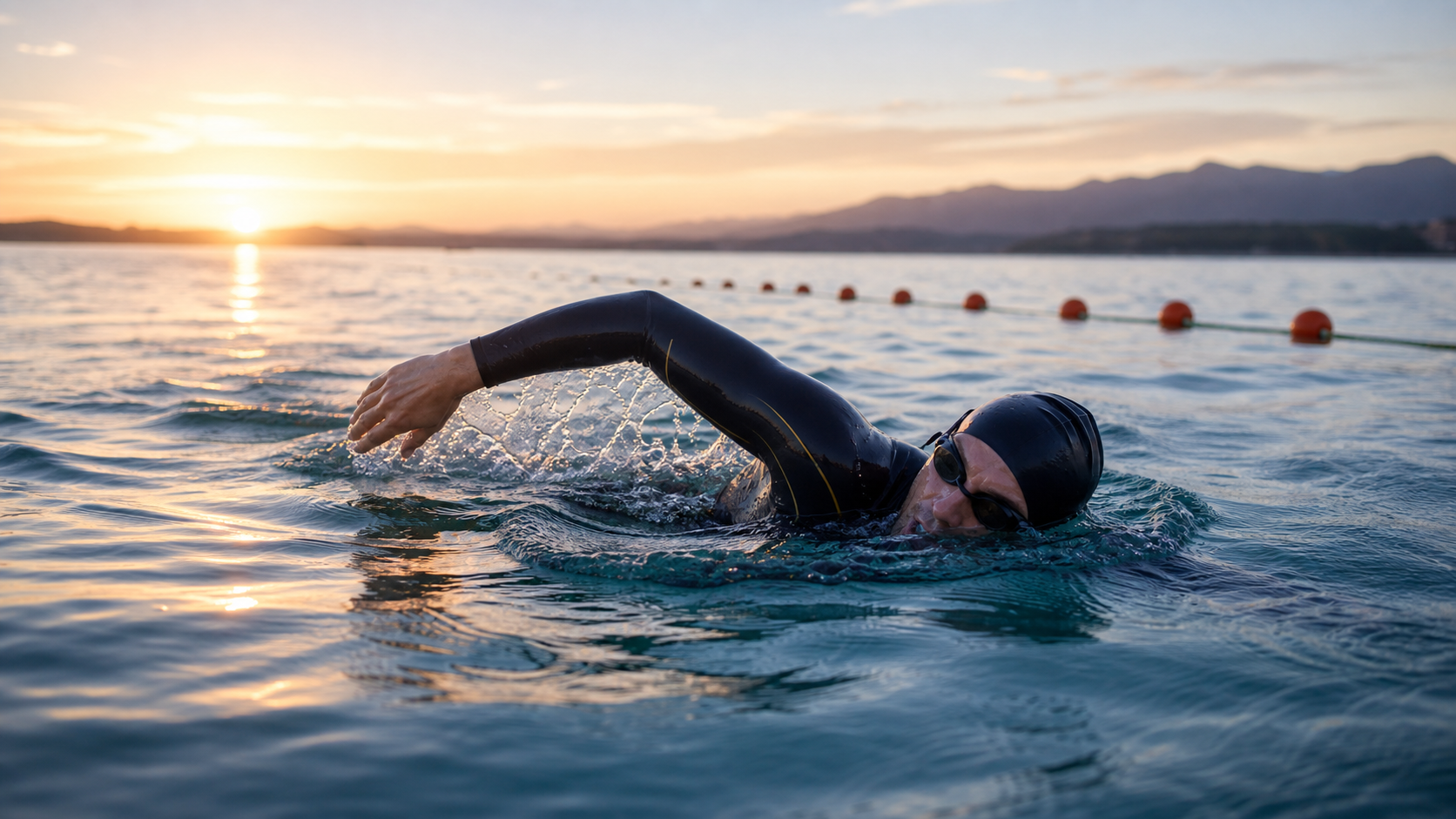
The Olympic Distance Triathlon is the most widely used standard format and the distance used in the Olympic Games: a 1500-meter swim, 40-kilometer bike, and 10-kilometer run. The 1500-meter swim typically takes 18–28 minutes to complete, making it the shortest segment by time in the entire race (which usually finishes in 1.5–2.5 hours), yet it has a profound impact on overall performance.
The 1500 meters sits in a delicate distance range: it’s twice as long as the Sprint’s 750 meters, so you can’t rely on short sprint tactics; but it’s not long enough to allow you to be as conservative as a 70.3 or full-distance ironman athlete. At this distance, you need to find a steady, high-speed swimming rhythm that approaches—but doesn’t exceed—your lactate threshold.
Physiological Characteristics of the 1500m
The 1500 meters is a middle-to-long distance in open-water swimming. Energy metabolism is predominantly aerobic (about 85–90%), but the lactate system also plays an important role in the opening segment and the final sprint.
| Distance Segment | Recommended Strategy | Pacing Target | Notes |
|---|---|---|---|
| First 200m | Control the urge, stay conservative | Race pace +5% | Chaotic group start period; maintain rhythm |
| 200–1200m | Steady progression | Race pace ±2% | Find a drafting position; maintain rhythm |
| 1200–1500m | Gradually accelerate | Race pace to all-out | Not much left; release reserved energy |
How to Find Your Race Pace
Establish a Baseline with Pool Testing
4–6 weeks before the race, perform the following tests to determine your target 1500m pace:
Test Method 1: Interval Testing
- Swim 3×500 meters with 60 seconds rest between each
- Use the pace of the final interval as your race target pace (simulating speed under fatigue)
Test Method 2: Full-Distance Time Trial
- Swim 1500 meters all-out and record the time
- Target race pace = total time divided by 15 (target pace per 100 meters)
- Actual open-water time is typically 10–20% slower than the pool; adjust expectations accordingly
Applying Heart Rate Zones
For athletes accustomed to swimming with a heart rate monitor:
- Target heart rate zone: 78–85% of maximum heart rate (equivalent to high aerobic intensity near the lactate threshold)
- How to gauge it: You can speak but it’s very effortful; you can’t complete full sentences
- Zone to avoid: In the first 200 meters, don’t let your heart rate exceed 90% of maximum
Drafting Strategy for the 1500m
In the Olympic distance, making good use of drafting can significantly conserve energy. Research shows that swimming 50–80 centimeters behind the athlete in front can reduce swimming drag by about 15–25%, which translates to increased speed at the same energy expenditure.
Practical Drafting Tips:
- After the start, find an athlete whose speed matches or is slightly faster than yours, and position yourself slightly to the side and behind them
- Pay attention to the drafting swimmer’s navigation; if the athlete ahead veers off course, you’ll follow them off course too
- Periodically lift your head to confirm your own direction; don’t rely entirely on the drafting swimmer’s sense of direction
Breathing Rhythm and Bilateral Breathing Strategy
In the 1500m, bilateral breathing (breathing every 3 strokes) is the most widely adopted rhythm, as it balances adequate oxygen supply with rotational symmetry of the body. However, adjustments are needed in specific situations:
- When there are waves: Turn to breathe on the leeward side; you may need to adopt a slightly unilateral 2-3-2 breathing pattern
- When intensity increases: In the final 300 meters, you can switch to breathing every 2 strokes to increase oxygen supply
- When the start is chaotic: If your breathing is disrupted after the start, don’t force the rhythm; first ensure you can breathe normally, then gradually adjust back to your planned rhythm
Swim Preparation Adjustments in the 2 Weeks Before the Race
| Weeks Before Race | Training Focus | Recommended Swim Volume |
|---|---|---|
| 3 weeks out | Final long-distance session | 2000–2500m |
| 2 weeks out | Reduce volume, maintain intensity | 1500m (including pace segments) |
| 1 week out | Recovery week, maintain feel | 800–1000m |
| 2 days before race | Brief activation | 400–500m (easy with a few short sprints) |
Practical Tips
- Incorporate non-stop 1500m swims into training: At least once a week, get yourself accustomed to the challenge of maintaining pace
- Practice accelerating in the final 400 meters: In the last 400 meters of longer swim sessions, deliberately increase speed by 5–10% to build the ability to finish strong
- Open-water race practice: If conditions allow, participate in open-water swimming races to simulate race pace and competitive environments
- Energy intake during the preparation period: The Olympic-distance swim doesn’t require complex fueling; a normal meal 2 hours before the race is sufficient
- Plan your late-race acceleration timing: Mentally preset a plan to start gradually accelerating after passing the second buoy, making your acceleration strategy concrete
Conclusion
The 1500-meter swim in the Olympic distance is the perfect balance point between speed and endurance. It demands efficient swimming technique, mature pacing discipline, and the ability to face all the challenges of open water. At this distance, the best athletes aren’t the fastest swimmers—they’re the ones who can convert 90% of their potential into actual performance: those who don’t waste energy on the starting sprint, avoid unnecessary zigzagging, and can still accelerate before the finish. This kind of race intelligence is harder to train than swimming speed itself, and it’s worth investing your time in.
Related Reading
Live) 備戰2019彰化經典百K 賽前攻略 (已完賽請看新影片
7 年前
半日 小台灣 極限單車路線挑戰實錄
7 年前
西進武嶺 免費訓練分析服務 Intervals | 練不夠還是練過頭?你哪一種類型選手?AI模型告訴你! | 備戰神器 | 公路車 訓練 | CT Yeh
4 年前
2019 夏季KOM 5小 完賽心得 準備攻略 東進武嶺 夏季登山王之路 Taiwan KOM Challenge
7 年前
靠單車減肥35公斤 心得分享與整理
7 年前
一日北高前的高裝檢 | 北高 360 | 挑戰11小時的裝備 | 一日雙塔 | 補給
6 年前
福隆鐵人團練隨拍
8 年前
CT 喇低賽) 武嶺牽車 才是王道 西進牽車四小時內秘訣 攝手位置 如何判斷 防抽筋小秘訣
7 年前