Introduction
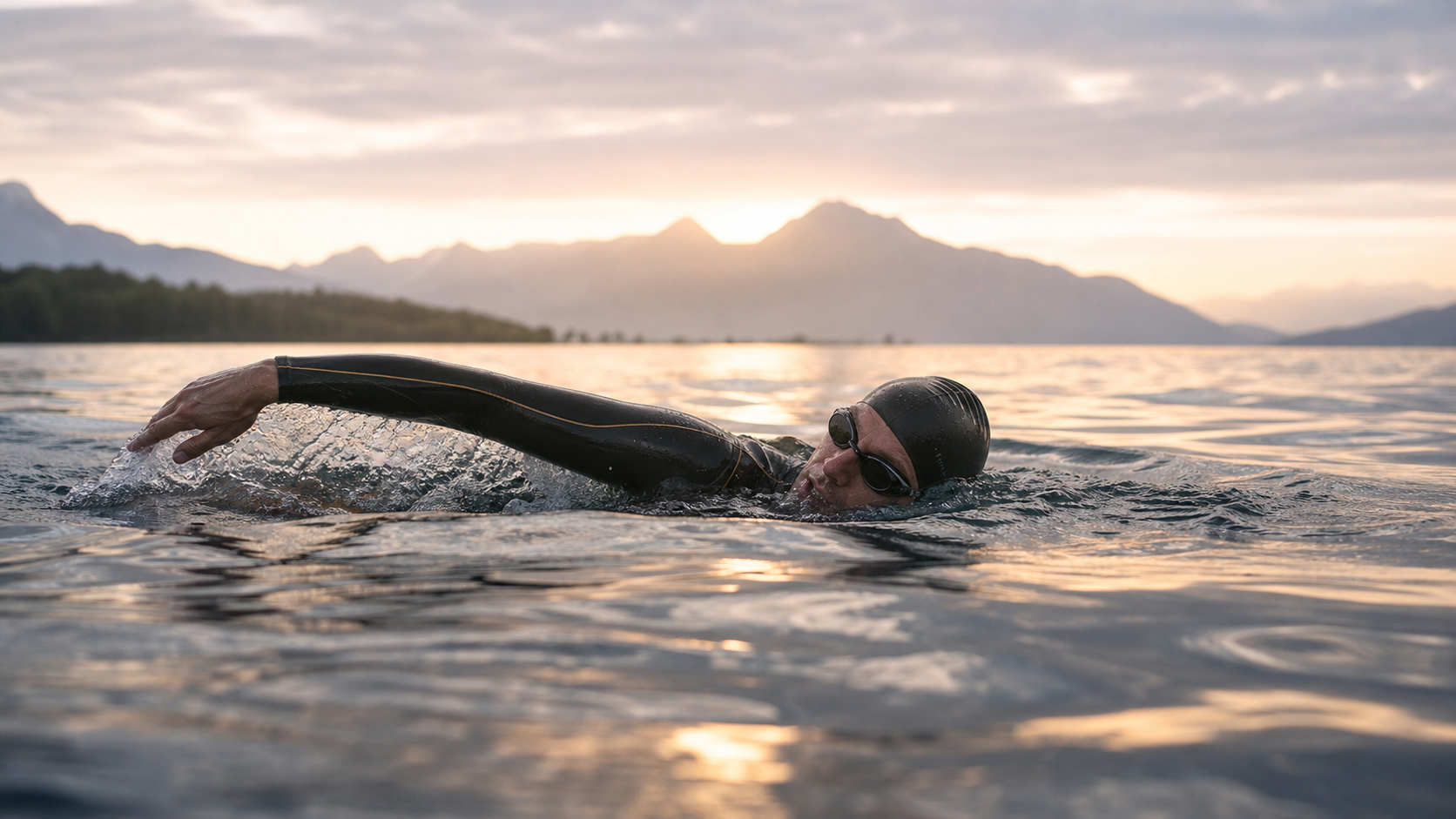
IRONMAN Full Distance is the ultimate challenge in endurance sports: a 3800-meter swim, a 180-kilometer bike, and a 42.2-kilometer run. Total finish times range from 8 hours for elite athletes to 14–17 hours for age-groupers. In this context, the 3800-meter swim—even if it takes 50–80 minutes—accounts for only a small fraction of the entire race. The swim strategy for a full-distance IRONMAN boils down to one core principle: pace ultra-conservatively and exit the water with minimal energy expenditure.
Reframing the 3800-Meter Swim
Many athletes spend a great deal of time improving their swim speed when training for a full-distance IRONMAN, trying to post a good time in the swim leg. But from an overall time-management perspective, the return on that investment is quite low:
| Distance | Elite Pace Finish Time | Conservative Age-Grouper Finish Time | Difference |
|---|---|---|---|
| 3800m Swim | 45–50 minutes | 65–80 minutes | 15–30 minutes |
| 180km Bike | 4.5–5 hours | 6–8 hours | 1.5–3 hours |
| 42.2km Run | 2.5–3 hours | 4–6 hours | 1.5–3 hours |
For age-groupers, going from a conservative to an aggressive swim pace might save 10–15 minutes; but if that 10–15 minutes of effort costs you 20–30 extra minutes on the bike or run, it is simply not worth it.
Defining Ultra-Conservative Pacing
“Ultra-conservative” in a full-distance IRONMAN swim means:
- Slow down 10–15% from your comfortable pace: If you can hold a 2:00 per 100-meter pace in a 1-hour continuous swim workout, your target pace for the full-distance swim should be 2:12–2:20 per 100 meters
- Plenty of breathing, feeling relaxed: Throughout the entire swim, your breathing should be easy, almost as if you are not “working” at all
- Heart rate held in the low aerobic zone: Stay at 70–78% of max heart rate, and do not exceed 80%
The Mental Challenge of 3800 Meters
The mental challenge of the full-distance swim often exceeds the physical one:
Managing the Sense of Distance
3800 meters is a distance many people have never swum in training. On race day, facing such a long distance, feeling anxious is normal.
Coping strategies:
- Break the distance into segments: treat 3800 meters as 4 segments of 950 meters each (roughly 4 big loops), and only think about completing the segment in front of you
- Do not estimate the remaining distance while swimming (this makes time feel slower)
- Create a “swim mantra,” such as repeating a word in your head every 4 strokes, to maintain rhythm and focus
Mental Adaptation to Dark Water
Taiwan’s full-distance IRONMAN events (such as the Penghu International Triathlon) typically start at dawn when the sky is just getting light, and with low visibility in the sea, you can barely see anything.
Mental preparation:
- Do multiple low-visibility open-water training sessions before the race
- Deliberately practice “swim 30 seconds with eyes closed, then continue normally” in training to reduce dependence on vision
- Accept that “not being able to see the bottom is normal,” and do not treat low visibility as a threat
The Actual Pacing of a Full-Distance Swim
| Distance Segment | Strategy | Mindset |
|---|---|---|
| First 500m | Start conservatively, find a pair of feet to draft | Be patient, do not follow others’ sprint |
| 500–3000m | Steady low-aerobic pace | Relax, conserve energy |
| 3000–3500m | Assess energy levels, maintain pace | Appreciate your patient strategy |
| Final 300m | Slight pickup allowed, but no sprint | Prepare to enter T1 |
Special Training Requirements for the Full-Distance Swim
The goal of swim training for a full-distance IRONMAN is not speed, but the ability to maintain technique over a long period:
- At least one continuous swim over 3000 meters per week: Let your body adapt to the feeling of swimming for a long time
- Technique maintenance training: Practice maintaining proper stroke and body position under fatigue
- Mental endurance training: Stay focused during boring long swims instead of letting your mind wander
Practical Tips
- Complete at least one continuous 4000-meter swim within the year before the race: Confirm that your body can handle the distance and understand how you feel after an ultra-long swim
- Do a brick session right after swimming: A 3000+ meter swim followed by a 60+ km bike ride to experience the real feeling of the full-distance energy transition
- Confirm race-day nutrition: Carb-load adequately the night before, do not eat before the swim (to avoid stomach discomfort), but make sure you are well hydrated
- Take T1 slowly: In a full-distance IRONMAN, T1 does not need to be rushed like in a sprint race. Transition methodically and let your heart rate gradually settle during T1—this matters more than getting out fast
- Water temperature and wetsuit: Water temperature in full-distance races is often below 24°C (especially in ocean swims), and wetsuits are almost always allowed—make full use of them
Conclusion
The swim leg of a full-distance IRONMAN is the first chapter of the day, not the climax. The real race begins on the bike, and the run is where the final battle is decided. Completing 3800 meters at an ultra-conservative pace and exiting the water with abundant energy and a steady heart rate is the most important swimming task for every full-distance athlete. Those who swim the easiest are often the ones running the strongest in the final 10 kilometers of the marathon.
Related Reading
半日 小台灣 極限單車路線挑戰實錄
7 年前
2019 夏季KOM 5小 完賽心得 準備攻略 東進武嶺 夏季登山王之路 Taiwan KOM Challenge
7 年前
Live) 備戰2019彰化經典百K 賽前攻略 (已完賽請看新影片
7 年前
西進武嶺 免費訓練分析服務 Intervals | 練不夠還是練過頭?你哪一種類型選手?AI模型告訴你! | 備戰神器 | 公路車 訓練 | CT Yeh
4 年前
再快都跟的上!? 單車跟隨攝影機之王 HOVERAir X1 PROMAX 全面實測 / 唯一!8K畫質&自行車專用模式和跟蹤信標&前後避障 / DJI Neo 可參考/ 公路車 / CT Yeh
1 年前
靠單車減肥35公斤 心得分享與整理
7 年前
[防寒衣體驗] 鐵人魂 三鐵 防寒衣試穿會 於松運 深水游泳池 鯨魚池
8 年前
一日北高前的高裝檢 | 北高 360 | 挑戰11小時的裝備 | 一日雙塔 | 補給
6 年前