Swimming Conditions in Taiwan's Triathlon Events: Technical Differences Between Open-Water Sea Swimming and Lake Swimming
Introduction
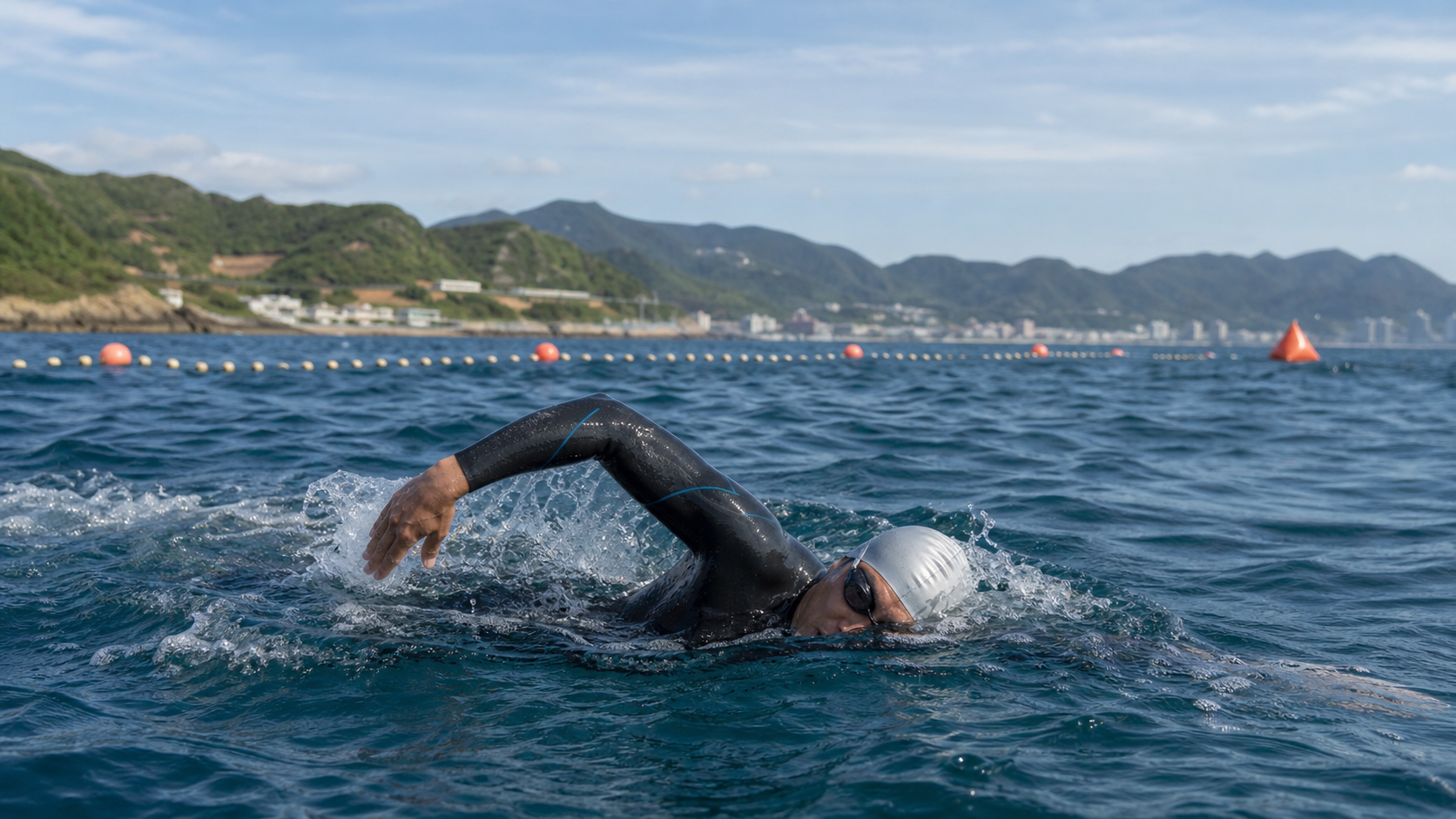
Taiwan is one of the most thriving regions for triathlon in Asia, hosting dozens of triathlon events of various sizes throughout the year. These events are spread across different geographical environments, and the conditions for the swim leg vary significantly: Penghu’s sea swimming involves currents and saltwater buoyancy, Sun Moon Lake’s lake swimming offers high visibility and calm water, while Hualien’s nearshore swimming falls somewhere in between. Understanding the characteristics of different water environments and adjusting your swimming strategy accordingly can help you perform at your best in events across Taiwan.
Overview of Taiwan’s Major Triathlon Swimming Venues
| Event / Venue | Water Type | Water Temperature (Spring–Summer) | Visibility | Main Challenges |
|---|---|---|---|---|
| Penghu Ironman | Open sea | 24–28°C | Moderate | Currents, wind and waves |
| Sun Moon Lake Triathlon | Freshwater lake | 24–27°C | High | Calm but long distance |
| Hualien Triathlon | Nearshore (bay) | 24–27°C | Moderate to low | Occasional currents |
| Keelung Triathlon | Harbor | 22–25°C | Low | Water quality, visibility |
| Taitung Triathlon | Living water lake / nearshore | 24–28°C | Moderate | Some events have waves |
Special Technical Demands of Sea Swimming
Saltwater Buoyancy Effect
The salinity of seawater provides approximately 2–3% more buoyancy than freshwater. The practical impact on swimming technique:
- Natural body buoyancy increases, making it easier to maintain a horizontal lower-body position
- The importance of kicking efficiency is relatively reduced (because the body stays flatter more easily)
- Overall swimming drag is slightly reduced
Strategy adjustment: In sea swimming, you can reduce kicking power by about 10–15% compared to freshwater swimming, saving leg energy for the bike leg.
The Impact of Currents
Open-sea events such as Penghu may encounter significant currents (typically 0.2–0.8 knots). The effect of currents on your swimming route can be substantial.
Coping strategies:
- Check the day’s current direction before the race (organizers usually announce it)
- If the current direction is consistent, correct your course slightly upstream in advance so the current helps you maintain a straight line
- When swimming against the current, a natural drop in pace is normal—don’t panic and speed up
- When swimming with the current, it feels easy—resist the urge to over-accelerate
Swimming Technique in Waves
In a wavy sea-swimming environment:
- Hand entry timing: After your hand enters the water, completing the pull phase beneath the wave crest is more efficient
- Breathing timing: Breathe in the trough between two waves to avoid inhaling spray
- Don’t fight the waves: When a wave hits, slightly compress your body or sink beneath it to let the wave pass, rather than forcing your way through
Special Technical Demands of Lake Swimming
Sun Moon Lake is Taiwan’s most famous lake-swimming venue. The water surface is relatively calm, visibility is high, and it is a comparatively friendly environment among open-water venues. But calm lake swimming has its own unique challenges:
Navigation Challenges
In lake swimming, the water surface is relatively calm with no visual interference from waves, but distant buoys may be harder to gauge for distance.
Technical advice: In high-visibility lake swimming such as Sun Moon Lake, you can increase the interval between sighting (lifting your head only every 15–20 strokes), but each sighting must precisely confirm your course to avoid accumulating deviation.
Water Temperature Stability
Thermal stratification in lake water (warmer at the surface, colder at depth) is especially pronounced in summer lake swimming. Suddenly encountering a cold water layer while diving down can trigger a brief startle response.
Coping: During the pre-race warm-up in the water, deliberately swim to slightly deeper areas to feel the temperature changes and let your body adapt in advance.
Taiwan’s Signature Mixed-Water Events
In eastern Taiwan’s Hualien, Taitung, and other areas, the swim leg is sometimes held in a bay or artificial lake, where water conditions fall between pure sea swimming and pure lake swimming.
General advice:
- The day before the race or early on race morning, be sure to visit the swim area to assess the water conditions
- Observe the water surface to determine whether there is an obvious current direction (check the consistency of surface movement)
- Do a trial swim of 100–200 meters to confirm buoyancy, visibility, and breathing comfort
Seasonal Water Temperatures for Taiwan Events
| Month | Taiwan Sea Water Temperature (North) | Taiwan Lake Swimming Temperature (Sun Moon Lake) | Wetsuit Recommendation |
|---|---|---|---|
| Jan–Mar | 18–21°C | 20–22°C | Recommended |
| Apr–Jun | 22–26°C | 22–25°C | Depends on regulations |
| Jul–Sep | 27–30°C | 26–28°C | Usually prohibited |
| Oct–Dec | 22–25°C | 23–25°C | Depends on regulations |
Practical Advice
- Do your homework before every race: Research the historical water temperature of the race venue, common current conditions, and the distribution of past athletes’ swim times
- Penghu is the top choice for a full-distance race in Taiwan: If you want to experience the complete sea-swimming challenge, the environmental conditions at the Penghu Ironman offer an excellent training opportunity
- Use the Sun Moon Lake Swimming Carnival as base training: The annual Sun Moon Lake Swimming Carnival (3.3 km) in September is a great open-water long-distance swimming training opportunity
- Spare goggles: Outdoor light is strong at Taiwan events, so prepare a spare pair of goggles with tinted lenses (amber or gray) to handle different light conditions
- Know the rescue facilities: All official events in Taiwan have ample water rescue support; knowing where the lifeguards are can help you get assistance quickly in an emergency
Conclusion
Taiwan’s diverse geography has created a rich variety of triathlon swimming venues, from tropical seas in the south to alpine lakes. Each venue has its own unique challenges and appeal. Understanding the characteristics of different water environments and preparing accordingly in advance will not only improve your swimming performance but also allow you to face every open-water challenge with greater composure at triathlon events across Taiwan.
Related Reading
- A Complete Penghu Triathlon Experience: An Unforgettable Journey of Pushing Limits on an Offshore Paradise
- Complete Analysis of Taiwan’s Triathlon Courses: Course Guides for Taitung, Kenting, and Penghu
- In-Depth Review of Hualien Triathlon: A Courageous Journey of Self-Challenge Where Mountains Meet the Sea
- Recommended Triathlon Events in Taiwan: Athlete Reviews of Kenting, Taitung, and Penghu
[防寒衣體驗] 鐵人魂 三鐵 防寒衣試穿會 於松運 深水游泳池 鯨魚池
8 年前
4K單車實境) 嘉義 梅山36灣 訓練台 爬坡 輕鬆騎
6 年前
虎豹潭!日本老師來台一日約騎 台灣車友熱情招待私房路線 / CT Yeh
21 天前
備戰 戀戀197 賽前關門點分析 西濱團練 #公路車 4K高畫質
6 年前
2019 夏季KOM 5小 完賽心得 準備攻略 東進武嶺 夏季登山王之路 Taiwan KOM Challenge
7 年前
2023桃園團體繞圈賽 / 海鷗繞圈賽 | 全程空拍數據版 | 公路車 | CT Yeh
2 年前
福隆鐵人團練隨拍
8 年前
單車 梅山36灣 坡度介紹 路段介紹 空拍 (相關遊記影片,請參考說明或我的頻道喔,歡迎訂閱)
6 年前