Introduction
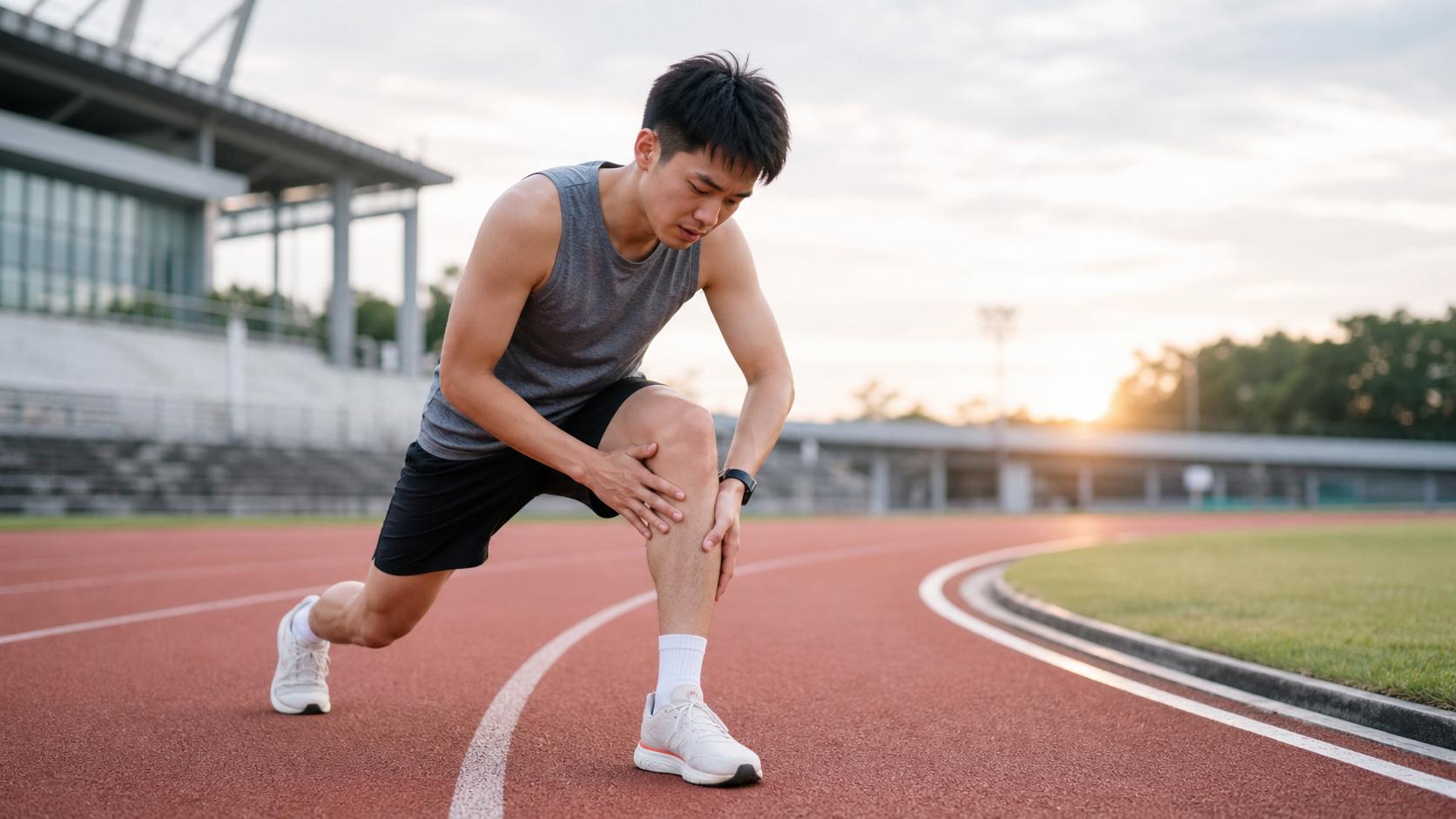
Road running is one of the most accessible aerobic activities—all you need is a pair of running shoes to get started. However, precisely because it’s so easy to begin, many beginners rush to increase their mileage before building sufficient muscle foundation and joint adaptability, leading to a cascade of injuries. According to sports medicine research, the injury rate among beginner runners is notably high within the first three to six months, but most of these injuries can be prevented or effectively managed in their early stages.
Five Common Injuries for Beginners
1. Lateral Knee Pain (Iliotibial Band Syndrome, ITBS)
Causes: The iliotibial band is a thick band of fascia extending from the hip to the outside of the knee. Repeated flexion and extension causes friction against the lateral femoral condyle, triggering inflammation. Common causes for beginners include increasing mileage too quickly, long downhill runs, and excessive knee valgus (knees collapsing inward) while running.
Initial Treatment:
- Immediately reduce or pause running training
- Ice the outside of the knee for 15–20 minutes, 2–3 times daily
- Use a foam roller to release the outer thigh (but avoid rolling directly over the knee)
- Strengthen the gluteus medius (side-lying leg raises, clamshells)
2. Medial Heel Pain (Plantar Fasciitis)
Causes: The plantar fascia extends from the heel to the toes and absorbs the repeated impact of the entire body during running. A sudden increase in mileage, excessively tight calves, and wearing shoes with insufficient cushioning are common triggers.
Initial Treatment:
- Mobilize the ankles before getting out of bed in the morning (ankle circles, toe stretches)
- Static stretching of the calves and the bottom of the foot
- Temporarily use insoles with arch support
- Short-term use of non-steroidal anti-inflammatory drugs (NSAIDs) for pain relief (consult a physician first)
3. Medial Shin Pain (Shin Splints)
Causes: The periosteum along the inner shin becomes inflamed from repeated impact, commonly occurring when beginners suddenly transition from a sedentary lifestyle to running multiple times per week. Wearing inappropriate running shoes, running on hard surfaces, and excessive heel striking can also aggravate the condition.
Initial Treatment:
- Ice the inner shin after running
- Reduce weekly running frequency and intensity; substitute with swimming or cycling
- Strengthen calf muscles (single-leg calf raises)
- Check whether running shoes need to be replaced
4. Anterior Knee Pain (Runner’s Knee / Patellofemoral Pain Syndrome)
Causes: The patella (kneecap) does not track properly along the femur, leading to cartilage wear and inflammation of surrounding tissues. Contributing factors include weak quadriceps, insufficient hip strength, and overpronation gait.
Initial Treatment:
- Temporarily avoid stair climbing and downhill running, as these movements place the greatest stress on the patella
- Strengthen terminal knee extension of the quadriceps (seated straight-leg raises)
- Use a patellar support brace for short-term assistance
- Strengthen the hip muscles (bridges, controlled squats)
5. Blisters and Black Toenails
Although these may seem like minor issues, severe blisters or black toenails (subungual hematomas) can keep you from running in shoes for weeks.
Causes:
- Blisters: Repeated friction between the shoe and skin; ill-fitting shoes or cotton socks that increase friction when saturated with sweat
- Black toenails: Insufficient toe box space; toes repeatedly striking the front of the shoe during downhill running
Initial Treatment:
- Unbroken blisters: Protect with waterproof tape; broken blisters: clean and disinfect, then cover with a sterile dressing
- Choose running-specific socks made of moisture-wicking wool or synthetic fibers
- When selecting shoes, ensure there is 1–1.5 cm of space between the toes and the front of the shoe
Summary Table of the Five Injuries
| Injury | Primary Pain Location | Most Common Triggers | Initial Self-Treatment |
|---|---|---|---|
| ITBS | Lateral knee | Mileage increasing too quickly, downhill running | Ice, foam rolling, gluteus medius training |
| Plantar Fasciitis | Medial heel | Tight calves, insufficient cushioning | Stretching, arch support |
| Shin Splints | Anterior shin | Hard surfaces, sudden increase in volume | Ice, reduce intensity |
| Runner’s Knee | Anterior knee | Weak quadriceps, overpronation | Avoid downhill, strengthen hips |
| Blisters / Black Toenails | Toes, ball of foot | Ill-fitting shoes, cotton socks | Protection, replace gear |
Practical Advice
The most important principle for beginners is “progressive overload.” It is recommended to keep weekly mileage under 20 km for the first two months and schedule at least two rest days per week. Avoid training on concrete surfaces every day; instead, alternate between parks, school tracks, or riverside trails. Five minutes of dynamic warm-up before each run and five minutes of static cool-down afterward are the simplest investments you can make to protect yourself.
Conclusion
Injuries among beginner runners are usually not due to poor natural aptitude, but rather to rushing. The body needs time to adapt—bones, tendons, and joints strengthen far more slowly than the cardiovascular system. Learning to “listen to your body’s signals” and giving yourself adequate rest and treatment at the first sign of pain is what will allow road running to truly become a lifelong pursuit.
Related Reading
- Running Form Basics: Correcting the 5 Most Common Mistakes for Beginners
- Running Injury Prevention: The 5 Most Common Running Injuries and How to Prevent Them
- Running Injury Prevention: Prevention and Treatment of ITBS and Plantar Fasciitis
- Running Injury Prevention and Common Injury Management: Knees, Ankles, and Plantar Fasciitis
一日北高常見問題大集合 | 攻略 | 路線 | 訓練 | 補給 | 自行車 單車 | 一日雙城 | 雙塔 | TWB北高360 | 屁股痛
6 年前
一日北高/長距離團騎 常見問題補充篇 / 組團或跟團的眉角 / 壯車友容易被瘦車友慢性拉爆 / 原來屁股痛可能是這個原因...? / 風場配速法 / 公路車 / CT Yeh
2 年前
摔車後補裝備: 好市多新款單車安全帽& Specialized Romin 北高整路屁股都不痛的坐墊 | 一千元居然有MIPS | CT Yeh | 公路車
4 年前
滑雪新手們慘摔學習全紀錄(請開字幕),滑雪好好玩 | Snowboard + Ski | 岩原 スキー場 | 滑雪APP使用 | GoPro Max
6 年前
Never Stop 西進武嶺 前後雙機 完整全程錄影 訓練台 實境
8 年前
[教學] Premiere 影片 手震 修正 教學 防抖 單眼 影像 GoPro 穩定 Video Stabilization
8 年前
2026 輪霸西濱200K 挑戰VLOG / 第一集團 / 首次參加..經驗不足、膀胱不足 /死守6H內 / AI戰鬥力顯示系統 / 公路車 / CT Yeh
4 個月前
爬陡坡被爆胎的車友跑步超車 #cycling #里佳部落
9 個月前