Introduction
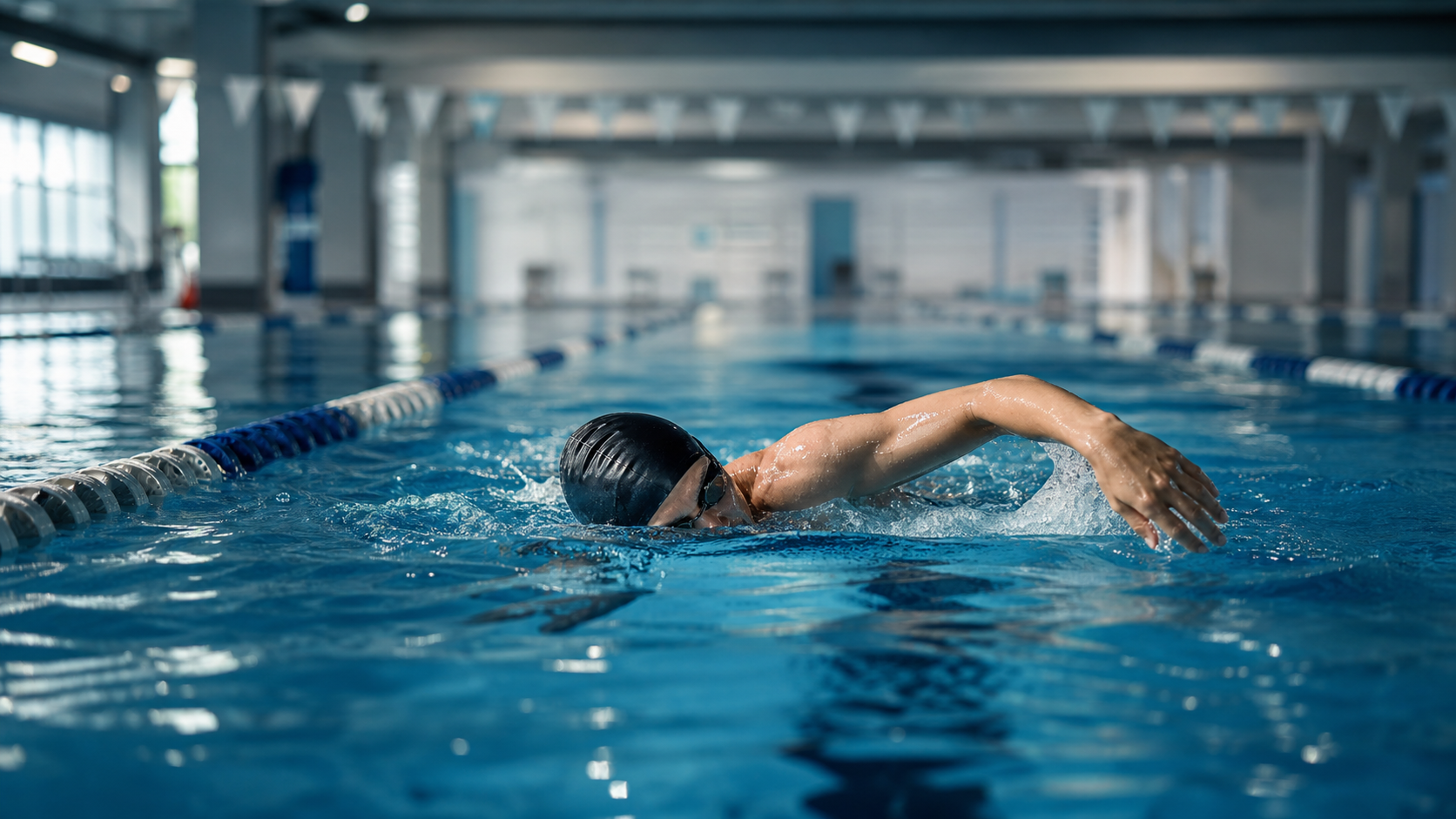
For many swimming enthusiasts, “swimming 3000m or more in one go” is a dual mental and physical challenge. The swim leg of a triathlon (1.5km to 3.8km), marathon swimming (10km and above), and even ultra-long distance sets in daily training all require swimmers to possess the ability to swim ultra-distances. Ultra-distance training not only improves aerobic capacity but also enables you to maintain technical efficiency under fatigue—an adaptation that short-distance training can hardly replicate.
The Physiological Challenges of Ultra-Distance Swimming
After swimming continuously for more than 30 minutes, the body faces several key physiological challenges:
Energy Substrate Shift: In the first 20–30 minutes, glycogen serves as the primary fuel, after which fat oxidation gradually increases. If your aerobic base is insufficient, fat metabolism efficiency is low, and a noticeable “hitting the wall” phenomenon may occur at the 30–45 minute mark.
Core Temperature Regulation: During prolonged swimming, if the water temperature is below 28°C, body heat loss accelerates; above 30°C, overheating may occur. Indoor pools in Taiwan are typically maintained at 27–30°C, which falls within an acceptable range.
Technical Fatigue: The shoulder rotator cuff and forearm radioulnar muscle groups gradually fatigue after repeated pulling over a long period, leading to a shortened pull arc and disrupted kick rhythm.
Mental Fatigue: One of the greatest challenges of ultra-distance swimming is “monotony”—laps back and forth in the pool can easily cause you to lose rhythm and motivation.
Pacing Strategy for 3000m and Beyond
The pacing strategy for ultra-distance swimming should follow the principle of a “Negative Split”—the second half slightly faster than the first half.
| Segment | Distance | Pacing Strategy |
|---|---|---|
| Start Segment | First 500m | 3–5 seconds slower than target pace (to warm the body up) |
| Steady Segment | 500–2500m | Maintain target pace (±2 seconds) |
| Sprint Segment | Final 500m | 3–5 seconds faster than target pace |
Using a target pace of 2:10/100m for completing 3000m as an example, the start segment pace is approximately 2:13–2:15, the middle segment maintains 2:10, and the final 500m accelerates to 2:05–2:07.
Mental Segmentation Every 500m
Breaking 3000m down into 6×500m mental segments feels far less daunting than thinking “I need to swim 3000m” all at once. After completing each segment, mentally “check it off” and give yourself positive feedback.
Key Elements for Maintaining Technique
In ultra-distance swimming, maintaining technical efficiency matters more than chasing speed. Here are the three technical points most prone to breaking down:
1. Body Rotation
After fatigue sets in, shoulder flexibility declines, and many people’s body rotation gradually diminishes, turning into a “flat swimming” pattern. Consciously remind yourself every 200m: “Is the feeling of my shoulder rotating to touch my ear still there?”
2. Kick Rhythm
Ultra-distances typically use a “2-beat kick” rhythm (kicking twice per full stroke cycle), which is more energy-efficient than a 6-beat kick. After fatigue, many people unconsciously switch to “random kicking,” wasting extra energy.
3. Breathing Timing
For ultra-distances, bilateral breathing every 3 strokes is recommended to ensure balanced use of both shoulders. If you switch to unilateral breathing every 2 strokes after fatigue sets in, it indicates the intensity is too high, and you should slow down slightly.
Progressive Plan for Ultra-Distance Training
Here is an 8-week plan for progressing from 2000m to 4000m+:
- Weeks 1–2: One continuous 2000m set per session, 2 times per week
- Weeks 3–4: One continuous 2500m set per session, 2 times per week
- Weeks 5–6: One continuous 3000m set per session, 2 times per week
- Week 7: Recovery week (one 1500m set + one 2000m set)
- Week 8: Challenge a continuous 4000m swim
Practical Tips
- Prepare a lap counter or a smart waterproof watch to count laps, avoiding loss of confidence from miscounting
- Check your stroke rate every 500m; if it has increased by more than 10% compared to your warm-up, it means you are maintaining speed through “muscling the stroke” rather than efficiency
- Eat a full meal 2 hours before ultra-distance training, and drink 200–300ml of sports drink every 30 minutes during the session (especially in summer)
- For your first attempt at a continuous 3000m swim, set “completion” rather than “speed” as your goal
Conclusion
Ultra-distance swimming is a unique training experience that teaches you to coexist with fatigue and maintain efficiency under difficulty. For Taiwanese triathletes, learning to stay composed in the water before battling the weather and hills on the road is the most critical mental preparation in the entire triathlon. Every ultra-distance training session is an opportunity to build deeper confidence in the water.
Related Reading
- Ultra-Distance Swim Training: 1.5–3 Times Race Distance Is the Key to Endurance Breakthroughs
- Long-Distance Swim Endurance Training: The Benefits of a Weekly 3000–5000m Continuous Swim
- Swim Endurance 2000m+ Long-Distance Training Plan
- Long-Distance Swim Pace Training: Speed Management from 1500m to 5000m
一日北高前的高裝檢 | 北高 360 | 挑戰11小時的裝備 | 一日雙塔 | 補給
6 年前
JE22 百里任務體驗,心跳不能過150,三小時內有可能...? 沒有天時地利難度有多高? / 公路車 / CT Yeh
1 年前
西進武嶺 免費訓練分析服務 Intervals | 練不夠還是練過頭?你哪一種類型選手?AI模型告訴你! | 備戰神器 | 公路車 訓練 | CT Yeh
4 年前
[防寒衣體驗] 鐵人魂 三鐵 防寒衣試穿會 於松運 深水游泳池 鯨魚池
8 年前
Live) 備戰2019彰化經典百K 賽前攻略 (已完賽請看新影片
7 年前
FTL 與 SYB 車隊專訪 西進武嶺 實用攻略分享! 2小時 如何練?!你不知道的眉角!新手準備武嶺必看 EP1 | 實力派女車友 | 精華版 | 公路車 | CTYeh
4 年前
實景訓練台) 彰化經典百K 高強度喵團 90分鐘 跟著一起練功 2019 Indoor workout Changhua Classic 100 Taiwan
7 年前
live) 超越北高 之一日北高12小時 策略
7 年前