Introduction
Many runners put plenty of effort into long-term training and carbohydrate loading, only to stumble at the final hurdle—the pre-race meal. Some skip eating out of nervousness, leading to low blood sugar and fatigue within the first few kilometers; others eat too heavily and suffer from stomach churning and abdominal pain halfway through the run.
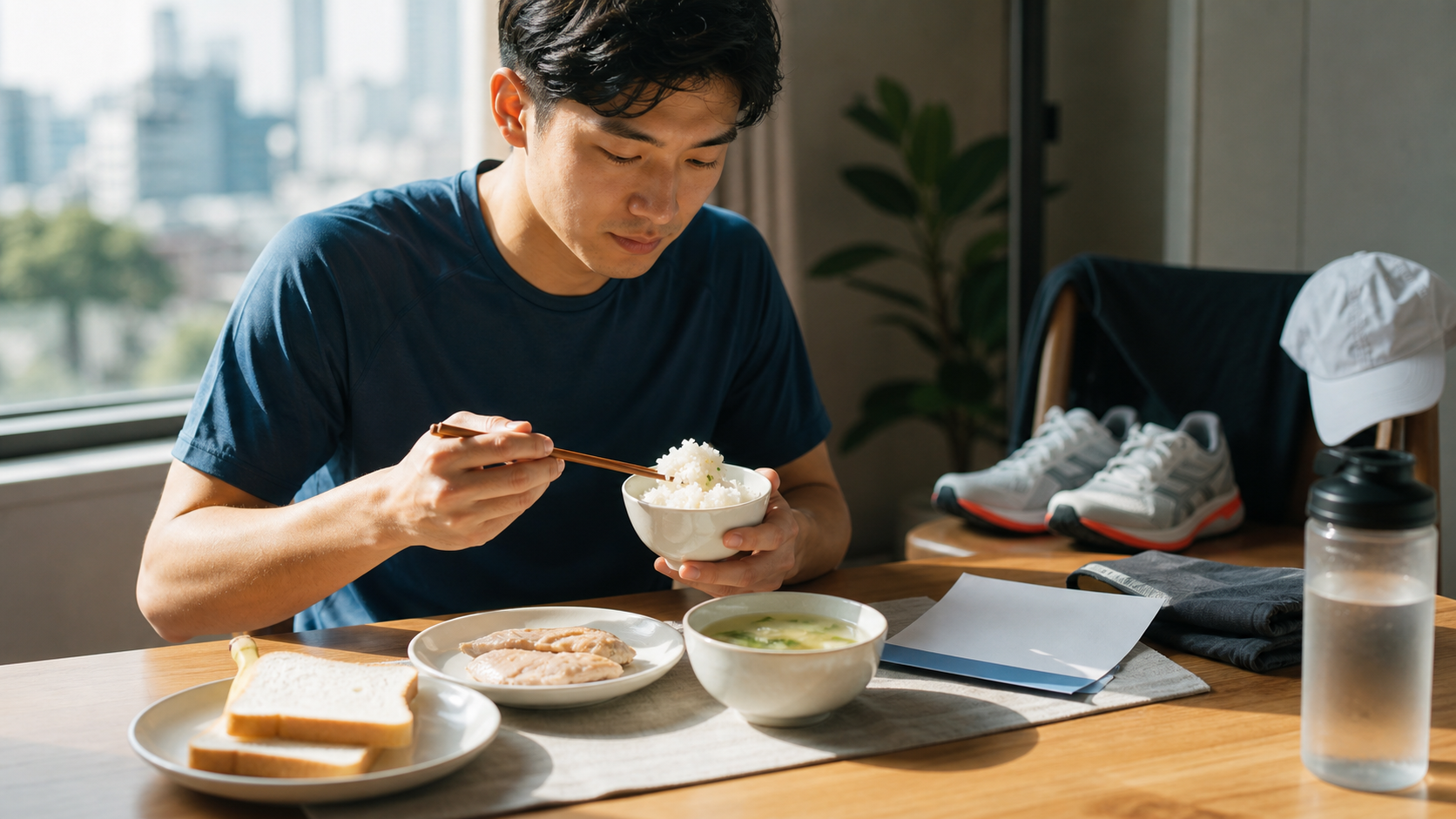
The pre-race meal has three core goals: replenish glycogen depleted overnight, stabilize blood sugar, and keep the stomach feeling light and settled. Master these three points, and you’ll be in optimal condition at the starting line.
Timing: Why 2–3 Hours Before
It’s generally recommended to eat 2–3 hours before the race, for the following reasons:
- Digestion time: A mixed meal (carbohydrates plus a small amount of protein) takes about 90–120 minutes to complete gastric digestion. A 2–3 hour window ensures food has left the stomach, reducing the risk of bloating and nausea while running.
- Blood sugar stability: Eating within 1 hour of the race may actually leave you in a “post-insulin-response” low blood sugar state when the gun goes off, causing an unstable pace in the early stages.
- Mental preparation: After eating, there’s ample time to use the restroom and ease pre-race nerves.
If the race starts early (e.g., 6 AM), getting up early to eat is essential. If you can’t manage a full 3 hours, allow at least 1.5–2 hours, and reduce portion sizes while choosing more easily digestible foods.
Food Selection Principles
Characteristics of an Ideal Pre-Race Meal
| Characteristic | Explanation |
|---|---|
| High carbohydrate | Replenishes glycogen, provides immediate energy |
| Low fat | Fat slows gastric emptying and increases digestive burden |
| Low fiber | High-fiber foods can easily trigger diarrhea during running |
| Low protein | Protein digests slowly; this meal doesn’t need high protein |
| Familiar foods | Don’t try new foods, to avoid gastrointestinal discomfort |
Recommended Meal Combinations for Taiwanese Runners
Combination A (Standard)
- 1 bowl of white rice (about 150g) + steamed fish or braised chicken leg (skin removed)
- Clear soup or a small amount of vegetables
- Approximately 500–600 kcal
Combination B (Convenience)
- 2–3 onigiri rice balls from 7-11 (choose light flavors like salmon or plum)
- Approximately 400–500 kcal
Combination C (Noodle Version)
- Thin noodles in soup or clear udon (without fried tofu or large chunks of meat)
- Approximately 450–550 kcal
Combination D (Light Version, suitable within 2 hours of race start)
- 2 slices of white toast + a small amount of jam
- 1 banana
- Approximately 300–350 kcal
Portion Calculation and Personal Adjustments
The recommended carbohydrate intake for the pre-race meal is 1–1.5g per kilogram of body weight.
| Body Weight | Carbohydrate Target | Corresponding Food Amount |
|---|---|---|
| 50kg | 50–75g | About 1.5–2 bowls of white rice |
| 60kg | 60–90g | About 2–2.5 bowls of white rice |
| 70kg | 70–105g | About 2.5–3 bowls of white rice |
Individual differences: Runners with sensitive stomachs should lean toward the lower end of the range and choose more liquid foods (congee, rice milk); those with strong digestion can opt for the upper end.
Fluid Intake
The pre-race meal should be accompanied by 300–500ml of water or electrolyte drink, sipped gradually. Drinking excessively (more than 1L) can cause bloating and frequent bathroom needs.
Up to 1 hour before the race, you can top up with 150–250ml of water to maintain hydration balance without burdening the stomach.
Practical Tips
- Test at home, don’t experiment on race day: The pre-race meal combination should be tested before long-distance training days (e.g., 20–25km runs) to confirm how your stomach reacts to that meal.
- Pre-order or prepare your food: Breakfast shops near many marathon starting areas have huge lines on race day, so it’s recommended to bring your own food or order it the night before.
- Eat even when nervous: Pre-race nerves are normal, but not eating at all means running on an empty stomach. Unstable blood sugar will cause heavy glycogen depletion in the first half, making it easier to hit the wall in the second half. Eating a little is still better than eating nothing.
- Avoid high-fat coffee: Coffee with creamer or milk may trigger diarrhea during running. If you need caffeine, black coffee or caffeine tablets are more stable options.
- Observe your own digestion speed: Everyone’s gastric emptying rate is different. It’s recommended to find your optimal time window through 1–2 long training runs.
Conclusion
The pre-race meal is the final piece of the marathon preparation puzzle. It’s not a complicated problem, but a habit that needs to be “trained” through practice. Starting with your next long run, arrange your pre-race meal according to your race-day schedule, letting your stomach get used to it and your body remember it. By the time race day actually arrives, this habit will be your quietest and most reliable teammate.
Related Reading
- Breakfast Design for Runners: The Best Eating Timing on Race Morning
- The Pre-Race Meal: Personalized Solutions for Timing, Portion, and “Reactive Hypoglycemia”
- Breakfast Design for Runners: The Ideal Carbohydrate-to-Fat Ratio 3 Hours Before the Race
- Nutrition Strategies Before Swimming: What to Eat 1–3 Hours Before Training
FTL 與 SYB 車隊專訪 西進武嶺 實用攻略分享! 2小時 如何練?!你不知道的眉角!新手準備武嶺必看 EP1 | 實力派女車友 | 精華版 | 公路車 | CTYeh
4 年前
一日北高前的高裝檢 | 北高 360 | 挑戰11小時的裝備 | 一日雙塔 | 補給
6 年前
Live) 備戰2019彰化經典百K 賽前攻略 (已完賽請看新影片
7 年前
CT暗黑廚房) 車友必備 宇宙無敵鮮蚵湯 幫助訓練恢復 天然食補 好市多 超肥鮮蚵 破PR
7 年前
CT 喇低賽) 武嶺牽車 才是王道 西進牽車四小時內秘訣 攝手位置 如何判斷 防抽筋小秘訣
7 年前
西進武嶺 免費訓練分析服務 Intervals | 練不夠還是練過頭?你哪一種類型選手?AI模型告訴你! | 備戰神器 | 公路車 訓練 | CT Yeh
4 年前
一日北高/長距離團騎 常見問題補充篇 / 組團或跟團的眉角 / 壯車友容易被瘦車友慢性拉爆 / 原來屁股痛可能是這個原因...? / 風場配速法 / 公路車 / CT Yeh
2 年前
單車 一日北高 ( 雙城 ) 肥宅雙人瘋狂行 紀錄片 REACTO
10 年前