Vegan Nutrition Strategies for Road Running: A Guide to Plant-Based Protein Sources and Iron Supplementation
Introduction
Taiwan has a significant number of vegetarian runners who, whether choosing a plant-based diet for religious beliefs, environmental considerations, or health reasons, are equally dedicated to training for marathons. However, the natural gaps in certain key nutrients within a plant-based diet, if left unaddressed, can lead to fatigue, anemia, and decreased immunity, ultimately affecting training effectiveness and race performance.
This article systematically organizes the most critical nutritional topics for vegetarian runners and provides practical, actionable food pairing strategies.
Strategies for Complete Plant-Based Protein Intake
Animal proteins contain all essential amino acids, while most plant proteins are deficient in certain essential amino acids (for example, legumes lack methionine, and grains lack lysine). The solution is complementary protein pairing:
| Pairing Method | Example | Amino Acids Supplemented |
|---|---|---|
| Legumes + Grains | Brown rice + tofu | Complements lysine and methionine |
| Legumes + Nuts/Seeds | Soy milk + sesame | Complements methionine |
| Whole grains + Legumes | Whole wheat toast + peanut butter | Complete essential amino acids |
Protein Intake Target: Because the digestibility and absorption rate of plant proteins (70–85%) is slightly lower than that of animal proteins (90–95%), vegetarian runners are advised to increase their protein intake by approximately 10–15%, equating to 1.6–2.0g per kilogram of body weight.
High-Quality Plant-Based Protein Sources
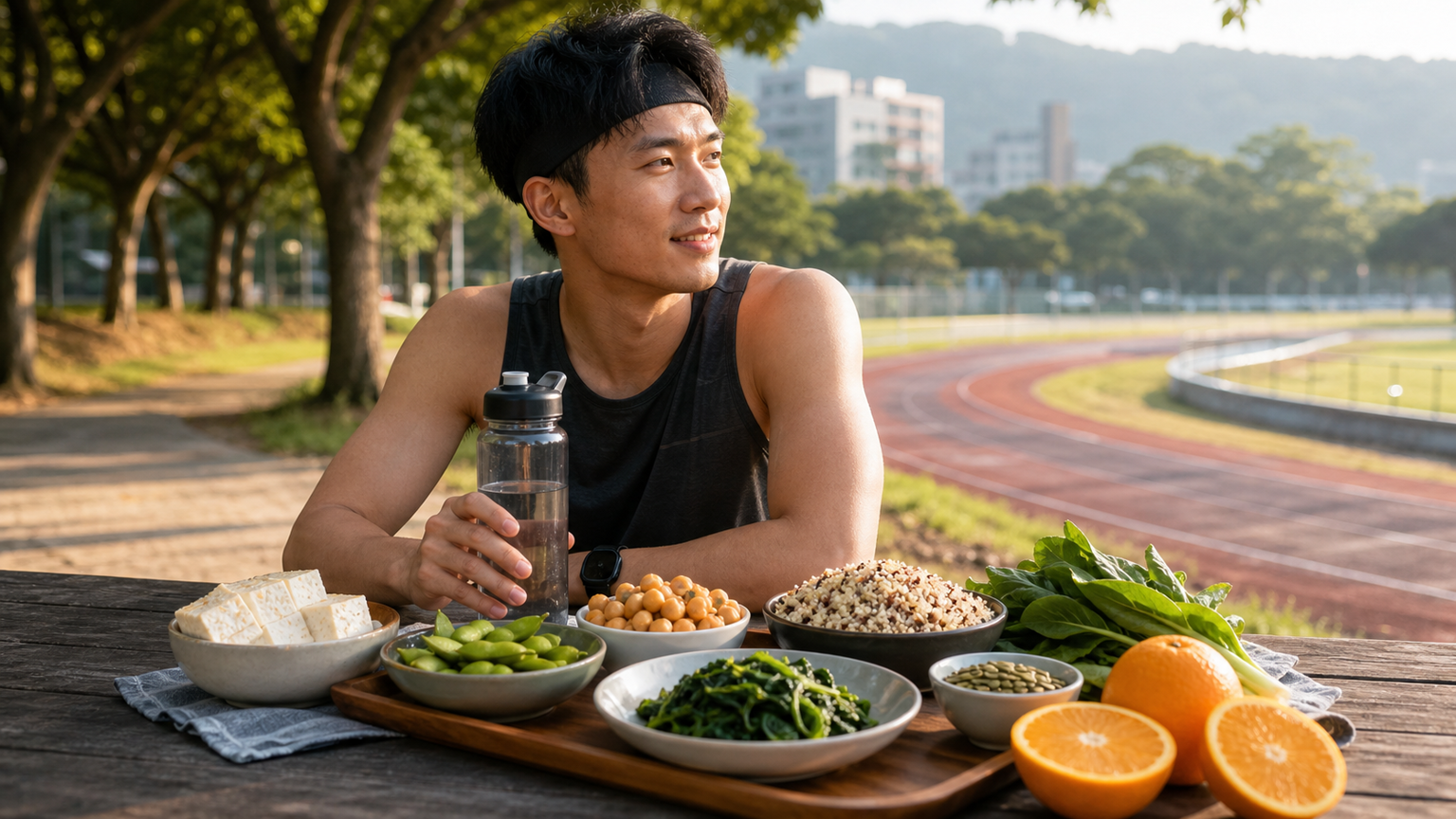
- Soy and soy products: Tofu (approximately 8g protein per 100g), soy milk (approximately 8–10g per 250ml), tempeh (approximately 19g per 100g), edamame (approximately 11g per 100g)
- Other legumes: Chickpeas, black beans, lentils, adzuki beans
- Pseudo-grains: Quinoa (complete essential amino acids, approximately 14g protein per 100g dry weight)
- Nuts and seeds: Hemp seeds (10g protein per 3 tablespoons), pumpkin seeds, almonds
- Lacto-ovo vegetarians: Eggs, dairy products (protein quality close to animal protein)
Iron: The Biggest Challenge for Vegetarian Runners
Iron is a core mineral for oxygen transport and energy metabolism. Runners inherently have higher requirements than the general population (due to hemolysis caused by foot strike impact), and vegetarians face the following additional disadvantages:
- The absorption rate of plant-based iron (non-heme iron) is only 2–20%, far lower than the 15–35% of animal-based iron (heme iron)
- Phytates and oxalates present in plant foods inhibit iron absorption
Strategies to Enhance Iron Absorption
Increase absorption:
- Consume vitamin C-rich foods (kiwi, guava, citrus fruits) alongside iron sources at every meal
- For example: stir-fried tofu with dark leafy greens + a glass of orange juice after the meal
Reduce inhibitors:
- Avoid drinking coffee, tea, or milk simultaneously with iron-rich meals (tannins and calcium inhibit iron absorption)
- Take iron supplements and calcium supplements separately, with at least a 2-hour interval
High-Quality Plant-Based Iron Sources
| Food (per 100g) | Iron Content |
|---|---|
| Red amaranth | Approximately 2.9mg |
| Pig’s blood cake (not applicable for vegetarians, shown for comparison only) | Approximately 9mg |
| Firm tofu | Approximately 1.5mg |
| Sesame paste (1 tablespoon) | Approximately 2.2mg |
| Pumpkin seeds (30g) | Approximately 2.5mg |
| Dried wood ear mushrooms | Approximately 5.5mg |
| Adzuki beans (cooked) | Approximately 2.0mg |
Taiwanese female vegetarian runners need special attention: the recommended daily iron intake for adult women is 15mg. If undergoing heavy training periods or having regular menstruation, the risk of low ferritin levels is high. It is recommended to have blood ferritin levels checked regularly on an annual basis.
Other Nutrients Vegetarian Runners Need to Watch
Vitamin B12
Vitamin B12 is found almost exclusively in animal foods. Vegan runners must supplement additionally: the recommended daily intake is 2.4μg, and athletes may need more. It is recommended to choose plant-based foods fortified with B12 (some soy milks and plant milks are fortified) or take supplements directly.
Calcium
- Prioritize high-calcium tofu (made with calcium sulfate), fortified soy milk, sesame, and dark leafy greens (amaranth, water spinach, cabbage)
- Vegan runners have a recommended daily calcium intake of 1000–1200mg, which requires proactive planning
Omega-3 Fatty Acids
- EPA/DHA (long-chain Omega-3) is found almost exclusively in fish; plant-based sources (flaxseed, walnuts) contain ALA, which has a low conversion rate
- Vegan runners are advised to consider algae oil supplements, the only plant-based source of EPA/DHA
Practical Recommendations
- Get a comprehensive blood test annually: Including serum ferritin, hemoglobin, vitamin B12, and vitamin D, to detect deficiencies early.
- Don’t rely on a single protein source: Tofu is great, but eating only tofu every day can lead to amino acid imbalance; diversifying plant-based protein sources is key.
- Quinoa is a vegetarian runner’s secret weapon: Increasingly easy to find in Taiwanese supermarkets, using it as a staple to replace part of your white rice can significantly improve protein quality.
- Race-day fueling is unaffected: Most energy gels are vegan-friendly (a few contain gelatin), and bananas are the perfect race-day fuel for any vegetarian.
Conclusion
Vegetarianism is not a barrier to running; it is a dietary system that requires more careful planning. By mastering complementary proteins, actively consuming iron, and regularly tracking key nutrients, vegetarian runners can stand at the marathon starting line just the same, charging toward the finish line in peak condition.
Related Reading
- Dietary Strategies for Vegetarian Runners: A Complete Guide to Plant-Based Protein Supplementation
- Dietary Strategies for Vegetarian Cyclists: Complete Nutritional Supplementation for a Plant-Based Diet
- Vegetarian Diets for Swimmers: A Complete Guide to Plant-Based Protein
- Vegetarian and Vegan Riders: How to Ensure Complete Nutritional Intake
CT暗黑廚房) 車友必備 宇宙無敵鮮蚵湯 幫助訓練恢復 天然食補 好市多 超肥鮮蚵 破PR
7 年前
靠單車減肥35公斤 心得分享與整理
7 年前
太平山單車員工旅遊 | 這樣玩CP值最高!| 公路車
5 年前
單車 一日北高 ( 雙城 ) 肥宅雙人瘋狂行 紀錄片 REACTO
10 年前
一日北高常見問題大集合 | 攻略 | 路線 | 訓練 | 補給 | 自行車 單車 | 一日雙城 | 雙塔 | TWB北高360 | 屁股痛
6 年前
一日北高/長距離團騎 常見問題補充篇 / 組團或跟團的眉角 / 壯車友容易被瘦車友慢性拉爆 / 原來屁股痛可能是這個原因...? / 風場配速法 / 公路車 / CT Yeh
2 年前
FTL 與 SYB 車隊專訪 西進武嶺 實用攻略分享! 2小時 如何練?!你不知道的眉角!新手準備武嶺必看 EP1 | 實力派女車友 | 精華版 | 公路車 | CTYeh
4 年前
一日北高前的高裝檢 | 北高 360 | 挑戰11小時的裝備 | 一日雙塔 | 補給
6 年前