文章導覽
- Introduction
- Nutritional Design Principles for Homemade Fuel
- Recipe 1: Date and Peanut Butter Energy Balls
- Recipe 2: Taiwanese Sweet Potato Rice Cake Bars
- Recipe 3: Banana Rice Cake Bars (Onigiri-Inspired)
- Recipe 4: Homemade Electrolyte Energy Drink
- Things to Keep in Mind When Using Homemade Fuel in Training
- Conclusion
Introduction
Every long run or race, the energy gels and bars in your waist pack add up to a significant expense. More importantly, commercial fuel often contains artificial flavors, preservatives, artificial sweeteners, and other ingredients that can cause discomfort for runners with sensitive stomachs.
Making your own energy fuel has three major advantages: full control over ingredients, lower cost, and the ability to customize to your taste and digestive needs. This article provides several simple, field-tested recipes for natural fuel made from whole ingredients.
Nutritional Design Principles for Homemade Fuel
An ideal running fuel should have the following characteristics:
| Characteristic | Description |
|---|---|
| High carb, low fiber | Provides quick energy with minimal digestive burden |
| Moderate sodium | Replaces electrolytes lost through sweat |
| Low fat | Fat slows digestion and is unsuitable during high-intensity running |
| Doesn’t crumble or stick | Easy to handle mid-run |
| Stable at room temperature | Won’t spoil or melt within 3–4 hours |
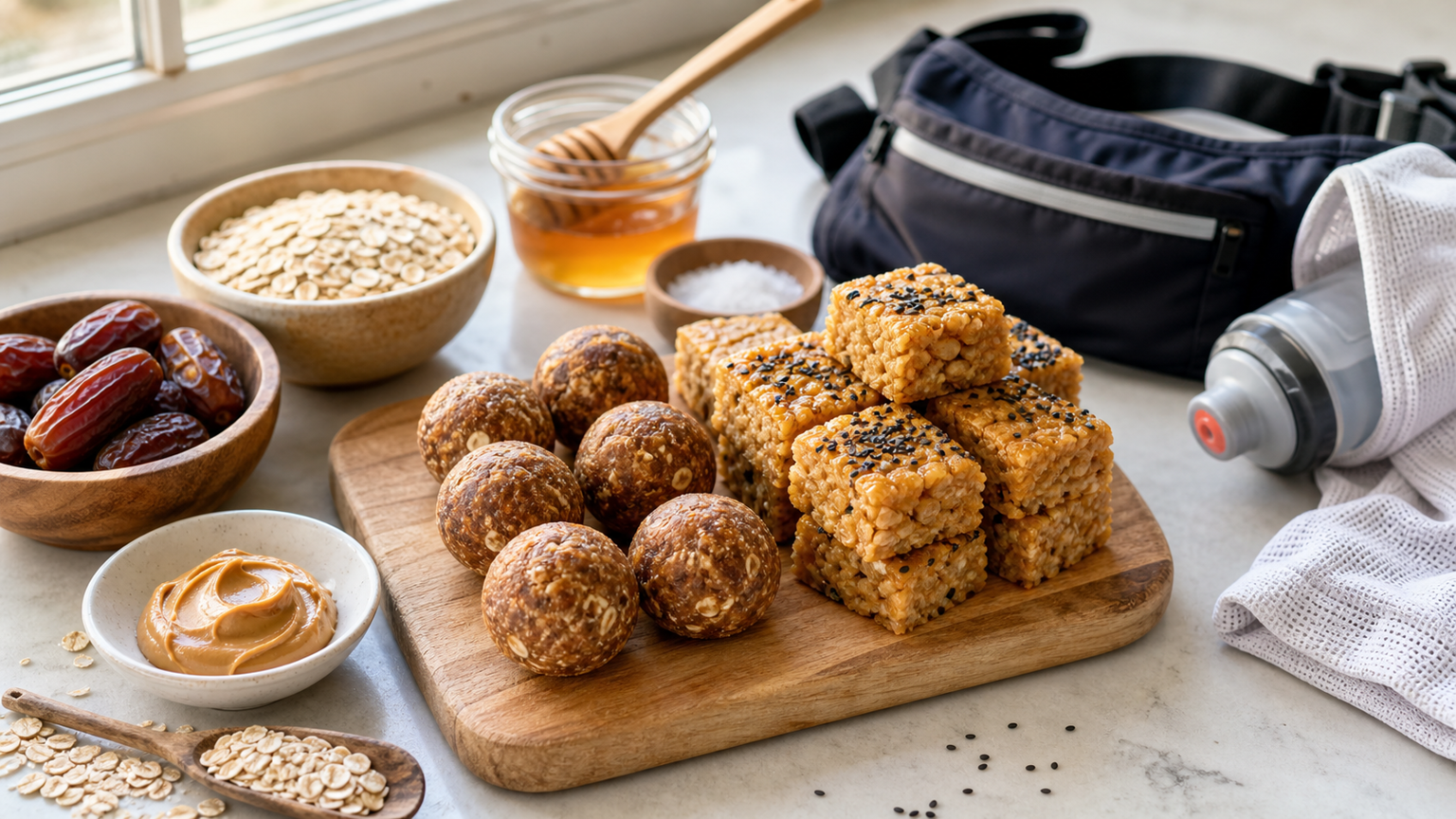
Recipe 1: Date and Peanut Butter Energy Balls
Best for: Long-run training fuel, approximately 30–35g carbs per ball
Ingredients (makes about 12 balls):
- Pitted dates (Medjool dates): 250g
- Rolled oats (instant): 80g
- Peanut butter (unsweetened): 2 tablespoons
- Sea salt: 1/4 teaspoon
- Optional: a sprinkle of black sesame seeds or pumpkin seeds (for added minerals)
Instructions:
- Blend the dates into a paste in a food processor
- Add rolled oats, peanut butter, and sea salt; mix until well combined
- Wet your hands slightly, take portions and roll into balls
- Chill in the refrigerator for 30 minutes to set
- Wrap individually in plastic wrap and place in a resealable bag in your waist pack
Storage: 4 hours at room temperature, 5 days refrigerated
Calories per ball: Approximately 110–130 kcal, 20–22g carbs, 2–3g protein
Recipe 2: Taiwanese Sweet Potato Rice Cake Bars
Best for: Marathon long-distance runs (using exclusively local Taiwanese ingredients)
Ingredients (makes about 8 bars):
- Sweet potato (steamed and mashed): 200g
- White glutinous rice flour: 60g
- Honey: 2 tablespoons
- Sea salt: 1/4 teaspoon
- Black sesame seeds: 1 tablespoon
Instructions:
- Steam the sweet potato, peel, and mash; mix in honey and salt while still hot
- Add glutinous rice flour and knead into a non-sticky dough
- Sprinkle in black sesame seeds and knead until evenly distributed
- Divide into portions and press into flat rectangular bars (about 2cm thick), place on baking paper
- Steam over high heat for 15 minutes
- Cool completely, then wrap individually
Calories per bar: Approximately 90–110 kcal, 18–22g carbs
Advantages: Chewy and soft texture, easy to digest, ingredients available at any Taiwanese supermarket
Recipe 3: Banana Rice Cake Bars (Onigiri-Inspired)
Best for: Fueling the first half of a half or full marathon
Ingredients (makes about 6 bars):
- Cooked white rice: 200g
- Banana (ripe): 1
- Sea salt: a pinch
- Optional: a small amount of pickled plum or umeboshi (adds saltiness and acts as a preservative)
Instructions:
- Mash the banana and mix with the rice; season with salt
- Press into rectangular bars by hand or with a sushi mold
- Wrap tightly in plastic wrap; optionally wrap an outer layer of nori
- Refrigerate for at least 1 hour to set the shape
Calories per bar: Approximately 90–110 kcal, 20–25g carbs
Note: For summer races, this fuel needs to be carried in an insulated waist pack and should be consumed within the first 2 hours
Recipe 4: Homemade Electrolyte Energy Drink
A replacement for commercial sports drinks
Ingredients (per 500ml):
- Water: 400ml
- Lemon juice: 30ml (vitamin C aids iron absorption and adds natural flavor)
- Honey: 2 tablespoons (about 30g carbs)
- Sea salt: 1/4 teaspoon (about 300mg sodium)
- Optional: a pinch of baking soda (sodium bicarbonate, buffers lactic acid, but too much creates a salty-bitter taste)
Note: Adjust the sodium content of your homemade electrolyte drink based on your individual sweat rate
Things to Keep in Mind When Using Homemade Fuel in Training
- Test it in training first: Digestive tolerance to homemade food varies from person to person. Any new recipe should be tested during a long training run to confirm there are no stomach issues before bringing it to a race.
- Race regulations: Some marathon aid station rules prohibit bringing your own fuel (to be picked up on course), but you can carry your own in a waist pack. Check the regulations of your specific race.
- Packaging design matters: Homemade fuel packaging needs to be easy to open with one hand mid-run, with tear-open openings that don’t require too much attention.
- Practice food safety: Homemade fuel contains no preservatives. Stored above 25°C for more than 3–4 hours, there is a food safety risk, especially for recipes containing dairy or eggs.
Conclusion
Homemade fuel is the most intimate connection between a runner and their food. When you pull out a sweet potato rice cake bar you made yourself at the 30km aid station, knowing every ingredient is natural and every gram of carbs was calculated by you, that satisfaction is something no store-bought package can provide. Try making a batch of fuel, take it on a long run, and experience the flavor that’s uniquely yours.
Related Reading
- Complete Comparison of Running Fuel: Gut Tolerance Analysis of Gels, Bars, and Liquid Fuel
- The Complete Guide to Using Energy Gels in Running: When to Take Them, How Much, and How Much Water to Drink
- Energy Gels and Bars Explained: Ingredients, Selection Logic, and DIY Recipes
- Race Aid Station Food Selection Strategies: Making Energy Gels Not Your Only Option