Nutrition Preparation for Overseas Road Races: Dietary Strategies for Competing Abroad and Preventing Traveler's Tummy
Introduction
The Tokyo Marathon, Boston Marathon, Berlin Marathon—these World Marathon Majors are dream races for many Taiwanese runners. However, racing abroad isn’t just about flights and accommodation; the unfamiliarity of the local food environment is often one of the toughest challenges to manage.
Language barriers, unfamiliar ingredients, jet lag disrupting your digestive rhythm, traveler’s stomach… any one of these factors can make your stomach protest in the days before the race. This article provides a systematic overseas race nutrition strategy so you can prepare effectively no matter where you are in the world.
Before Departure: What Food to Bring
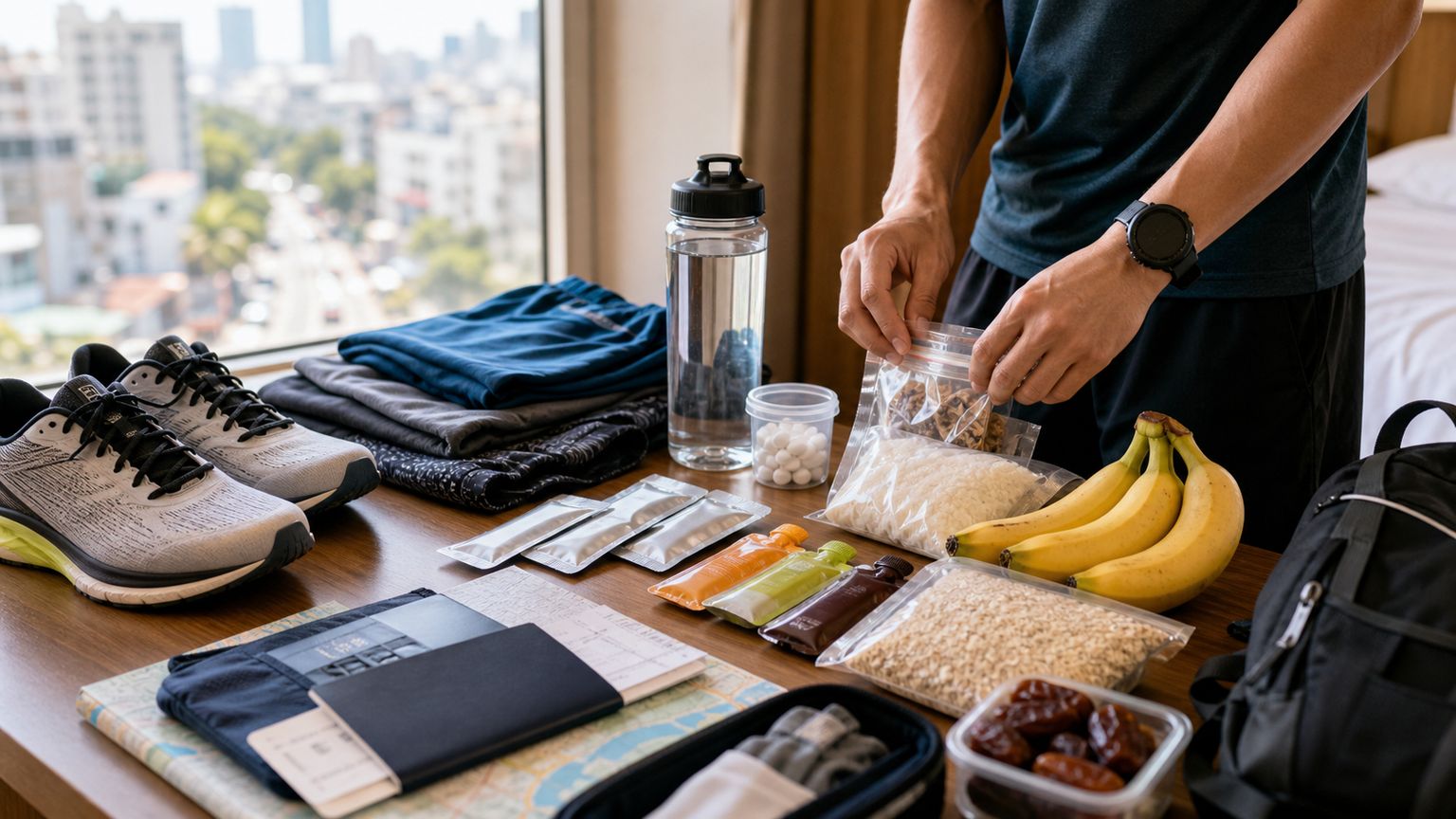
Essential Packing List
| Item | Purpose | Recommended Amount |
|---|---|---|
| Instant white rice (vacuum-sealed) | Familiar carbohydrate source, main meal staple before the race | 3–5 packs |
| Taiwanese instant noodles or rice noodles | Emergency meal, familiar flavor | 3–5 packs |
| Personal brand energy gels | In-race fueling, no reliance on local aid stations | 30% more than needed |
| Salt tablets | Electrolyte replenishment | 30–50 tablets |
| Dates or energy bars | Snacks and backup fuel | 5–10 packs |
| Instant oatmeal | Backup breakfast for the days before the race | 3–5 packs |
| Electrolyte powder packets | For use with diluted local mineral water | 10–15 packets |
Why bring 30% more energy gels: Some races do not allow runners to use their own fuel outside of aid stations, but carrying them in a waist belt is usually fine; plus, luggage can be damaged or lost, so having extra is necessary.
Regional Dietary Characteristics and Precautions
Japan (Tokyo Marathon, etc.)
- Advantages: Light, mild flavors and fresh ingredients; convenience stores offer high-quality onigiri, which is gentle on Taiwanese runners’ stomachs
- Cautions: Onigiri from Japanese convenience stores is higher in salt, which is good for sodium replenishment; ramen broth is rich in fat, so avoid it before the race
- Recommendations: Onigiri, udon noodles (Japanese style, mild flavor), bananas (high quality at Japanese supermarkets)
Europe and North America (Boston, Berlin, London, etc.)
- Challenges: Western diets have lower carbohydrate density, with more whole wheat bread and high-fiber grains, requiring time for your gut to adapt
- Cautions: Milk and cheese are abundant (some Asians have lactose intolerance); salads and high-fiber vegetables should be reduced before the race
- Recommendations: White bread (not whole wheat) with jam, pasta (with olive oil or tomato sauce, avoid creamy sauces), baked potatoes (skin removed)
- Strategy: Look for Asian grocery stores or convenience stores near your hotel; Japanese convenience stores are increasingly common in major Western cities
Southeast Asia (Singapore, Kuala Lumpur, Bangkok, etc.)
- Challenges: Hot and humid environment means higher sweat rates and increased electrolyte needs; spicy food is common
- Cautions: Strictly avoid spicy food 3 days before the race; street food hygiene varies, so choose well-known chains or larger restaurants
- Recommendations: Asian rice-based meals (white rice as the staple) are easy to find in Southeast Asia; coconut water is a natural electrolyte drink; bananas and similar fruits are plentiful
- Water quality: Tap water quality is inconsistent in some cities; it’s recommended to use mineral water for cooking or rehydrating food for the week before the race
Mainland China (Shanghai, Beijing, etc.)
- Advantages: Rice-based diet, food culture is close to Taiwan’s
- Cautions: Oil usage tends to be higher; avoid heavy, salty northern-style wheat dishes before the race; some people with sensitive stomachs need an adjustment period with the local diet
- Recommendations: Congee (plain rice porridge) is an excellent pre-race dinner; steamed buns with light dishes
Jet Lag and Digestive Rhythm Adjustment
The most overlooked issue when racing abroad is the impact of jet lag on your digestive rhythm. Jet lag can disrupt your gut motility rhythm, leading to constipation or indigestion, which affects your pre-race elimination routine.
Adjustment strategies:
- Immediately shift your meal times to the local time zone upon arrival
- Consume high-fiber foods (in small amounts) at a fixed time each day, especially in the morning, to help establish a digestive rhythm
- Stay well hydrated (long flights easily cause dehydration)
- If constipation occurs, consume a small amount of sweet potato or oatmeal in the morning 3–4 days before the race, but reduce fiber 1–2 days before
Preventing Traveler’s Stomach
“Traveler’s stomach” is typically the gut microbiome’s adaptation response to a new environment. Prevention strategies:
- Start taking probiotics 2 weeks before departure: Especially probiotics containing Lactobacillus rhamnosus GG or L. acidophilus, which help strengthen the intestinal protective barrier
- Avoid raw food and street food (in areas with uncertain hygiene conditions)
- Stick to mineral water: In areas with uncertain water quality, even use mineral water for brushing your teeth
- Carry gastrointestinal medication with you: Seirogan (a familiar Taiwanese remedy) or Imodium (anti-diarrheal), just in case
Race-Day Minus Two: Nutrition Execution
- Stay as consistent as possible with your usual pre-race nutrition from training periods
- If local food options are limited, use your brought instant white rice and instant noodles as the main meals
- For protein sources, choose boiled eggs from local supermarkets, tofu (available at Japanese supermarkets), or ready-to-eat chicken breast from supermarkets
Practical Tips
- Research the destination’s food environment in advance: Use Google Maps to find convenience stores, supermarkets, and gut-friendly foods near your destination, so you have a backup plan before you arrive.
- Consider hotel options with kitchen facilities: Hotels with a kitchenette or Airbnb allow you to prepare some meals yourself.
- Luggage weight considerations: Energy gels and fuel supplies are not an issue at airport security (liquid restrictions apply to beverages, not gel-based fuel); salt tablets and electrolyte powder are lightweight, so it’s recommended to bring enough.
- Contact the race organizers to confirm aid station supplies: Major international marathons typically provide electrolyte drinks at aid stations, but brands and formulas vary; understanding this helps you adjust your personal carrying plan.
Conclusion
Racing abroad is a major milestone in your running career, and thorough nutrition preparation is the key piece that makes the journey complete. An unfamiliar city, an unfamiliar language, an unfamiliar course—amid all that unfamiliarity, your body needs familiar fuel. Bring your supplies, bring your understanding of your own dietary needs, and on any marathon course in the world, you can deliver your best performance.
Related Reading
- Athlete Travel Nutrition: How to Eat When Racing Abroad Without Falling Short in a Foreign Land
- Taiwanese Runners’ Food Culture: Post-Race Fueling and Local Ingredients
- Pre-Race Dinner Nutrition for Runners: The Pasta Carb Myth and Practical Alternatives
- Breakfast Design for Runners: Optimal Eating Timing on Race Morning
單車 一日北高 ( 雙城 ) 肥宅雙人瘋狂行 紀錄片 REACTO
10 年前
CT暗黑廚房) 車友必備 宇宙無敵鮮蚵湯 幫助訓練恢復 天然食補 好市多 超肥鮮蚵 破PR
7 年前
一日北高前的高裝檢 | 北高 360 | 挑戰11小時的裝備 | 一日雙塔 | 補給
6 年前
水金九不厭五分 10度寒流冷到不願停!feat. 卡卡 / 公路車 / CT Yeh
6 個月前
#KOM 夏季登山王之路 比賽實況 #東進武嶺
7 年前
台北大雁西飛 約騎挑戰 feat. Doris | 公路車 | CT Yeh
3 年前
新屋團體繞圈賽 | 眾多菁英好手賽道奔馳 | 千瓦女子軍團 | 無敵交管狂獲好評 明年你一定不能錯過 | #公路車
5 年前
一日北高/長距離團騎 常見問題補充篇 / 組團或跟團的眉角 / 壯車友容易被瘦車友慢性拉爆 / 原來屁股痛可能是這個原因...? / 風場配速法 / 公路車 / CT Yeh
2 年前