Daily Maintenance of Swimming Gear: Cleaning and Extending the Life of Swimsuits, Goggles, and Swim Caps
Introduction
Many swimmers share a similar regret: a good swimsuit starts to deform and fade after just a few dozen swims, and a NT$2,000 pair of goggles starts leaking from the silicone frame within six months. In many cases, these problems aren’t due to poor quality, but rather incorrect care methods. Understanding the material properties of swimming gear and proper care techniques can more than double the lifespan of your equipment, saving you considerable money in the long run.
Swimsuit Materials and Care
Competitive swimsuits available on the Taiwanese market primarily use the following materials:
| Material | Characteristics | Main Enemies | Care Focus |
|---|---|---|---|
| PBT (Polybutylene Terephthalate) | Excellent chlorine resistance, good shape retention | Hot water, direct sunlight | Hand wash in cold water, dry in shade |
| Nylon/Lycra Blend | Soft, comfortable, good stretch | Chlorine, sunscreen, machine washing | Immediate rinsing is most important |
| Polyester (Pure Polyester Fiber) | Most chlorine-resistant, most wash-durable | Almost no natural enemies, best value for money | Still requires cold water washing, avoid high-temperature machine wash |
| Training Racing Fabric (XTRA LIFE LYCRA) | High elasticity, form-fitting | Prolonged chlorine exposure | Rinse immediately after swimming |
Correct Washing Steps:
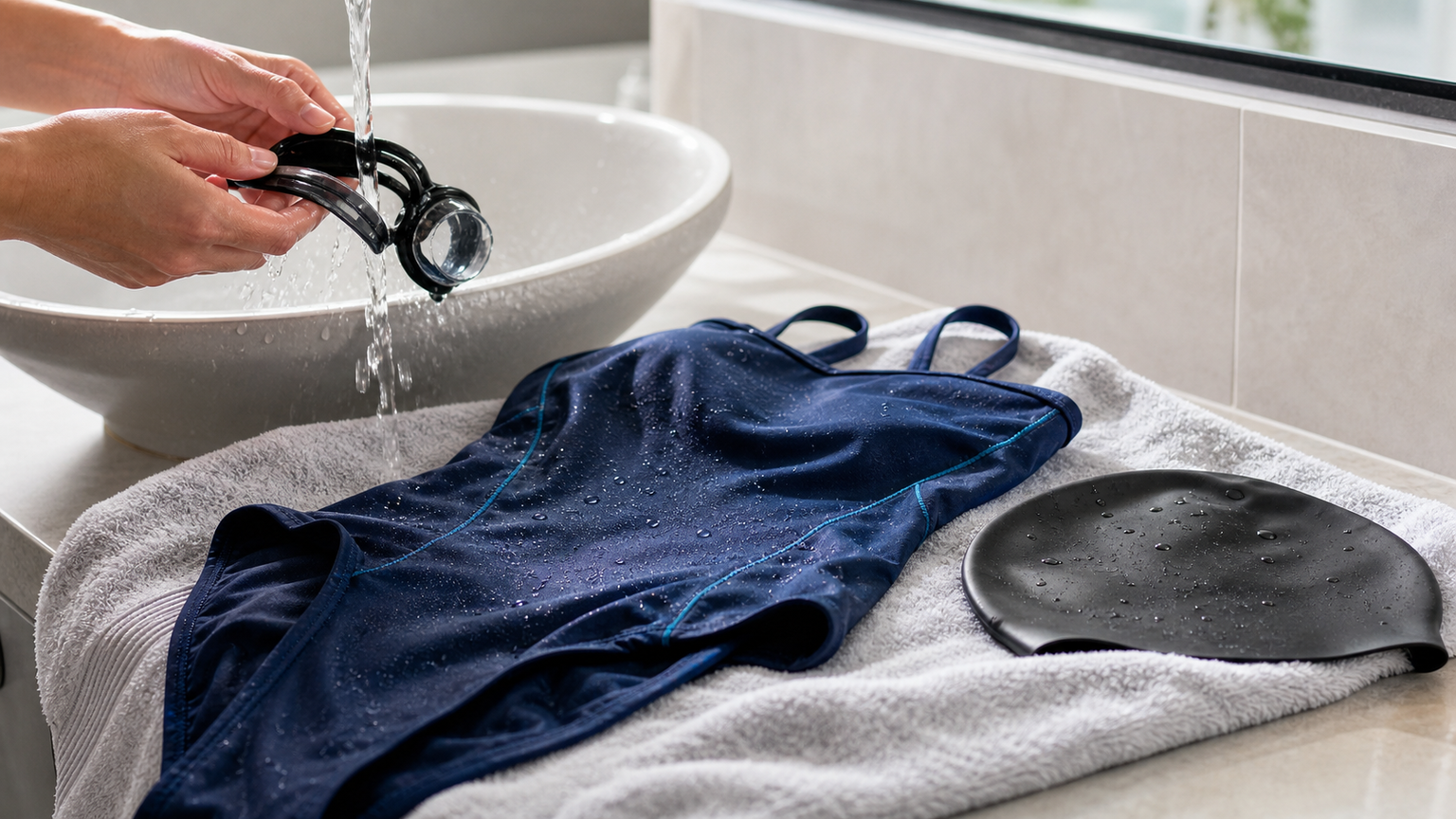
- After swimming, thoroughly rinse the swimsuit under clean water (not hot water) at the poolside or in the locker room sink—this step is the most important. Chlorine is more damaging after it dries than during swimming, so the sooner you rinse, the better.
- At home, gently hand wash with mild soap or swimsuit-specific cleaner (soak in a basin for 5 minutes), paying special attention to areas prone to sweat residue such as the crotch and underarms.
- Never use a washing machine: the mechanical friction and high temperatures of a washing machine severely damage elastic fibers; if machine washing is absolutely necessary, use a laundry bag and select the cold water gentle cycle.
- Do not wring out: gently press to remove excess water, or wrap in a towel and press lightly—do not twist or wring.
- Dry in a cool, ventilated area: avoid direct sunlight, as UV rays accelerate the aging of elastic fibers.
Goggle Care
Goggles are the swimming gear item most easily damaged by improper use:
Lens Protection (Most Important!)
- The inside of new goggle lenses has an anti-fog coating that is extremely fragile. Never wipe the inside of the lenses with your hands or cloth—one wipe and it’s ruined.
- When lenses fog up, simply rinse with clean water or gently shake off water droplets. If the anti-fog effect has worn off, you can purchase anti-fog spray to reapply.
Daily Cleaning:
- After swimming, rinse the entire pair of goggles with clean water, including the silicone frame and head strap.
- Avoid using regular cleaners (they may corrode silicone material); dedicated goggle cleaning spray is a safer choice.
- Ensure they are completely dry before storing—moist silicone frames sealed for long periods are prone to mold.
Storage Protection:
- Goggles that come with a hard case should be returned to the case to prevent the lenses from being scratched by other gear.
- Do not leave goggles in direct sunlight (such as on a car dashboard)—high temperatures cause silicone to age and deform rapidly.
Swim Cap Care
Swim caps are mainly made of two materials: silicone and latex.
- Silicone Swim Caps: Highly durable and easy to care for—just rinse with clean water and air dry. Avoid pulling at them with fingernails, as this can cause small tears.
- Latex Swim Caps: Fit more snugly to the head, but are very sensitive to oils (sunscreen, scalp oil). Be sure to rinse thoroughly after use. When storing, lightly dust the inside with talcum powder (baby powder) to prevent the latex from sticking together and deforming.
General Care Principles:
- After rinsing, turn the cap inside out to dry, ensuring the inside is completely dry.
- Store flat or gently folded—do not leave them crushed at the bottom of your bag for extended periods.
Care for Other Swimming Accessories
- Kickboards and Fins: Rinse with clean water and stand upright to dry. Avoid prolonged soaking in water (pool equipment is usually fine stored in the water, but for personal items it’s recommended to take them out).
- Earplugs: Rinse with clean water after each use, periodically wipe with alcohol swabs for disinfection, and replace every 3–6 months.
- Waterproof Stopwatches: Replace the waterproof gasket regularly (typically once a year) to prevent water damage to internal components.
Practical Tips
- Consider preparing a “swim-specific bag”: a breathable mesh bag allows wet gear to stay ventilated during transport, avoiding the damp, stuffy environment created by sealed plastic bags.
- Sunscreen is the biggest invisible killer of swimsuits: if you need sun protection for outdoor pool swimming, choose mineral sunscreen ingredients (zinc oxide, titanium dioxide), which cause far less damage to swimsuit fibers than chemical sunscreens.
- The “odor” in swimsuits is usually residual chloramine, which regular washing cannot remove. Try soaking in diluted white vinegar (1:10) for 20 minutes before washing—this effectively neutralizes chloramine.
Conclusion
Caring for swimming gear doesn’t require much time—the key is “immediacy”: rinse immediately after swimming, and only store gear once it’s dry. These two habits alone can extend the lifespan of most equipment by one to two years. Take good care of your gear, and it will fully support you in every swim.
Related Reading
- The Complete Guide to Swimming Gear: Buying Advice for Goggles, Wetsuits, and Training Aids
- The Aesthetics of Swimming Gear: Fashion Choices for Swimsuits, Goggles, and Swim Caps
- The Complete Guide to Buying Goggles: Full Testing of Anti-Fog, UV Protection, and Frame Seal
- The Complete Guide to Buying Goggles: Frame Shape, Anti-Fog Coating, and Prescription Lens Options Explained
洗單車神器 吹水機! 實際洗車用用看 暴力洗鍊條大法 | 公路車 | CT Yeh
4 年前
自助洗車場 洗單車 50元有找 清鍊條大法 居然還有小小兵
7 年前
碟煞公路車 銑面器 !? 原來銑完差這麼多! 降低蹭碟機率! | TIME 公路車 保養小記錄 | CT Yeh
3 年前
摔車後補裝備: 好市多新款單車安全帽& Specialized Romin 北高整路屁股都不痛的坐墊 | 一千元居然有MIPS | CT Yeh | 公路車
4 年前
單車 一日北高 ( 雙城 ) 肥宅雙人瘋狂行 紀錄片 REACTO
10 年前
[教學] Premiere 影片 手震 修正 教學 防抖 單眼 影像 GoPro 穩定 Video Stabilization
8 年前
入門車錶王者 iGPSPORT BSC100S 一千元的售價! 超大螢幕、連續兩趟北高的續航、藝術般的APP! Bryton Garmin 兩王地位撼動? | 公路車 | CT Yeh
3 年前
松運深水池拍攝 作品 防寒衣品牌
8 年前