Introduction
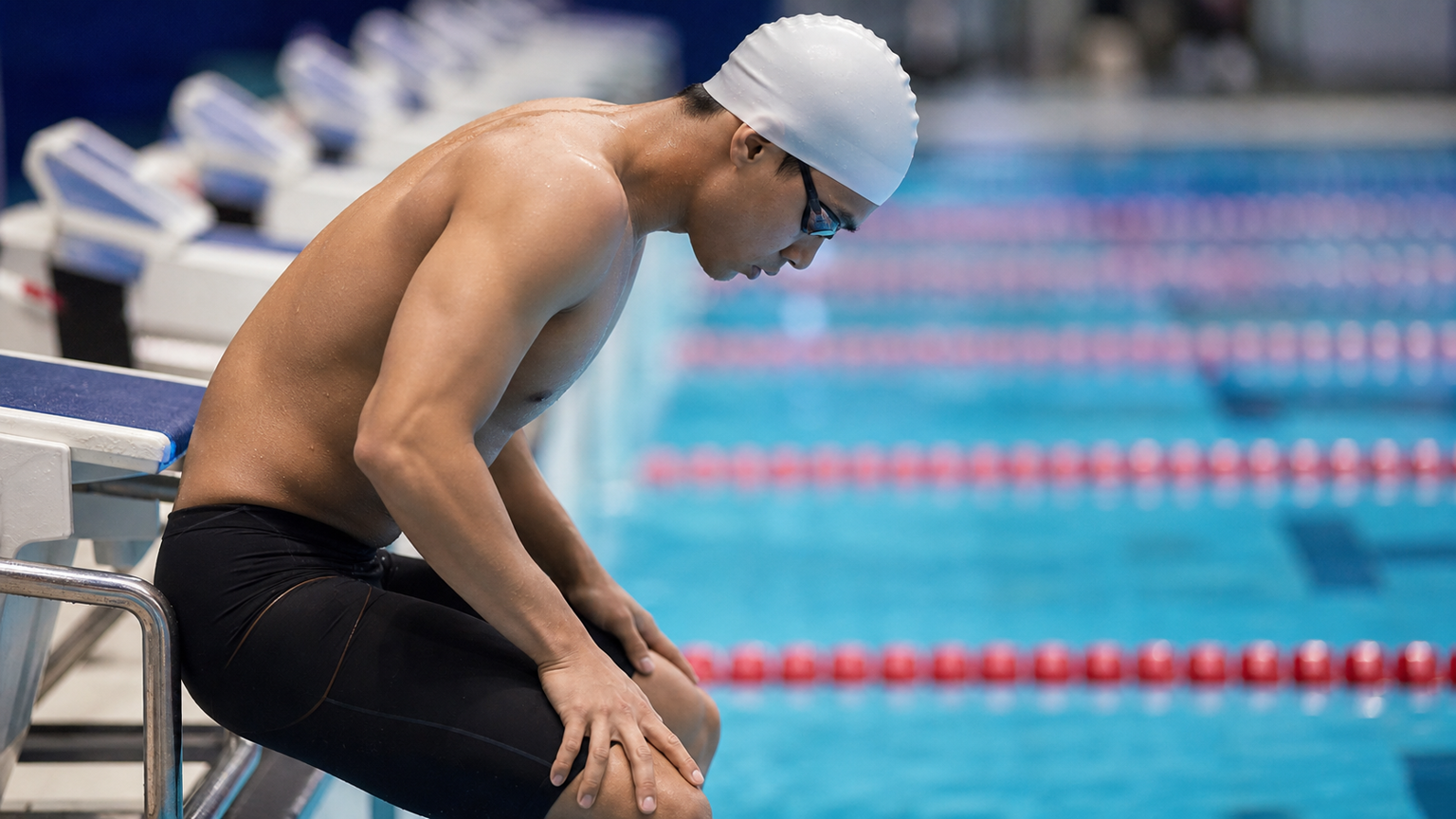
If you have ever watched international swimming competitions closely, you will notice many athletes performing a fixed sequence of actions before stepping onto the starting block: a specific way of jumping, the rhythm of slapping their body, the timing of removing their earphones, and the angle at which they look down their lane. These behaviors are not random or superstitious—they are what sports psychology calls a “Pre-race Routine”—a personalized psychological preparation procedure that helps athletes quickly enter their optimal competitive state before a race.
This article will delve into the psychological mechanisms behind pre-race routines, how to design your own ritual, and common mistakes with their corrections.
The Psychological Functions of a Pre-race Routine
Pre-race routines are effective because they serve multiple psychological needs simultaneously:
1. Reducing uncertainty: Competition is full of uncontrollable variables, while a routine is an element you can completely control. Executing a familiar sequence of actions builds a psychological sense of “I am in control.”
2. Triggering a focused state: Repeatedly performing the same actions in the same context creates conditioned neural connections. Once you begin your routine, your brain automatically switches to “competition mode.”
3. Blocking negative thoughts: Directing attention to concrete physical actions naturally interrupts rumination such as “what if I make a mistake.”
4. Building self-affirmation: Routines often include technical cue words, deep breathing, and other confidence-affirming actions that reinforce the feeling of “I am ready.”
Structural Design of a Pre-race Routine
| Phase | Timing | Goal | Example Activities |
|---|---|---|---|
| Day before competition | -24 hours | Psychological preparation and relaxation | Easy swim, imagery training, adequate sleep |
| Race morning | -4 to -2 hours | Establish race-day mindset | Fixed breakfast, listening to a specific music playlist |
| After check-in | -60 to -30 minutes | Formally begin preparation | Warm-up, stretching, final strategy confirmation with coach |
| Entering marshalling area | -10 to -5 minutes | Emotional regulation | Breathing exercises, self-talk, muscle relaxation |
| On the starting block | -60 to -5 seconds | Final focus | Fixed action sequence (see example below) |
Example of a starting-block routine (30 to 60 seconds):
- After stepping onto the block, plant both feet firmly to feel stability
- Take a deep breath, exhale slowly, repeat 2 times
- Look down your lane and silently repeat technical cue words (e.g., “explosive start, long glide”)
- Slap both thighs 2 times to confirm muscle tension
- Lock your gaze on the water ahead, “ready”
Principles for Building a Personal Routine
When designing your routine, follow these principles:
Personalization: Reference what others do, but ultimately the actions must feel meaningful to you. Forcing yourself to use an unsuitable ritual will only increase anxiety.
Simplicity: Overly complex routines are prone to errors under pressure; aim to keep it within 5 to 8 steps.
Portability: Ensure your routine does not depend on specific items (such as a particular pair of gloves), so that losing an item does not cause psychological collapse.
Consistency: Execute the same routine during training so it becomes an automated behavior, not just a special procedure “used only in competition.”
Common Mistakes and Corrections
- Over-reliance on “lucky charms”: If the core of your routine is a certain necklace or a certain pair of goggles, losing it means losing your psychological stability. Shift to internal actions you can control autonomously.
- Routine is too long: A complex 30-minute ritual cannot be fully executed in a tight race schedule. Streamline it down to the core steps.
- Skipping the routine during training: A ritual used only in competition lacks training reinforcement, greatly diminishing its effectiveness.
Practical Advice
- Start piloting it in training today: Execute the same preparation procedure before every time trial to build neural connections.
- Let your coach know about your routine: Prevent your coach from interrupting you mid-routine and disrupting your rhythm.
- Make regular fine adjustments rather than complete overhauls: You can adjust 1 to 2 steps each season based on your condition, but keep the core structure stable.
- Record which actions truly work: In your post-race journal, log the relationship between how your routine was executed and how you felt during the race.
Conclusion
A pre-race routine is one of the most effective ways to systematize and automate psychological preparation. It does not require genius—only consistent construction and practice. When you execute that familiar sequence of actions on the starting block, your brain knows: now is the time. That sense of stability is precisely the competitive resource every athlete needs most—and can most actively create.
Related Reading
- Psychological Preparation for Swimming Competitions: Building a Pre-race Ritualized Process
- Pre-race Psychological Preparation in Swimming: How Elite Athletes Find Calm in the Water?
- Psychological Preparation for Swimming Competitions: Breathing and Focus Techniques Before the Dive
- The Science of Pre-race Rituals: 12 “Superstitions” and Psychological Mechanisms of Elite Athletes
[教學] Premiere 影片 手震 修正 教學 防抖 單眼 影像 GoPro 穩定 Video Stabilization
8 年前
西進武嶺 自製新版AI配速表產生器 x 賽前攻略 抱佛腳! 沒有功率計也可以產生配速表嗎?有什麼其他眉角賽前要注意的呢? | 西進武嶺 / 東進武嶺 KOM 攻略 | 公路車 | CT Yeh
4 年前
西進武嶺 免費訓練分析服務 Intervals | 練不夠還是練過頭?你哪一種類型選手?AI模型告訴你! | 備戰神器 | 公路車 訓練 | CT Yeh
4 年前
FTL 與 SYB 車隊專訪 西進武嶺 實用攻略分享! 2小時 如何練?!你不知道的眉角!新手準備武嶺必看 EP1 | 實力派女車友 | 精華版 | 公路車 | CTYeh
4 年前
一個測試有沒有認真練車的方法😂 #公路車
10 個月前
Live) 備戰2019彰化經典百K 賽前攻略 (已完賽請看新影片
7 年前
CT Talk) 數據面窺看 武嶺大神們 平時的備戰 共通點 (娛樂性質XD)
7 年前
福隆鐵人團練隨拍
8 年前