Introduction
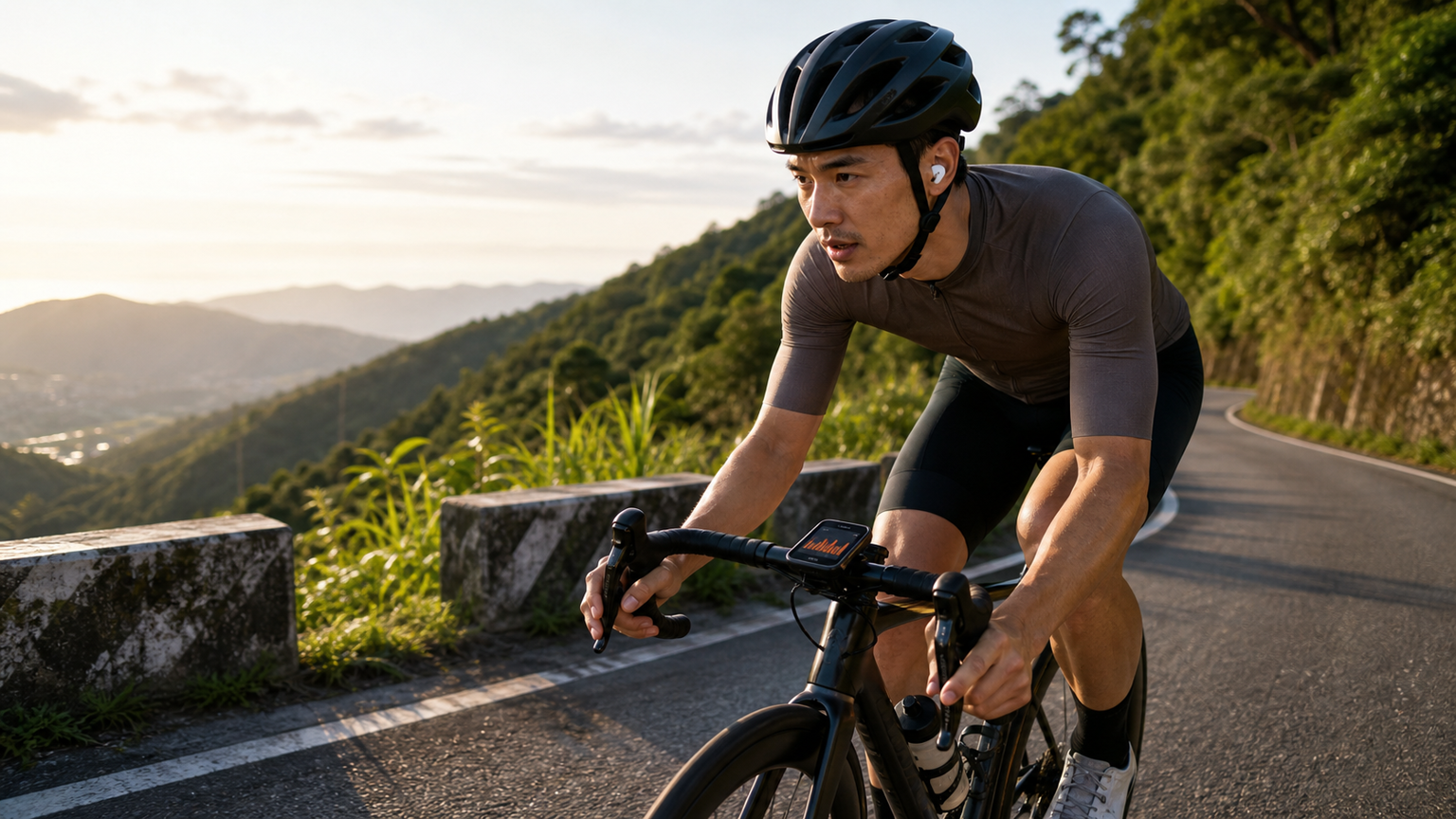
Do you wear earphones while riding? This question often sparks debate among cyclists in Taiwan. Some believe music is a distraction and that you should stay fully focused on your surroundings; others are convinced that a good song can give you a push during the most painful climbs. Whichever camp you belong to, one thing is certain: the beat of music (BPM, Beats Per Minute) is indeed linked to the body’s physiological responses. Making good use of this characteristic can make your riding experience more scientific and more enjoyable.
The Science of Music and Athletic Performance
Sports psychology research indicates that music can influence athletic performance through the following mechanisms:
Rhythmic Synchronization Effect: The human body has a natural tendency to follow external rhythms in its movements. When cycling, pedaling cadence (revolutions per minute, RPM) tends to naturally synchronize with the musical beat, which can make pedaling more efficient and reduce energy waste caused by irregular effort.
Attention Diversion Effect: Music can shift attention from “this is so tiring” to “this song is really good,” reducing the perception of fatigue. This effect is most pronounced during low-to-moderate intensity training.
Emotional Arousal Effect: Music with fast beats and positive lyrics can elevate arousal levels, providing psychological momentum when explosive power is needed.
| Training Intensity | Heart Rate Zone (Estimated) | Recommended BPM | Suggested Music Styles |
|---|---|---|---|
| Warm-up/Easy Ride | 50-60% of max HR | 80-100 BPM | Light jazz, Bossa Nova, easy-listening pop |
| Aerobic Base | 60-70% of max HR | 100-120 BPM | Pop ballads, general pop music |
| Sweet Spot Training | 70-80% of max HR | 120-140 BPM | Pop rock, electronic pop |
| Threshold Training | 80-90% of max HR | 140-160 BPM | EDM, rock |
| Sprint/VO₂max | Above 90% of max HR | 160-180 BPM | Fast-paced electronic, metal, Drum & Bass |
| Cool-down | Below 50% of max HR | 70-90 BPM | Classical, ambient music, meditation music |
Survey of Taiwanese Cyclists’ Music Preferences
Based on informal sharing across several Taiwanese cycling communities, different types of riders have their own music preferences:
Road cycling training enthusiasts generally prefer music with a steady beat and less distracting lyrics. Electronic music (EDM) and post-rock are common choices. The long, gradual build-ups of post-rock are especially suited to long climbs—the gentle opening passages match the start, and the climactic burst arrives just a few hundred meters before the summit, as if perfectly choreographed.
Commuters prefer relaxed music that isn’t overly intense; podcasts and audiobooks are also common options. Commuting is all about safety, and overly rousing music may lead to more impulsive riding behavior.
Mountain climbers enjoy “companionship-style” music—Mandarin pop lyrics with an encouraging quality that can resonate emotionally during the most painful moments.
- Key to climb songs: pick your playlist before you start; switching songs mid-climb can easily disrupt your rhythm
- Check playlist length: if the climb is expected to take 25 minutes, prepare a 30-minute playlist to avoid losing your rhythm in the silence after the playlist ends
- Spotify has a BPM auto-adjustment feature designed for cycling; beginners can make good use of it
How to Use Earphones Safely
Taiwan’s road environment is complex, and riding with earphones raises safety concerns. Here are suggestions for reducing risk:
Single-ear use: Keep one ear open to ambient sounds, so you can perceive approaching vehicles, traffic light signals, pedestrians calling out, and other information.
Bone-conduction earphones: These don’t seal the ear canal; they transmit sound through bone vibration, maintaining awareness of your surroundings. They are currently recognized as the safest earphone option for cycling. Shokz (formerly AfterShokz) is the most common bone-conduction earphone brand among Taiwanese cyclists.
Volume control: Even with bone-conduction earphones, the volume should not be too high—make sure you can still hear cars and motorcycles approaching from behind.
Situational judgment: On safe routes like riverside bike paths, the risk of using earphones is lower; on city roads, mountain descents, and sections with limited visibility, it’s advisable to take them off.
Building Your Own Riding Playlist
Categorize by training plan: Create a separate playlist for each training type—a long-distance LSD playlist, a high-BPM playlist for threshold training—so you don’t need to manually adjust once you start training.
Use tools to find BPM:
- Spotify’s Discover Weekly and Release Radar recommend music based on your preferences
- Online BPM lookup tools (such as Tunebat) can tell you the BPM of any song
- Jog.fm is designed specifically for exercise, allowing you to search for songs by BPM range
Practical Advice
- Experiment first, then commit: Different people respond to music differently. Test a few songs at different BPMs during the same workout to find the range that works best for you
- Don’t be a slave to BPM numbers: Emotional resonance sometimes matters more than precise BPM. A song that gets your blood pumping may outperform an unfamiliar track with the “correct BPM”
- Try riding without music: Occasionally set the earphones aside and let natural sounds be your companion, training your awareness of your own breathing and pedaling rhythm
Conclusion
Music is the most private companion of a ride. Choose it well, and an ordinary training session gains emotional warmth, and the hardest climb gains the motivation to keep going. Next time you head out, don’t just prepare your water bottle and energy bars—also carefully prepare a playlist for your ride. It’s a small gift to yourself, ensuring every pedal stroke has the perfect soundtrack.
Related Reading
- Cycling Music: What to Listen to While Riding to Best Enhance Your Pedaling Rhythm
- Cycling and Music: Playlists and Rhythm Pairing for Rides
- Indoor Training Playlists and Music Tempo: The Impact of BPM on Cadence and Scientific Pairing
- Cycling and Music: Should You Wear Earphones While Riding? Balancing Safety and Enjoyment
單車 重低音 藍芽喇叭 音質實測 SoundBot SB525 Real Sound Test
8 年前
#公路車 #Fitting 靠人工智慧APP 幫你調整單車
6 年前
大家都在開箱的...單車用藍芽對講耳機真的有幫助嗎? SENA BiKom 20 長距離旅遊 & 海鷗繞圈賽 實際體驗心得 / 公路車 / CT Yeh
9 個月前
#公路車 台北 #風櫃嘴 23:47 全台單車實境請訂閱鎖定
7 年前
單車 一日北高 ( 雙城 ) 肥宅雙人瘋狂行 紀錄片 REACTO
10 年前
靠單車減肥35公斤 心得分享與整理
7 年前
單車 梅山36灣 坡度介紹 路段介紹 空拍 (相關遊記影片,請參考說明或我的頻道喔,歡迎訂閱)
6 年前
公路車 爬坡 破PR 紀錄 小技巧 分享
6 年前